98%
Placed
in 2025







The MSc Biotechnology programme is a 2-year postgraduate life sciences course for students who want advanced knowledge in molecular biology, genetics, microbiology, bioprocessing, immunology, plant biotechnology, animal biotechnology, bioinformatics, pharmaceutical biotechnology, and research-based laboratory practices. Students searching for MSc Biotechnology course details, MSc Biotech, or a masters degree in biotechnology can use this page to understand the course duration, eligibility, fees, syllabus, admission process, career options, and learning benefits.
At Brainware University, the MSc Biotechnology course is designed for graduates from relevant life science backgrounds who want to build careers in biotechnology research, biopharma, healthcare technology, agriculture biotechnology, environmental biotechnology, food processing, molecular diagnostics, quality control, and higher research. The programme combines classroom learning with laboratory exposure, industrial training, project-based work, and research-oriented learning.
This page covers important details on MSc Biotechnology admission 2026, MSc Biotechnology eligibility, MSc Biotech fees, MSc Biotechnology subject areas, placement scope, laboratory facilities, industry exposure, and direct admission-related guidance.
The applicants will find all admission relevant information on this page including programme overview, syllabus outline, career options, as well as learning benefits. Details concerning course, eligibility and admission criteria are provided as well.
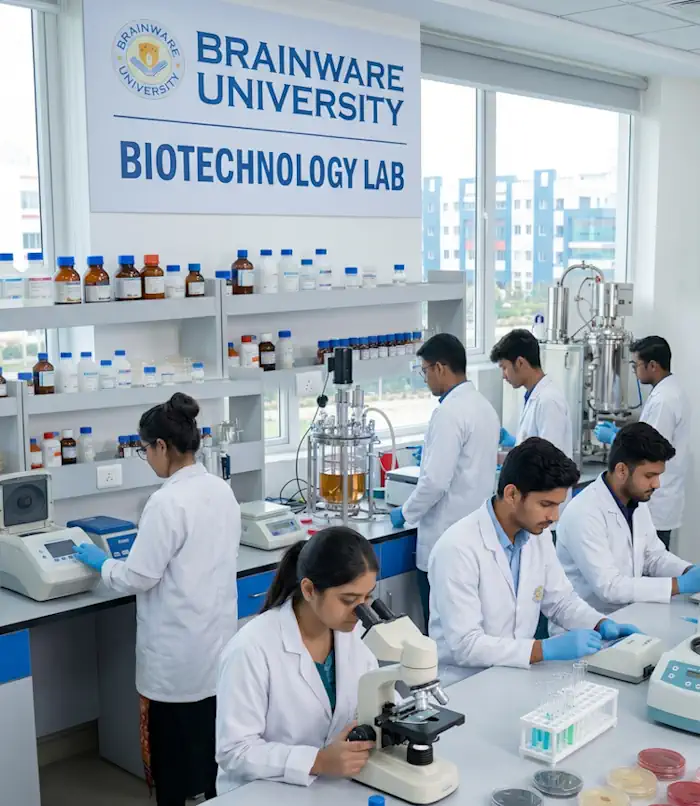

The MSc Biotechnology programme is designed to provide advanced knowledge in molecular biology, genetics, microbiology, bioinformatics, and modern biotechnological applications. The MSc Biotechnology course combines theoretical learning with hands-on laboratory training, preparing students for careers in research, healthcare, pharmaceuticals, agriculture, and the biotech industry.
| Programme | Master of Science in Biotechnology |
|---|---|
| Duration | 2 years |
| Focus Areas | Molecular Biology, Genetics, Microbiology, Biochemistry, Immunology, Plant Biotechnology, Animal Biotechnology, Cytogenetics, Bioprocess Technology, Bioinformatics, Genetic Engineering, Environmental Biotechnology, Food Biotechnology, Pharmaceutical Biotechnology, Mushroom Cultivation, Tissue Culture, Cell Culture, Research Methodology, and Laboratory Instrumentation. |
| Salary | Salary after MSc Biotechnology depends on the student’s laboratory skills, research exposure, internship experience, technical knowledge, chosen industry, job role, and recruiter requirements. Graduates may explore entry-level and growth-oriented roles in research labs, biopharma companies, food processing units, environmental organisations, agriculture biotech firms, healthcare technology companies, and academic or research institutions. |
| Popular Job Types | Biotechnologist, Research Assistant, Junior Research Fellow, Laboratory Technician, Quality Control Analyst, Quality Assurance Executive, Microbiologist, Bioprocess Associate, Molecular Biology Assistant, Food Safety Analyst, Environmental Biotechnology Assistant, Plant Tissue Culture Executive, Clinical Research Associate, Scientific Writer, and Bioinformatics Assistant. |
| Hiring Industries | Biopharmaceuticals, Biotechnology Companies, Healthcare Research, Molecular Diagnostics, Food Processing, Agriculture Biotechnology, Environmental Biotechnology, Waste Management, Biofuel and Energy Research, Academic Research Labs, Public Funded Laboratories, Contract Research Organisations, Quality Testing Labs, and Industrial Bioprocessing Units. |
| Top Recruiters | MSc Biotechnology graduates may explore opportunities with biotechnology companies, pharmaceutical firms, research laboratories, food testing organisations, agriculture biotech companies, healthcare technology firms, molecular diagnostic labs, environmental testing agencies, and academic or public research institutions. |
| Specializations | The MSc Biotechnology course supports advanced learning in Molecular Biology, Genetic Engineering, Microbiology, Bioprocess Technology, Plant Biotechnology, Animal Biotechnology, Cytogenetics, Environmental Biotechnology, Food Biotechnology, Pharmaceutical Biotechnology, Bioinformatics, Immunology, Tissue Culture, and Cell Culture. |
| Higher Studies | Students can pursue PhD in Biotechnology, PhD in Life Sciences, PhD in Microbiology, PhD in Molecular Biology, PhD in Biochemistry, PhD in Bioinformatics, research fellowships, CSIR-NET or GATE preparation where applicable, and advanced certifications in clinical research, bioinformatics, quality control, molecular diagnostics, food safety, regulatory affairs, and bioprocess technology. |
| Benefits | The programme offers advanced laboratory exposure, research-based learning, training in hybrid mushroom cultivation, plant tissue culture, animal cell culture methods, modern biotechnology labs, expert faculty mentoring, project work, industrial training, internship support, and placement preparation. |
| Internship and Placement | Students receive internship guidance, laboratory training, research project exposure, industrial learning, pre-placement training, resume preparation, interview grooming, and career support. Practical exposure may include molecular biology techniques, microbial culture, plant tissue culture, animal cell culture, fermentation, bioprocessing, and laboratory documentation. |
| Location | Brainware University, Barasat, Kolkata, West Bengal. |
| Approvals & Recognition | Brainware University is a UGC-recognised university. |

Educational Qualification: Candidates must have completed graduation in any relevant Life Science discipline such as Biology, Botany, Zoology, Biotechnology, Microbiology, Chemistry, Physiology, Food Science, Agriculture, or Medical Laboratory Technology (MLT).
Minimum Marks:A minimum of 55% marks or equivalent grade in the qualifying examination is required.
Entrance Criteria: Admission is based on merit or through the Brainware Entrance Test (BET) as applicable.
Pursue your passion for genetics, molecular biology, bioprocessing, and cutting-edge life science research with the MSc Biotechnology programme designed to offer high-quality scientific education at an affordable cost. The course provides access to advanced biotechnology labs, modern research instruments, expert faculty mentorship, and real-world exposure through practical experiments, industrial training, and project-based learning. With a balanced investment in theoretical knowledge and hands-on scientific practice, this programme equips students for successful careers in biopharma, research labs, healthcare technology, agriculture biotech, and the fast-growing biotechnology industry.
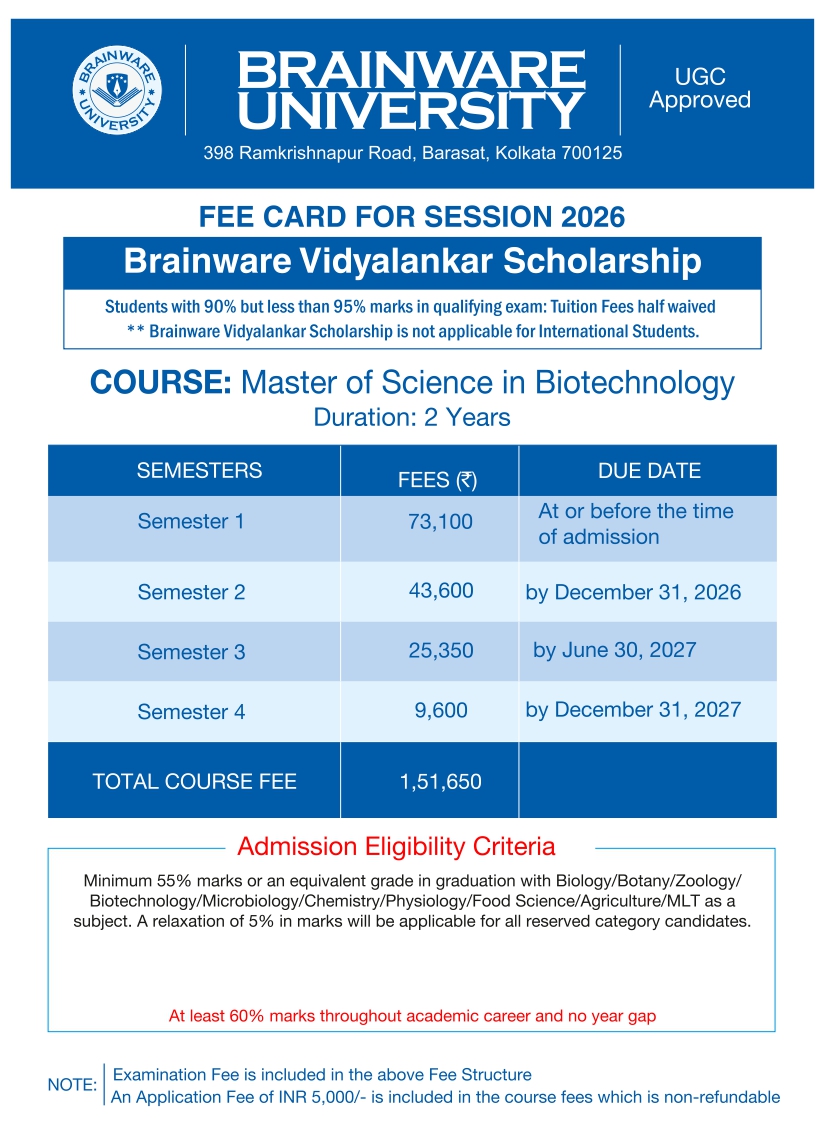
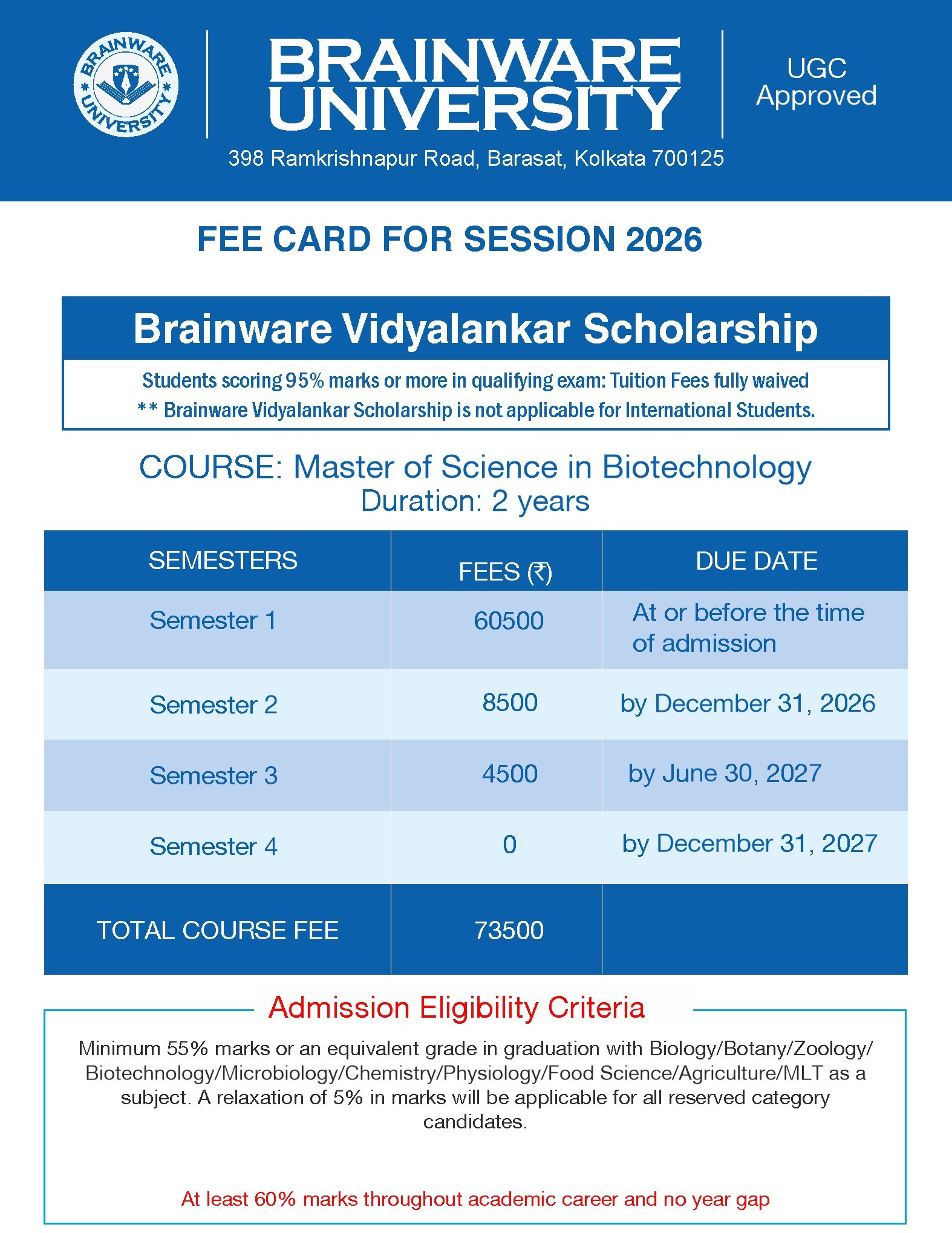
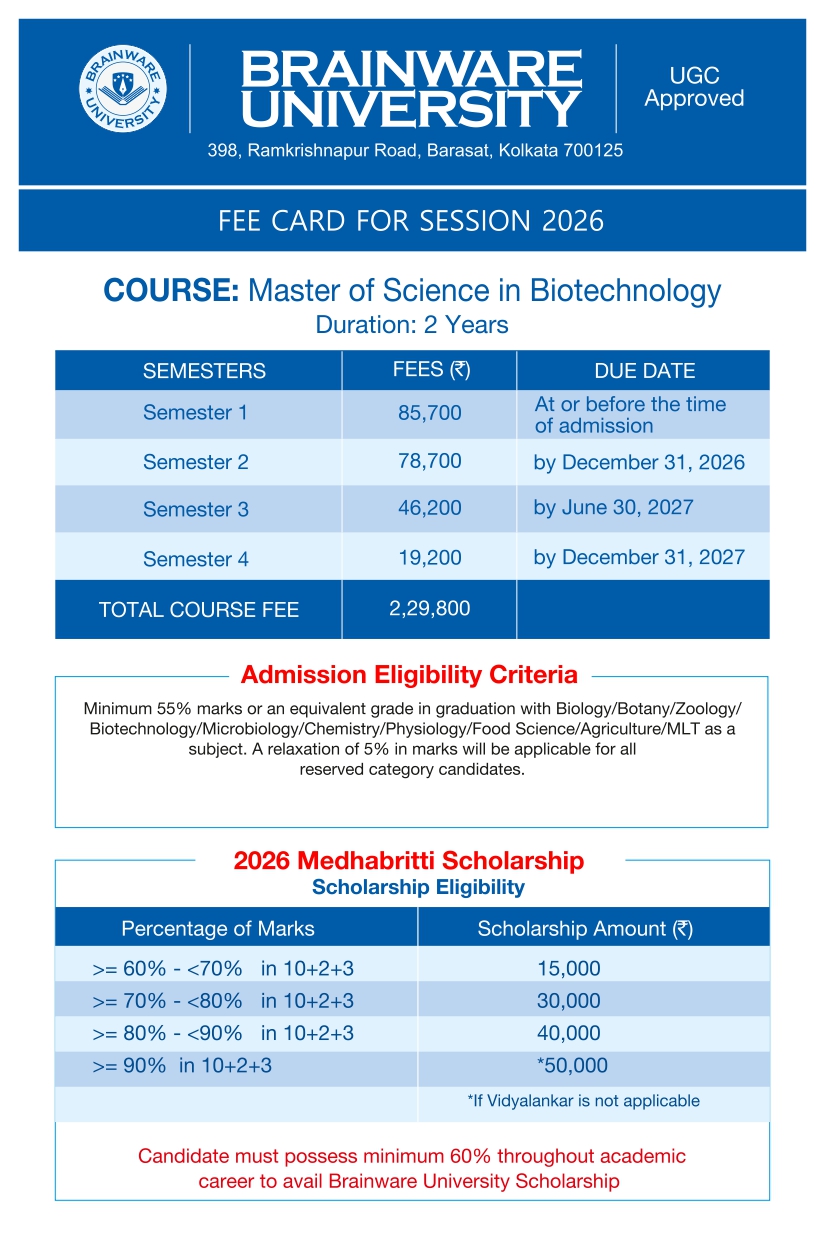
Students searching for MSc Biotech fees should check the latest semester-wise fee structure from the official Brainware University admission office before applying. Fees may be revised as per university policy, so applicants should verify the final fee amount, payment schedule, scholarship options, and admission-related charges before completing admission.
| Semesters | Semester 1 | Semester 2 | Semester 3 | Semester 4 | Semester 5 | Semester 6 | Semester 7 | Semester 8 | Semester 9 | Semester 10 | Total |
|---|---|---|---|---|---|---|---|---|---|---|---|
| Fees (INR) | 85700 | 78700 | 46200 | 19200 | 2,29,800 |
**Fees are subject to change, and the application fee of ₹5,000 is non-refundable under any circumstances. Please contact us for further details.
Scholarships(Fees): Brainware University offers merit-based scholarships for top performers and financial aid for deserving students. Scholarships are available for high scorers in entrance exams, board results, and outstanding achievements in innovation or research. Visit our scholarship page for more details.
**Please note that the Brainware Vidyalankar Scholarship is available only to students who passed their qualifying examination in the current admission year. Also, eligibility is strictly restricted to Indian nationals; international students are not eligible to apply.
Artificial Intelligence is becoming an important part of modern biotechnology research, especially in drug discovery, genetic data analysis, protein structure prediction, disease modelling, bioinformatics, clinical research, agriculture biotechnology, and laboratory automation. The MSc Biotechnology programme can introduce students to the growing role of AI in life sciences and research-driven industries.
AI can help biotechnology students understand large biological datasets, identify genetic patterns, study protein interactions, support molecular diagnostics, improve crop research, analyse microbial behaviour, and speed up early-stage drug discovery. It also supports research planning, data interpretation, literature review, and scientific documentation.
This AI-driven exposure helps students prepare for a changing biotechnology sector where laboratory skills and data-based analysis increasingly work together. The focus is to help learners become confident in both biological techniques and technology-supported research methods, while maintaining scientific accuracy, ethics, and responsible use of data.

The AI learning spectrum in MSc Biotechnology should connect biological science with computational and data-driven research. Students may be introduced to how AI, data analysis, and bioinformatics support modern biotechnology applications from basic research to industrial use.
Key learning areas may include:
This learning spectrum helps students understand how biotechnology research is moving towards a combination of wet lab methods, computational biology, and intelligent data analysis.



The MSc Biotechnology placement process at Brainware University focuses on preparing students for roles in biotechnology companies, research laboratories, biopharmaceutical firms, food processing industries, environmental organisations, quality control units, molecular diagnostic labs, and academic research settings.


MSc Biotechnology placement support at Brainware University is designed to help students present their scientific knowledge, laboratory skills, research exposure, and industry readiness with confidence. The training process focuses on technical preparation, communication skills, interview practice, resume development, and career guidance.
Alumni from MSc Biotechnology can build career journeys across research laboratories, biotechnology companies, biopharmaceutical firms, diagnostic centres, food processing industries, environmental organisations, agriculture biotech companies, academic institutions, and public funded laboratories.
Graduates may begin their careers as research assistants, laboratory technicians, quality control analysts, microbiologists, bioprocess associates, clinical research assistants, scientific writers, or bioinformatics assistants. With experience and further training, they may move into senior roles in research and development, quality assurance, production, regulatory affairs, laboratory management, scientific communication, teaching, or doctoral research.


Brainware University has earned an AA+ rating in India’s Best Engineering Institutes by Careers360. The recognition reflects the University’s strength in academic quality, faculty, infrastructure, research, and student outcomes, reinforcing its position as a trusted destination for industry-aligned engineering education.

Brainware University has been ranked No. 1 Engineering College under a Private University in West Bengal in the IIRF Rankings 2026. The recognition highlights the University’s strength in engineering education, industry-focused learning, research, emerging technologies, and placement outcomes.

Brainware University has been ranked No. 2 Private University in West Bengal by uniRank 2026, marking another recognition of the University's growing presence in the state's higher education landscape.
Brainware University's inclusion in the Times Higher Education (THE) Impact Rankings 2025 reflects its contribution to the UN Sustainable Development Goals (SDGs) through education, innovation, sustainability, community engagement, and responsible institutional practices.

Brainware University has been recognised as the Best Private University of West Bengal in Infrastructure & Placement at Times Now.in – Leaders of Excellence: East 2026, celebrating its commitment to world-class infrastructure and career-focused education.

Brainware University has been recognised by The Times Group for excellence across Engineering (Placement), Law, and MBA Studies. The honours reflect the University’s multidisciplinary strength and its focus on career-oriented, industry-relevant education.

Brainware University received the ABP Ananda Shiksha Samman 2026 for Excellence in Placement & AI-Integrated Academic Infrastructure, acknowledging its emphasis on placement opportunities alongside technology-enabled academic development.

Brainware University has been honoured with the Zee 24 Ghanta Education Excellence Award 2026 for Best Industry Placement & Academic Infrastructure, continuing its recognition in 2022, 2023, 2024, 2025, and 2026. The University was also recognised in 2017 and 2018 for its job-oriented academic initiatives.

Brainware University received the TV9 Uttaran Academic Excellence Honour for Excellence in Placement & AI-Integrated Academic Infrastructure, highlighting its focus on combining career opportunities with an AI-enabled academic and learning environment.

Brainware University was honoured with the R Bangla Sikkha Gourab Samman 2026, recognising its contribution to higher education and continued pursuit of academic excellence and career-focused learning.

Brainware University was honoured as the Best Private University in West Bengal at the Times Now in Business Excellence Awards (East) 2025, recognising its academic quality, modern infrastructure, industry engagement, and focus on student success.

Brainware University was recognised as the Leading University in Infrastructure, Academics & Placement at the Times Business Awards West Bengal 2025, highlighting its strong campus facilities, academic ecosystem, and placement performance across disciplines.

The MSc Biotechnology syllabus is designed to provide advanced knowledge of life sciences and applied biotechnology. The curriculum covers important MSc Biotechnology subject areas such as molecular biology, genetics, microbiology, biochemistry, immunology, bioprocess technology, plant biotechnology, animal biotechnology, environmental biotechnology, bioinformatics, and research methodology.
The course combines theory with practical learning through laboratory experiments, project work, industrial training, seminar presentations, and research-based assignments. Students learn to use scientific instruments, follow laboratory protocols, analyse biological data, maintain documentation, and understand the application of biotechnology in healthcare, agriculture, environment, food processing, and industry.
The core foundations of MSc Biotechnology help students build advanced understanding of biological systems, cellular processes, molecular mechanisms, laboratory techniques, and research methods. These areas create the base for specialised biotechnology learning and scientific problem-solving.
Core learning areas may include:
These subjects help students understand biological processes at molecular, cellular, organismal, and applied levels.
The industry-driven advanced modules in MSc Biotechnology focus on applied areas that are important for research, healthcare, agriculture, food, environment, and industrial biotechnology. These modules help students connect scientific theory with real-world applications.
Advanced learning areas may include:
These areas prepare students for biotechnology careers where laboratory skill, process understanding, product quality, and research-based innovation are important.
| Semester | Course name |
|---|---|
| Semester-I | Research Methodology and Ethics |
| Advances in Plant Biotechnology | |
| Advances in Genetic Engineering | |
| Biomolecules and Biochemistry | |
| Advances in Plant Biotechnology Lab | |
| Biomolecules and Biochemistry Lab | |
| Advances in Genetic Engineering Lab | |
| Bioinformatics Tools and Techniques | |
| Semester-II | Environmental Biotechnology |
| Stem Cell Biology | |
| Drug Design | |
| MOOC | |
| Genomics and Proteomics | |
| Bioprocessing and Fermentation Technology | |
| Immunobiology | |
| Advances in Animal Biotechnology | |
| Professional Communication, Collaboration, and Career Skills | |
| Semester-III | Project |
| Semester-IV | Dissertation |
Please note that the syllabus is subject to modification. Visit our Syllabus page for the elective subject details and updated syllabus.

MSc Biotechnology graduates can explore corporate and private-sector roles in biotechnology companies, pharmaceutical firms, biopharmaceutical units, food processing industries, molecular diagnostic labs, agriculture biotech companies, environmental testing agencies, contract research organisations, healthcare technology companies, and quality testing laboratories.
Students with strong laboratory skills, internship experience, research exposure, documentation ability, and knowledge of current biotechnology tools can build better career profiles in private-sector roles.
MSc Biotechnology graduates can also apply for government and public-sector opportunities where life science research, laboratory testing, quality control, public health, agriculture, environment, food safety, and scientific documentation skills are required.
Candidates may need to qualify through NET, GATE, organisation-specific examinations, project-based recruitment, interviews, or other selection processes depending on the post.
Career prospects after MSc Biotechnology are broad because biotechnology supports multiple sectors, including healthcare, pharmaceuticals, food processing, agriculture, environmental management, waste treatment, bioenergy, and industrial bioprocessing. Graduates can work in research, testing, production, quality control, regulatory support, scientific writing, and higher academic pathways. The following areas show where MSc Biotechnology graduates can build career opportunities.
| Area of Opportunity | Why It’s in Demand |
|---|---|
| Drug and Pharmaceutical Research | Developing New Therapies: Essential for designing, testing, and optimizing biologic drugs like antibodies and vaccines and gene therapies to combat complex diseases. |
| Public Funded Laboratories | Fundamental Scientific Advancement: Required in government or academic labs such as CSIR and ICMR for basic research, disease surveillance, and contributing to national scientific goals and policy. |
| Environment Control | Pollution Remediation: Needed to develop and implement bioremediation techniques using microbes to clean up oil spills or pollutants and to monitor ecological health. |
| Waste Management | Sustainable Resource Recovery: Crucial for designing biological processes to treat sewage, decompose industrial waste, and convert organic waste into useful resources like compost or biogas. |
| Energy Management | Renewable Bio-Energy: Demand is high for developing efficient microbial systems and processes for the large-scale production of biofuels such as bioethanol and biodiesel as a sustainable energy source. |
| Food Processing | Safety, Quality, and Innovation: Essential for improving food safety through microbial testing, enhancing nutritional value, and developing new fermentation-based food and beverage products. |
| Bio-processing Industries | Industrial Scale Production: Needed to design, optimize, and manage large bioreactors and downstream processing techniques used to manufacture commercial quantities of enzymes, proteins, and therapeutics. |
Overall, MSc Biotechnology offers a strong career pathway for students who want to work in research, healthcare, agriculture, environment, food technology, biopharma, and industrial biotechnology. Students who develop strong lab skills, complete internships seriously, participate in research projects, and stay updated with emerging tools such as bioinformatics and AI-supported analysis can improve their long-term career scope.
The job market for MSc Biotechnology graduates from 2025 to 2032 is expected to grow around healthcare innovation, vaccine research, molecular diagnostics, genetic engineering, biopharmaceuticals, food safety, sustainable agriculture, environmental biotechnology, biofuels, and AI-supported life science research.
Between 2025 and 2032, MSc Biotechnology graduates with hands-on laboratory training, research exposure, bioinformatics awareness, and internship experience will be better prepared for industry and research-based careers.


| Laboratory | Facilities |
|---|---|
| Animal Biotechnology Lab. | Rotary centrifuge, REMI 4° centrifuge, blood group testing facility, sugar testing facility, dialysis facility, ice maker, water distillation unit, microtome, dissecting microscope binocular. |
| Plant Biotechnology & Cytogenetic Lab. | Plant physiology, LAF with HEPA, plant growth chamber (digitally controlled), karyotyping facility, breeding facility, pH meter, UV spectrophotometer, weighing balance, light microscope, hot air oven, plant tissue culture facility. |
| Microbiology Lab. | HEPA-LAF chamber, anaerobic culture unit, BOD facility, mushroom spawn production facility, soil testing facility, autoclave, digital pH meter, weighing balance, bacterial and fungal staining and culture facilities, light microscope, colony counter. |
| Bioprocess Technology Lab. | 5 Lts capacity bioreactor, fermentation facility, down-stream processing facility, enzymology, water treatment facility, HEPA-LAF, incubator cum shaker. |
| Molecular Biology Lab. | 96 well PCR machine (Thermocycler), gel-electrophoresis unit (horizontal & vertical), gel-doc system computerized, DNA, RNA, protein experimental facility, UV Transilluminator, micro centrifuge machine, vortexer, weighing balance. |

Industry-institute tie-ups help MSc Biotechnology students connect classroom learning with real scientific and industrial practice. Through collaborations, students may gain exposure to expert sessions, industry visits, workshops, internship opportunities, training programmes, research discussions, and applied biotechnology projects.
The department's MoU with S.D. Industries and its association with FOSTAC training. Such initiatives help students understand food safety standards, industry expectations, regulatory practices, and the practical use of biotechnology in commercial and public health contexts.




The Department of Biotechnology at Brainware University has signed multiple active MoUs with leading organisations across various industries, strengthening industry-academia collaboration and enhancing student exposure, training, and placement opportunities.
[Click here to view the complete list of MoUs]
MSc Biotechnology admission 2026 at Brainware University is open for eligible graduates who want to pursue advanced postgraduate study in biotechnology, life sciences, molecular biology, microbiology, genetics, bioprocessing, plant biotechnology, animal biotechnology, environmental biotechnology, and related scientific fields.
Admission Criteria: Candidates applying for MSc Biotechnology must have completed graduation in a relevant Life Science discipline such as Biology, Botany, Zoology, Biotechnology, Microbiology, Chemistry, Physiology, Food Science, Agriculture, Medical Laboratory Technology, or a related area from a recognised university.
A minimum of 55% marks or an equivalent grade in the qualifying examination is required. Final admission is subject to eligibility fulfilment, merit evaluation, BET performance where applicable, counselling, document verification, seat availability, and university admission guidelines.
Application: Students can apply for MSc Biotechnology admission 2026 by filling out the enquiry or application form available on the Brainware University website. Applicants must enter their name, select MSc Biotechnology from the course drop-down menu, choose their location, and submit a valid phone number and email ID.
Entrance Exam: MSc Biotechnology admission may be based on merit or through BET, the Brainware Entrance Test, as per university admission guidelines.
Counselling: After application submission, eligible candidates are guided through counselling by the university admission team. Counselling helps students understand MSc Biotechnology eligibility, course duration, fees, scholarships, syllabus, laboratory exposure, research opportunities, internship options, placement support, and career scope.
Direct Admission: MSc Biotech direct admission may be available for eligible candidates as per university norms, subject to academic qualification, merit, entrance requirement where applicable, seat availability, document verification, and admission guidelines.
Please follow the MSc Biotechnology admission procedure at Brainware University:


Extremely good infrastructure and a perfect platform that helps to overcome our drawbacks and to turn our dreams into reality
Pratik GhoshMSc Biotech
I am happy to say that, because of Brainware University and the excellent opportunities that they provided, I achieved my dream because of them.
Deblina PariaMSc Biotech

"Brainware students are professionally and technically well-informed as freshers. We are impressed with the level of confidence and positive attitude they demonstrated during their interviews."
Mr. Vaskar Bhattacharya Regional Head-East, Ginnisystems Ltd.
We always find competent and positive students who are almost ready to be professionals. We never get disappointed wherever we come for the recruitment. Well done Brainware University!
Ms. Srimoyee Mukherjee Manager HR Nature Technologies Pvt. Ltd.






Brainware University's Department of Biotechnology has emerged as a dynamic hub of innovation and collaboration, making significant strides in academia, industry, and entrepreneurship. Here's a glimpse of the department's impressive achievements:
The Intellectual Incubation Centre (IIC), in collaboration with the Departments of Biotechnology, Allied Health Sciences (AHS), and Corporate 2 Campus (C2C), orchestrated an exhilarating PANEL DISCUSSION - "Petridish to Profit: Unleashing the Biotech Entrepreneur." Esteemed speakers included Pooja Khairajani (Senior Marketing Manager at Hulladek), Debashish Datta (CEO, Kolkata Biotech Park), Dibyendu Sarkar (MD, EcoVocal Solutions), and Dr. Amit Das (CSO, Smart Farming India). This event not only showcased the entrepreneurial spirit within the department but also provided students with invaluable insights into the real-world applications of biotechnology.
Dr. Sayantan Ghosh, the Head of the Department of Biotechnology at Brainware University, made waves at IIT Delhi's 'Unnati Mahotsav and Expo.' His impactful presence underscored the department's commitment to fostering academic excellence and collaboration on a national platform.
The Department of Biotechnology solidified its industry ties by signing a Memorandum of Understanding (MoU) with S.D Industries. This collaboration extended to a FOSTAC training program, attended by enthusiastic Biotechnology students. Prof. (Dr.) Deborshi De, NLRP - FOSTAC / FSSAI, played a pivotal role in bridging academia and industry through this initiative.
Brainware University hosted a stellar National Conference that brought together eminent academicians and industry professionals. Speakers included Prof. Sib Sankar Roy (CSIR-IICB, Kolkata), Prof. (Dr.) Anupam Basu (DBT-NIBMG, Kalyani), Prof. (Dr.) Shampa Das (Bose Institute), and Prof. (Dr.) Samir Ranjan Sikdar (Bose Institute). This conference not only enriched the academic discourse but also strengthened collaborative networks in the field.
The Department of Biotechnology at Brainware University took a proactive stance in addressing environmental challenges. A thought-provoking seminar on National Pollution Control Day was conducted, featuring Dr. Asok Kanti Sanyal, the Biological Science Secretary of The Asiatic Society, Kolkata, as the keynote speaker. This event showcased the department's commitment to addressing real-world issues through science and research.
Brainware University's Department of Biotechnology stands as a beacon of excellence, seamlessly integrating academic rigour with industry relevance. Through groundbreaking events, collaborations, and academic initiatives, the department continues to make a positive impact on students, industry partners, and the broader scientific community.

MSc Biotechnology is a postgraduate degree program that focuses on the application of biological processes, organisms, or systems in various fields, including healthcare, agriculture, environmental science, and pharmaceuticals. It combines principles of biology, genetics, molecular biology, biochemistry, and other related disciplines to develop innovative solutions and technologies.
Students should choose Brainware University for MSc in Biotechnology in 2026 because the programme offers strong academic and laboratory training in molecular biology, genetics, microbiology, bioprocess technology, immunology, and applied biotechnology. With practical exposure, research-oriented learning, a 98% placement rate across courses, 1000+ recruiters, and placement assistance, Brainware University prepares students for careers in biotech industries, diagnostics, pharmaceuticals, research laboratories, and higher studies.
MSc Biotechnology stands for Master of Science in Biotechnology.
MSc Biotechnology is a 2-year postgraduate programme that focuses on applying biological systems, cellular processes, and molecular technologies to develop innovative products and solutions in healthcare, agriculture, environment, and industry. The course includes advanced study of genetics, microbiology, bioprocess engineering, molecular biology, immunology, and research methodologies, along with practical lab training and project work.
The prerequisites for pursuing MSc in Biotechnology may vary among institutions. Typically, a bachelor's degree in biotechnology, biology, microbiology, biochemistry, genetics, or a related field is required. Some programs may have specific coursework or minimum GPA requirements. It is advisable to check the eligibility criteria of the specific program or institution you are interested in.
The subjects covered in an MSc Biotechnology program may include molecular biology, genetics, biochemistry, cell biology, bioprocess engineering, genetic engineering, microbiology, bioinformatics, immunology, genomics, proteomics, biostatistics, and ethical considerations in biotechnology. The program may also include laboratory work, research projects, and seminars to provide practical experience and research skills.
Graduates of MSc Biotechnology programs have diverse career prospects in industries, research institutions, and government organizations. They can work in areas such as pharmaceuticals, biopharmaceuticals, healthcare, agriculture, food and beverage, environmental science, forensic science, biotechnology companies, research and development, quality control, regulatory affairs, and academia. Roles may include research scientist, biotechnologist, laboratory manager, product development specialist, quality assurance officer, and scientific writer.
Yes, MSc Biotechnology programs often provide research opportunities to students. These opportunities may include research projects, internships, or collaborations with industry partners or research institutions. Engaging in research allows students to gain practical skills, contribute to advancements in the field, and explore specific areas of interest within biotechnology.
An MSc Biotechnology program helps students develop various skills, including molecular biology techniques, genetic engineering methods, laboratory techniques, bioinformatics analysis, data interpretation, research design and execution, scientific communication, project management, critical thinking, and problem-solving in the context of biotechnology. Students also gain experience in working with advanced instruments and technologies used in the field.
While some institutions may offer distance learning or online programs in MSc Biotechnology, it is important to note that practical laboratory work and hands-on experience are integral components of the program. Therefore, it is advisable to research and check with specific institutions to determine if they offer any online or hybrid programs in this field and if they provide adequate laboratory facilities or in-person components to ensure comprehensive learning.
Within Biotechnology, students can explore various research areas during their MSc program. Some popular research areas include genetic engineering, biopharmaceutical production, agricultural biotechnology, environmental biotechnology, molecular diagnostics, stem cell research, bioinformatics, synthetic biology, proteomics, genomics, and drug discovery. The choice of research area often depends on individual interests and the expertise of the faculty within the program.
The duration of an MSc Biotechnology program typically ranges from 1 to 2 years, depending on the institution and the program structure. Some programs may offer part-time options, which can extend the duration. The duration may also vary if the program includes a research project or thesis component. It's essential to check the specific program requirements and consult the institution for accurate information regarding the duration of the program.
M.Sc. in Biotechnology is a postgraduate program that combines biology and technology to develop innovative solutions in healthcare, agriculture, environmental science, and industrial processes.
Brainware University offers a research-driven curriculum, advanced laboratory facilities, and industry-focused training, making it one of the best options.
Admission generally requires a B.Sc. degree in Biotechnology, Microbiology, Biochemistry, or Life Sciences. Some universities conduct entrance exams, while others offer merit-based admission.
Key subjects include Genetic Engineering, Molecular Biology, Immunology, Bioinformatics, Bioprocess Engineering, and Pharmaceutical Biotechnology.
The program is typically 2 years long, divided into 4 semesters.
Graduates can work as Biotechnologists, Research Scientists, Quality Control Analysts, Biomedical Engineers, or Bioprocess Technologists in healthcare, pharmaceuticals, agriculture, and environmental sectors.
The average salary ranges from ₹5 LPA to ₹15 LPA, depending on experience, industry, and specialization.
Top recruiters include Biocon, Dr. Reddy’s, Serum Institute of India, Bharat Biotech, Pfizer, Novartis, and research organizations like ICMR and CSIR.
Focus on biotechnology techniques, lab skills, research methodologies, and stay updated with the latest advancements in the biotech industry.
Yes, research is crucial for drug development, genetic engineering, vaccine production, and industrial biotechnology applications. A Ph.D. can open advanced career opportunities.
Key skills include PCR, CRISPR gene editing, cell culture, recombinant DNA technology, and protein purification techniques.
Participate in research projects, attend biotech workshops, publish papers, and gain hands-on lab experience.
Include internships, research projects, technical skills, certifications, and publications in biotechnology-related journals.
Tools like BLAST, BioEdit, MEGA, MATLAB, and Python for bioinformatics analysis are widely used.
It plays a critical role in drug discovery, vaccine production, gene therapy, and personalized medicine.
Trends include CRISPR gene editing, synthetic biology, personalized medicine, agricultural biotechnology, and AI-driven biotech research.
Biotech helps in bioremediation, biofuel production, and sustainable agricultural practices to reduce environmental impact.
AI assists in drug discovery, genetic data analysis, protein structure prediction, and clinical research automation.
It enhances food security through genetically modified crops (GMOs), biofertilizers, and precision agriculture.
Follow journals like Nature Biotechnology, attend biotech conferences, and join industry networks like ISCB (International Society for Computational Biology).