98%
Placed
in 2025







The 4-year Bachelor in Optometry Technology programme focuses on the study of examination, diagnosis, treatment and management of diseases and disorders of the visual system. It is a vision care science. This is a dynamic and challenging career option in the medical field.
It allows one to help people, achieve personal growth, community respect, job flexibility and financial success and offers virtually unlimited opportunities. In addition, the programme is envisaged to develop a multipurpose ophthalmic workforce at the allied health programme level.
This UG programme will enable students to become competent in providing services as an Optician, Optometrist, Refraction Specialist and Ophthalmic Assistant.
The applicants will find all admission-relevant information on this page, including the BSc optometry programme overview, BSc optometry syllabus outline, BSc optometry fees, career options, and learning benefits. Details concerning the course, eligibility and admission criteria are provided as well.
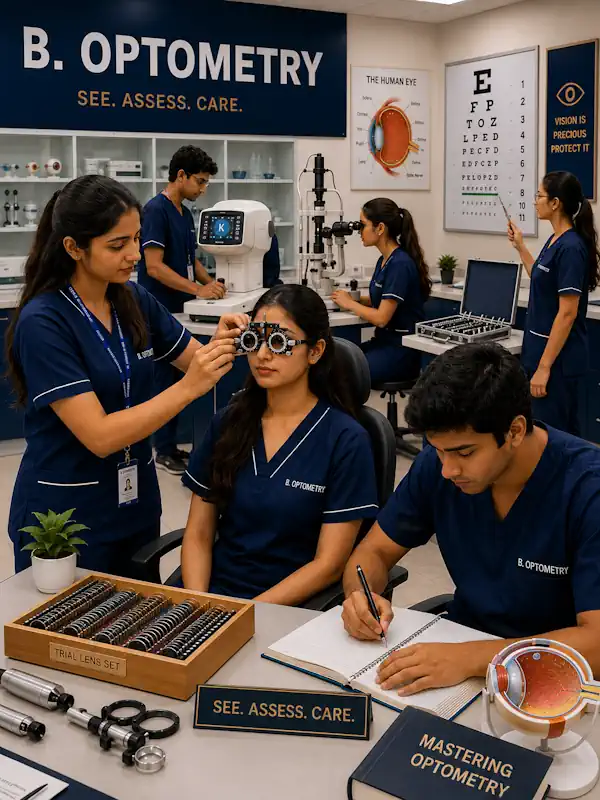

The Bachelor of Optometry at Brainware University is a 4-year clinical programme that trains students in vision science, diagnostics, refraction, ocular disease management, and advanced eye-care technologies. With licensed in-house clinics and government hospital internships, it provides unmatched real-world exposure and produces job-ready optometry professionals.
| Programme | Bachelor of Optometry |
|---|---|
| Duration | 4 Years + 1 year Internship |
| Focus Areas |
|
| Salary | Entry-level optometrists earn ₹3-₹5 LPA, depending on clinical exposure and competencies. Experienced professionals in hospitals, corporate optical chains, and specialty practices often earn ₹6-₹10 LPA, with independent consultants earning higher through patient-based practice. |
| Popular Job Types |
|
| Hiring Industries |
|
| Top Recruiters |
|
| Specializations |
|
| Higher Studies |
|
| Benefits |
|
| Internship and Placement | Students undergo a 1-year mandatory clinical internship, with 90% posted at Government Medical Colleges, District Hospitals, and Government Sub-divisional Hospitals. This government-recognised internship greatly enhances employability and professional credibility. Placement support begins from day one with soft skills training, industry tests, technical rounds, and HR grooming. |
| Location | Brainware University is situated in a green, well-connected campus in Barasat, Kolkata, offering a dedicated Allied Health Sciences block with modern labs, smart classrooms, and multi-speciality clinic facilities. |
| Approvals & Recognition |
|
Optometry is among India’s fastest-growing healthcare professions, driven by increased screen-time, rising refractive errors, and demand for specialised eye care. This degree prepares you to diagnose vision problems, manage ocular diseases (non-surgical), prescribe lenses, fit contact lenses, and enhance patient quality of life. With opportunities in hospitals, optical chains, community healthcare, and tele-optometry, the field offers strong employability and long-term career security.

Educational Qualification: Candidates must have passed the 10+2 or equivalent examination with individual pass marks in both theory and practical in Physics, Chemistry, Biology/Mathematics, and English.
Minimum Marks: Applicants must secure 60% marks or an equivalent grade in their 10+2 examination. The minimum age required is 17 years as on 31st December of the admission year, and the upper age limit is 40 years.
Entrance Exams: Admission is generally merit-based as per institutional norms. If applicable, candidates may appear for the BET – Brainware Entrance Test for selection.
Begin your journey into the world of vision care and eye health with the Bachelor of Optometry programme, crafted to deliver top-tier education at a student-friendly cost. This programme provides access to advanced optometry labs, modern diagnostic instruments, and hands-on clinical training through mandatory internships. With a balanced blend of theoretical learning and practical exposure, the course ensures that every student gains the skills, confidence, and clinical competence required to excel in eye hospitals, vision clinics, optical centres, and research facilities — all while keeping education accessible and affordable.
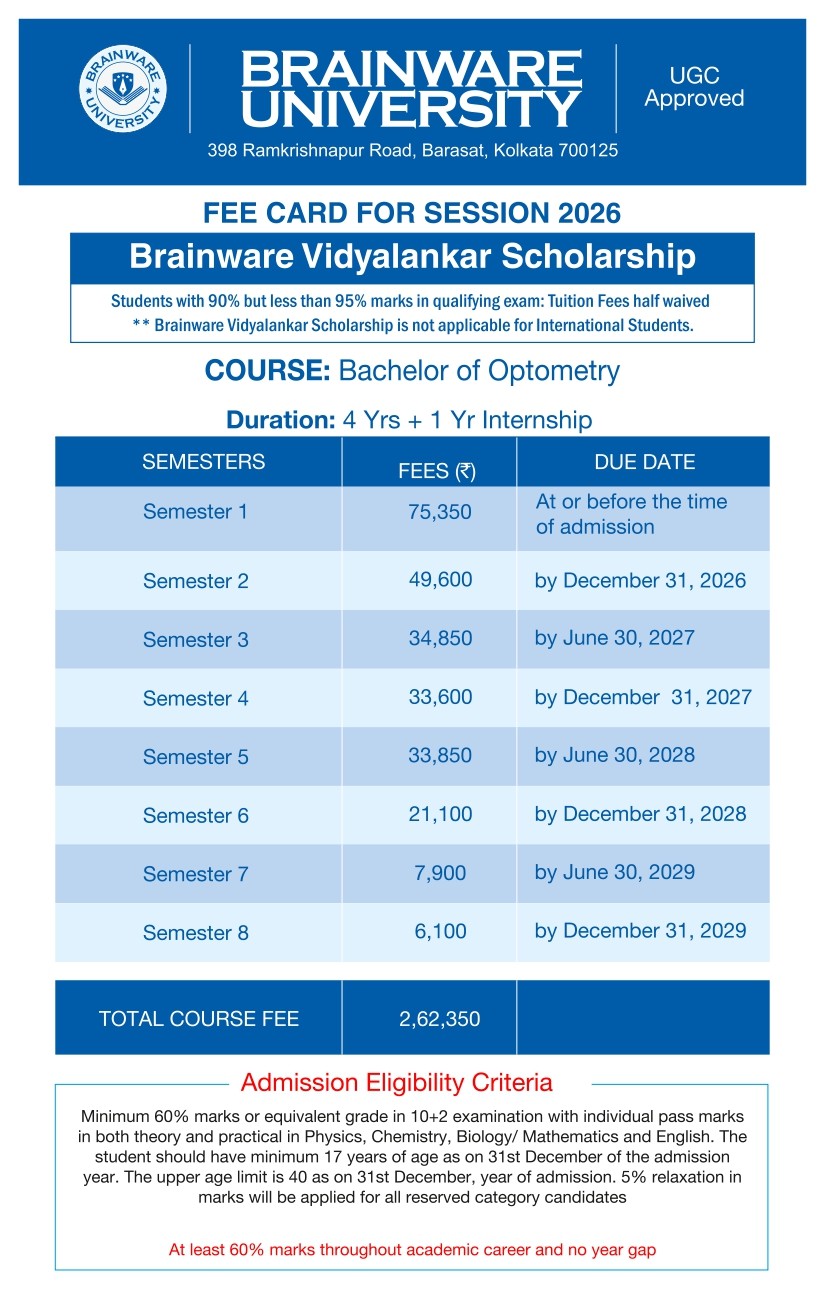
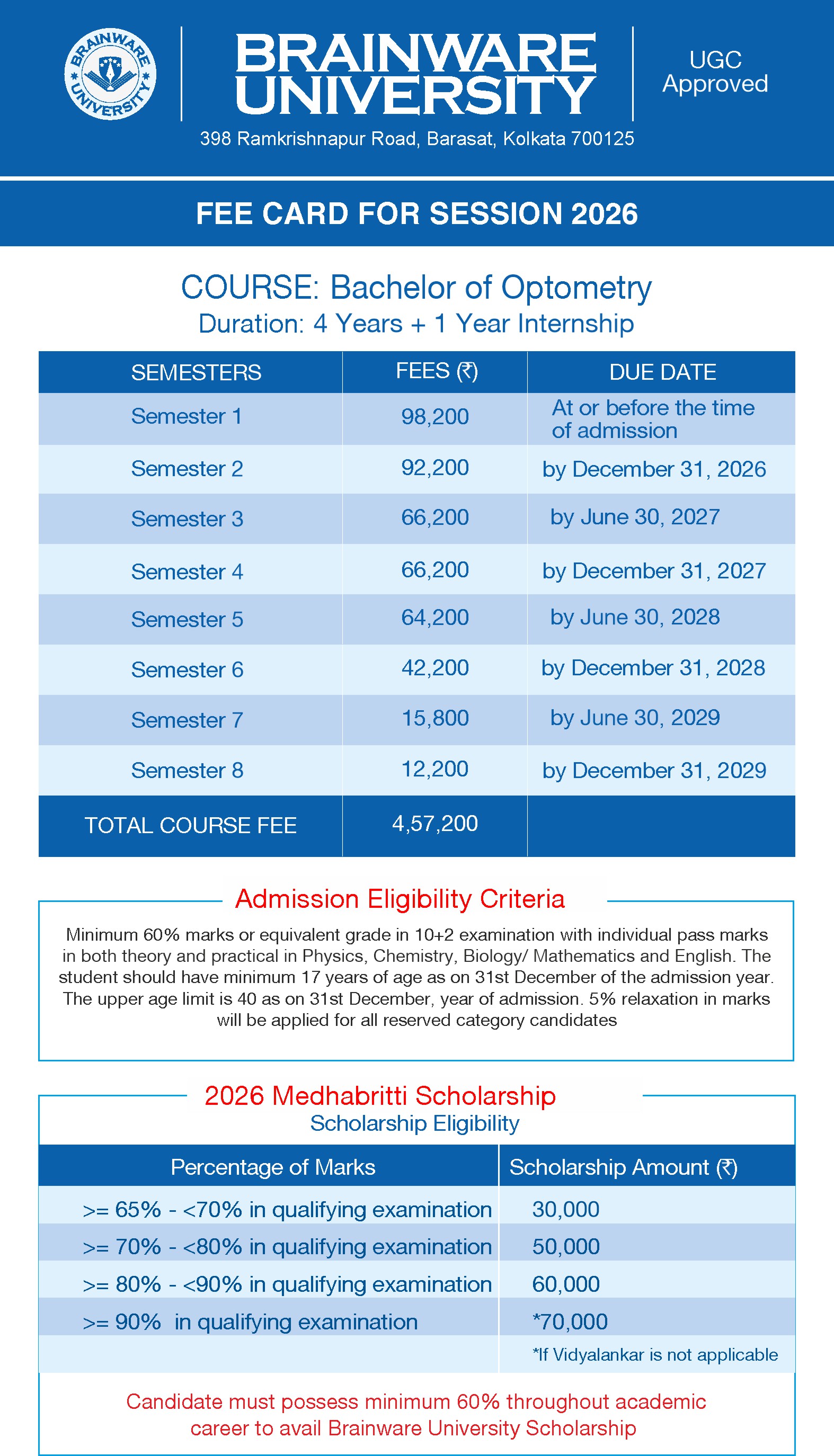
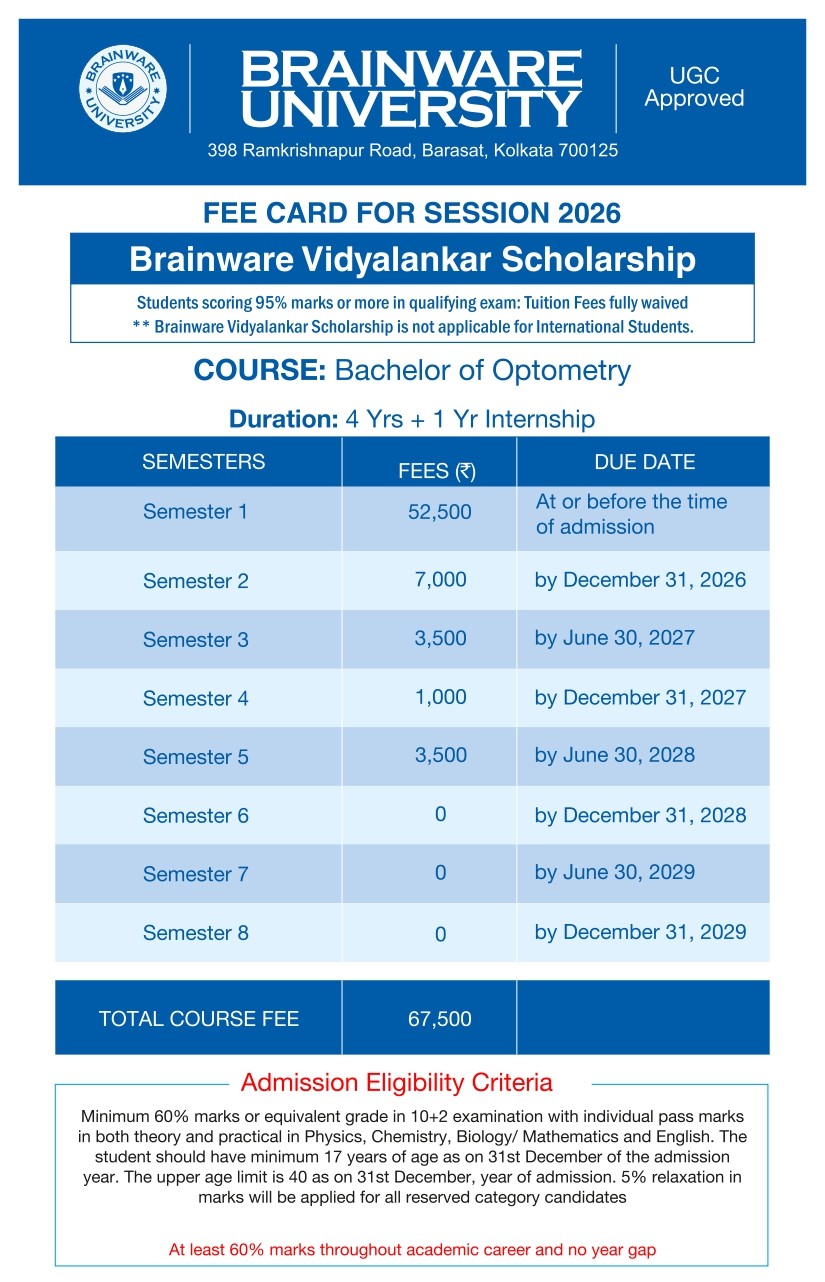
The Bachelor of Optometry programme at Brainware University is offered at a highly affordable fee structure to ensure accessible, high-quality education in eye care. The course fees cover academic learning, advanced laboratory training, clinical exposure, and the mandatory internship year. Detailed semester-wise fees are provided below to help students and parents plan their academic investment with full transparency.
| Semesters | Semester 1 | Semester 2 | Semester 3 | Semester 4 | Semester 5 | Semester 6 | Semester 7 | Semester 8 | Semester 9 | Semester 10 | Total |
|---|---|---|---|---|---|---|---|---|---|---|---|
| Fees (INR) | 98200 | 92200 | 66200 | 66200 | 64200 | 42200 | 15800 | 12200 | 0 | 0 | 457200 |
**Fees are subject to change, and the application fee of ₹5,000 is non-refundable under any circumstances. Please contact us for further details.
Scholarships(Fees): Brainware University offers merit-based scholarships for top performers and financial aid for deserving students. Scholarships are available for high scorers in entrance exams, board results, and outstanding achievements in innovation or research. Visit our scholarship page for more details.
**Please note that the Brainware Vidyalankar Scholarship is available only to students who passed their qualifying examination in the current admission year. Also, eligibility is strictly restricted to Indian nationals; international students are not eligible to apply.
The Bachelor of Optometry programme integrates digital eye-care technologies and AI-assisted diagnostics into clinical training. As modern optometry increasingly leverages automated refraction systems, ocular imaging software, and tele-optometry platforms, students are trained to operate within technology-enabled vision care environments.
The curriculum incorporates exposure to digital diagnostic workflows, imaging interpretation, patient data management systems, and smart screening tools used in corporate eye-care networks and hospital OPDs. This ensures graduates are not only clinically competent but also digitally adaptive to evolving eye-care technologies.
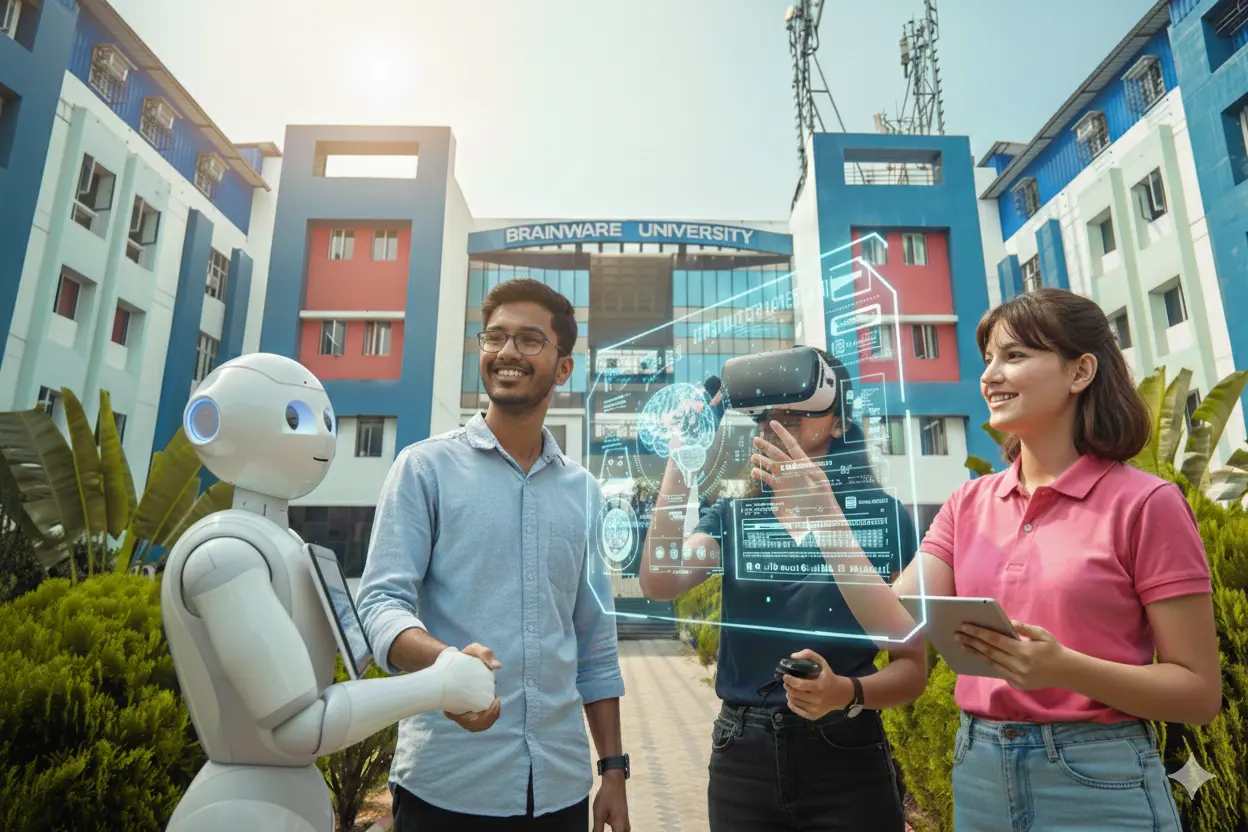
Students gain hands-on exposure to:
This blend of clinical science and digital tools prepares students for modern, technology-driven eye-care practice.



Brainware University stands out as one of the few private universities in West Bengal offering:
These advantages produce clinically competent, employment-ready optometrists.
The Bachelor of Optometry programme at Brainware University reflects steady placement performance across reputed eye hospitals, corporate optical chains, and vision care networks.
Placement preparation includes:
Graduates are placed in eye hospitals, optical chains, LASIK centres, and vision clinics, ensuring strong career beginnings in clinical and retail optometry environments.


Our optometry graduates are trained in clinical procedures, vision care, and eye health management, ensuring excellent placement prospects in eye hospitals, optical retail chains, and independent practices. Recruiters such as Lenskart, Titan Eye+, and Vasan Eye Care regularly hire from Brainware University.
Students receive practical internship exposure in eye hospitals, vision clinics, optical centres, and community eye-care settings, where they learn patient screening, refraction, lens fitting, and diagnostic procedures. This hands-on training helps them develop clinical confidence and prepare for careers in optometry, vision care, optical retail, and hospital-based eye-care services.
Bachelor of Optometry alumni from Brainware University have established successful careers in clinical practice, corporate optical retail, and public health eye-care programmes across India.
Graduates currently serve as:
Several alumni have pursued M.Optom and postgraduate fellowships in contact lenses, orthoptics, and ocular imaging, while others have built independent clinical practices serving local communities.
Their journeys reflect Brainware University’s emphasis on hands-on clinical exposure, government-recognised internships, licensed in-house clinic training, and industry alignment, preparing graduates for sustainable careers in the rapidly expanding eye-care sector.

Curious about what you'll be studying in our Bachelor of Optometry program? Our comprehensive syllabus is designed to ensure you have a strong foundation in both theoretical knowledge and practical skills. You'll be equipped with the latest advancements in optometry, making you a sought-after professional in the field.
| Semester | Course Name |
|---|---|
| Semester I | Environmental Science |
| General Human Anatomy | |
| General Human Physiology | |
| General Biochemistry | |
| Nutrition | |
| General Human Anatomy & Physiology – Practical | |
| Generic Elective – 1 | |
| Semester II | English Communication |
| English Communication – Lab | |
| Ocular Anatomy | |
| Ocular Physiology | |
| Ocular Biochemistry | |
| Physical Optics | |
| Geometrical Optics | |
| Physical Optics & Geometrical Optics – Practical | |
| Generic Elective – 2 | |
| Semester III | Visual Optics-I |
| Optometric Instrumentation | |
| Optometric Instrumentation – Practical | |
| Ophthalmic Lens & Dispensing Optics-I | |
| Ocular Diseases-I | |
| Clinical Optometry-I – Practical | |
| Ocular Microbiology and Pathology / Clinical Microbiology and Basic Immunology | |
| Generic Elective – 3 | |
| Semester IV | Ophthalmic Lens & Dispensing Optics-II |
| Ophthalmic Lens & Dispensing Optics-II – Practical | |
| Visual Optics-II | |
| Ocular Diseases-II | |
| Basic & Ocular Pharmacology | |
| Clinical Optometry-II – Practical | |
| Clinical Examination of Visual System | |
| Medical Psychology / Indian Medicine and Tele Medicine | |
| Generic Elective – 4 | |
| Semester V | Contact Lens-I |
| Contact Lens-I – Practical | |
| Binocular Vision-I | |
| Binocular Vision-I – Practical | |
| Low Vision Aids & Visual Rehabilitation | |
| Low Vision Aids & Visual Rehabilitation – Practical | |
| Geriatric Optometry | |
| Systemic Conditions & Eye | |
| Research Methodology and Bio-statistics | |
| Clinical Observership | |
| Semester VI | Contact Lens-II |
| Contact Lens-II – Practical | |
| Binocular Vision-II | |
| Binocular Vision-II – Practical | |
| Public Health & Community Optometry | |
| Occupational Optometry | |
| Paediatric Optometry | |
| Medical Law and Ethics | |
| Clinical Optometry-III – Practical | |
| Hospital Practice Management / Introduction to Quality & Patient Safety | |
| Myopia Control / Ophthalmic Imaging | |
| Semester VII | Internship |
| Project Work-I | |
| Semester VIII | Internship |
| Project Work-II |
Please note that the syllabus is subject to modification. Visit our Syllabus page for the elective subject details and updated syllabus.

Optometrists are widely employed in the private sector for roles in diagnostics, optical retail management, LASIK centres, lens companies, healthcare corporates, and vision therapy units. Career paths are dynamic with opportunities for growth and specialization.
Optometrists are integral to government hospitals, primary health centres, district health missions, school health programmes, and national blindness control initiatives. Opportunities also exist in ESIC, Defence services, Railways, and state health departments.
A Bachelor of Optometry offers diverse career opportunities across hospitals, optical chains, clinics, and public health programmes. As the demand for skilled eye-care professionals rises due to increased screen-time and lifestyle-related vision issues, optometrists are needed in both government and private sectors for diagnostics, vision management, and patient care. The table below outlines key job roles and why they are in high demand.
| Area of Opportunity | Why It’s in Demand |
|---|---|
| Optometrist in Government or Private Hospitals | Diagnostic Integration: Essential for providing primary eye care services, pre- and post-operative care, and routine vision screening within a multi-disciplinary medical setting. |
| Optometrist in Eye Care Hospitals (Specialty Clinics) | Specialized Patient Volume: Needed in high-volume specialty centers to manage routine and complex refractive errors, handle diagnostic testing, and assist ophthalmologists with clinical management. |
| Optometrist in Optical Industries and Corporate Sectors | Product Expertise and Sales Support: Employed by major lens, frame, and equipment manufacturers for product development, quality control, training, and sales consultation, bridging clinical and technical knowledge. |
| Private Practice in Clinical Setup | Entrepreneurial Demand for Primary Care: High demand for independent practitioners to serve local communities, offering comprehensive eye exams, prescribing corrective lenses, and managing common eye diseases. |
| Consultant Optometrist (Contact Lenses, Low Vision, etc.) | Specialized Care Needs: Required due to the aging population and the rise in chronic diseases (like diabetes) causing vision loss. Specialists are needed for complex contact lens fitting and vision rehabilitation. |
| Professional Services in Multinational Ophthalmic Industries | Clinical Education and Support: Hired by companies (like Johnson & Johnson, Essilor) to train eye care professionals on new products, conduct clinical trials, and provide expert product support. |
| Public Health and Community Optometrist | Addressing Rural and Underserved Needs: Essential for organizing eye camps, conducting large-scale screenings, and implementing public health programs to reduce preventable blindness in communities. |
| Research Assistant, Associate, and Coordinator | Advancing Eye Care Technology: Needed to support clinical trials for new drugs, lenses, and diagnostic tools, driving scientific advancements in vision science and optometric practice. |
The Bachelor of Optometry is a future-secure clinical degree with extensive opportunities in private, government, and global sectors—making it an excellent choice for students passionate about eye health.
The job market for Bachelor of Optometry graduates is expected to witness strong and consistent growth between 2025 and 2032, driven by increasing awareness of eye health, rising screen exposure, ageing populations, lifestyle-related vision disorders, and expansion of organised eye care services. As primary eye care professionals, optometrists play a crucial role in early diagnosis, vision correction, rehabilitation, and preventive eye health, making their demand steadily rise across healthcare systems.
Increased screen time, digital device usage, urban lifestyles, and ageing demographics are contributing to higher cases of refractive errors, dry eye syndrome, diabetic retinopathy, glaucoma, and cataract-related complications. This trend is expanding demand for trained optometrists in both clinical and retail eye care settings.
Growth in multi-speciality hospitals, super-speciality eye hospitals, vision centres, and organised optical retail chains is creating consistent employment opportunities. Tier 2 and Tier 3 city expansion is further strengthening demand for qualified eye care professionals.
Government and NGO-led programmes focusing on vision screening, school eye health, and rural outreach camps are generating large-scale opportunities for optometrists in public health and community healthcare projects.
Modern diagnostic tools such as OCT (Optical Coherence Tomography), automated refractometers, retinal imaging systems, contact lens technologies, and low vision rehabilitation devices are transforming optometric practice. Professionals trained in advanced instrumentation and digital diagnostics will have stronger career prospects.
The organised eyewear market, including branded optical chains and e-commerce platforms, is expanding rapidly. This growth is increasing demand for optometrists skilled in vision testing, lens dispensing, customer counselling, and retail management.
The global eye care and vision services market is projected to grow steadily through 2032, supported by rising healthcare expenditure, increasing awareness about preventive eye care, and technological innovation in ophthalmic diagnostics.
While core competencies in refraction, ocular examination, and lens dispensing remain essential, specialisations in contact lens practice, paediatric optometry, binocular vision therapy, low vision care, and advanced diagnostic instrumentation are expected to command higher demand and improved earning potential.
There remains a significant gap between the demand for primary eye care services and the availability of trained optometrists, especially in semi-urban and rural areas. This ensures long-term career stability and growth opportunities for well-trained graduates.
Between 2025 and 2032, Bachelor of Optometry graduates are expected to benefit from a resilient and expanding job market, offering career pathways in hospitals, super-speciality eye institutes, optical chains, public health programmes, research institutions, medical device companies, and independent clinical practice.


Brainware University collaborates with leading eye-care hospitals, optical chains, diagnostic centres, and healthcare organisations to offer practical workshops, internships, campus placement drives, equipment demonstrations, and industry-led training sessions—ensuring students gain real-world competencies.





Admission to the B.Optometry programme is based on academic merit and eligibility criteria. Students with strong backgrounds in Physics, Chemistry, Biology/Mathematics can apply online and appear for the Brainware Entrance Test (BET) where applicable.
Admission Criteria:
Application:
Candidates can apply online through our official portal. After submission, an admission counsellor will guide you through eligibility verification, documentation, and seat allocation.
Entrance Exam:
The Brainware Entrance Test evaluates scientific and analytical skills relevant to optometry, ensuring that students admitted show strong foundational understanding.
Counselling:
Qualified candidates participate in academic counselling sessions where curriculum, fees, scholarships, internships, and career pathways are discussed.
Direct Admission:
Students meeting all eligibility requirements may be considered for direct admission based on merit and available seats.
Please follow the Bachelor of Optometry admission procedure at Brainware University:

In the fast-evolving landscape of healthcare, Brainware University's commitment to excellence and innovation takes center stage. The university's various departments have orchestrated groundbreaking events and sessions, leaving an indelible mark on the industry and its stakeholders.
The university organized an insightful session that demystified the world of AYUSH. Featuring speakers like Dr. Krishnendu Mohanta, a Homoeopathic Medical Officer from the Department of Health and Family Welfare, and Dr. Sinchan Das, a Homoeopathic Physician and Researcher, this session addressed the myths and facts surrounding alternative healthcare practices. Brainware University is at the forefront of promoting holistic health education.
Dr. Ranjan Kumar Srivastava, Founder and MD of Renaissance Hospital, shared his wisdom on the scope and prospects of Allied Health Science. This session illuminated the diverse career paths within the healthcare industry, providing students with valuable insights into this dynamic field.
On World Health Day, Brainware University hosted an intriguing session with Rana Dasgupta, the eastern region CEO of Apollo Hospitals Group. The event featured Lieutenant Abhijit Majumder, COO of Apollo Hospitals Group Kolkata, and Phalguni Mookhopadhayay, the Hon'ble Chancellor of Brainware University. Together, they discussed crucial aspects of healthcare leadership and the collective responsibility of institutions towards public health.
The Optometry industry took centre stage as Brainware University's C2C cell organized a seminar in collaboration with Lenskart. Sreejit Sarkar, Regional Training Manager East, Professional Optometry Service, Lenskart, provided a captivating sneak peek into the industry's latest trends and innovations.
Brainware University's various departments continue to spearhead initiatives that not only enhance academic learning but also foster a deeper understanding of the ever-evolving healthcare landscape. Through these remarkable events and sessions, the university is making a positive impact on the industry and preparing its stakeholders for the challenges and opportunities that lie ahead.


Brainware University has earned an AA+ rating in India’s Best Engineering Institutes by Careers360. The recognition reflects the University’s strength in academic quality, faculty, infrastructure, research, and student outcomes, reinforcing its position as a trusted destination for industry-aligned engineering education.

Brainware University has been ranked No. 1 Engineering College under a Private University in West Bengal in the IIRF Rankings 2026. The recognition highlights the University’s strength in engineering education, industry-focused learning, research, emerging technologies, and placement outcomes.

Brainware University has been ranked No. 2 Private University in West Bengal by uniRank 2026, marking another recognition of the University's growing presence in the state's higher education landscape.

Brainware University's inclusion in the Times Higher Education (THE) Impact Rankings 2025 reflects its contribution to the UN Sustainable Development Goals (SDGs) through education, innovation, sustainability, community engagement, and responsible institutional practices.

Brainware University has been recognised as the Best Private University of West Bengal in Infrastructure & Placement at Times Now.in – Leaders of Excellence: East 2026, celebrating its commitment to world-class infrastructure and career-focused education.

Brainware University has been recognised by The Times Group for excellence across Engineering (Placement), Law, and MBA Studies. The honours reflect the University’s multidisciplinary strength and its focus on career-oriented, industry-relevant education.

Brainware University received the ABP Ananda Shiksha Samman 2026 for Excellence in Placement & AI-Integrated Academic Infrastructure, acknowledging its emphasis on placement opportunities alongside technology-enabled academic development.

Brainware University has been honoured with the Zee 24 Ghanta Education Excellence Award 2026 for Best Industry Placement & Academic Infrastructure, continuing its recognition in 2022, 2023, 2024, 2025, and 2026. The University was also recognised in 2017 and 2018 for its job-oriented academic initiatives.

Brainware University received the TV9 Uttaran Academic Excellence Honour for Excellence in Placement & AI-Integrated Academic Infrastructure, highlighting its focus on combining career opportunities with an AI-enabled academic and learning environment.

Brainware University was honoured with the R Bangla Sikkha Gourab Samman 2026, recognising its contribution to higher education and continued pursuit of academic excellence and career-focused learning.

Brainware University was honoured as the Best Private University in West Bengal at the Times Now in Business Excellence Awards (East) 2025, recognising its academic quality, modern infrastructure, industry engagement, and focus on student success.

Brainware University was recognised as the Leading University in Infrastructure, Academics & Placement at the Times Business Awards West Bengal 2025, highlighting its strong campus facilities, academic ecosystem, and placement performance across disciplines.


"Brainware students are professionally and technically well-informed as freshers. We are impressed with the level of confidence and positive attitude they demonstrated during their interviews."
Mr. Vaskar Bhattacharya Regional Head-East, Ginnisystems Ltd.
We always find competent and positive students who are almost ready to be professionals. We never get disappointed wherever we come for the recruitment. Well done Brainware University!
Ms. Srimoyee Mukherjee Manager HR Nature Technologies Pvt. Ltd.
No, a Bachelor of Optometry is not typically called a doctor. It is an undergraduate degree that provides specialised knowledge in optometry, but it does not confer the title of "doctor." To be addressed as a doctor, one usually needs to pursue a higher-level degree, such as a Doctor of Optometry (OD) or a Doctor of Philosophy (PhD) in Optometry.
B.Opto stands for Bachelor of Optometry. The course focuses on eye care, vision testing, diagnosis of eye conditions, optical dispensing, and the use of modern optometric instruments. It prepares students to work as optometrists in eye hospitals, vision clinics, optical centres, and diagnostic facilities.
Admission to Bachelor of Optometry programmes did not typically require NEET (National Eligibility cum Entrance Test) scores. NEET is primarily for medical and dental undergraduate courses (MBBS and BDS). However, admission criteria can change, so it's essential to verify the specific requirements of the institution you are interested in.
A Bachelor of Optometry can lead to a rewarding and fulfilling career for those interested in eye care and vision health. Optometrists play a crucial role in diagnosing and treating vision problems, prescribing glasses or contact lenses, providing vision therapy, and detecting various eye conditions. It can be a good career choice for individuals passionate about eye health and helping others improve their vision.
Brainware University offers a practice-oriented Bachelor of Optometry programme with a licensed in-house optometry clinic, hands-on diagnostic training, modern eye-care equipment, government-hospital internship opportunities, industry interactions, and placement support. With experienced faculty, optical industry tie-ups, and a 98% placement record, the university helps students prepare for careers in eye hospitals, optical chains, vision clinics, diagnostic centres, and community eye-care services.
Optometrists are primarily trained to diagnose and manage various vision-related conditions, but their scope of practice varies by country and state regulations. In some places, optometrists may be allowed to perform minor surgical procedures, such as removing foreign objects from the eye or performing laser surgeries for specific eye conditions. However, major eye surgeries are typically performed by ophthalmologists, who are medical doctors specialising in eye care and surgery.
The salary of an optometrist in India can vary based on factors like experience, location, type of employer, and skillset. On average, entry-level optometrists can earn around 2 to 5 lakhs per year. With experience and specialisation, the salary can range from 4 to 10 lakhs or more per year.
The scope of an optometrist in India is quite promising. As the population grows, so does the demand for quality eye care services. Optometrists can find employment opportunities in various settings, including eye clinics, hospitals, optical stores, vision centres, and research institutes. Additionally, many optometrists also establish their private practices. The increasing awareness of eye health and the need for regular eye check-ups further enhance the scope of this profession.
No, studying a Bachelor of Optometry alone does not qualify you to become an eye surgeon. Eye surgery falls under the domain of ophthalmology, which requires medical training. To become an eye surgeon, you would need to pursue an MBBS degree (Bachelor of Medicine and Bachelor of Surgery) and then specialise in ophthalmology through a postgraduate degree (MS or MD) in ophthalmology.
Yes, it is possible to pursue an MBBS degree after completing a Bachelor of Optometry, but the admission process and eligibility criteria might vary between institutions. Some medical colleges might have specific requirements or entrance exams, such as fulfilling NEET eligibility criteria for students with non-medical backgrounds. If you are interested in pursuing MBBS after optometry, you should research the medical colleges of your choice and inquire about their admission procedures for candidates with a background in optometry.
Brainware University is one of the top colleges for Bachelor of Optometry, offering comprehensive training, practical exposure, and excellent placement support.
To join the Bachelor of Optometry at Brainware University, you need to pass Class 12 with Science (Physics, Chemistry, and Biology). Apply online through the university's website and follow the admission process.
You can work as an Optometrist, Vision Therapist, Contact Lens Specialist, or Eye Care Consultant. You can also pursue higher studies like M.Optom or specialize in clinical optometry or research.
Yes, optometry is a growing field with high demand in eye care clinics, hospitals, and optical retail chains, offering great career growth and competitive salaries.
Key subjects include Human Anatomy and Physiology, Optics, Ocular Pharmacology, Clinical Optometry, and Contact Lens Fitting.
You can work as an Optometrist in hospitals, eye clinics, and optical chains or become a Vision Consultant, Contact Lens Specialist, or Optical Sales Manager.
The starting salary typically ranges from ₹3 to ₹5 LPA, depending on your skills and the organization. With experience, salaries can increase significantly.
Review key concepts like refraction, ocular diseases, and optometric instruments. Be prepared to demonstrate practical skills and communicate effectively with patients.
Eye hospitals like LV Prasad Eye Institute, hospitals like Fortis, optical retail chains like Titan Eye+ and Lenskart, and clinics specializing in eye care hire optometry graduates.
Highlight your academic achievements, practical experience, internships, certifications, and technical skills like refraction techniques and contact lens fitting.
Practice regularly in clinical labs, gain hands-on experience during internships, and stay updated on advancements in optometric technologies and techniques.
Certifications in Contact Lens Fitting, Low Vision Care, and Pediatric Optometry can enhance your career prospects.
Participate in lab sessions, internships, and workshops focused on instruments like slit lamps, keratometers, and autorefractors.
Focus on core subjects like Ocular Anatomy, Optics, and Clinical Optometry. Practice mock tests and review past question papers for postgraduate or licensing exams.