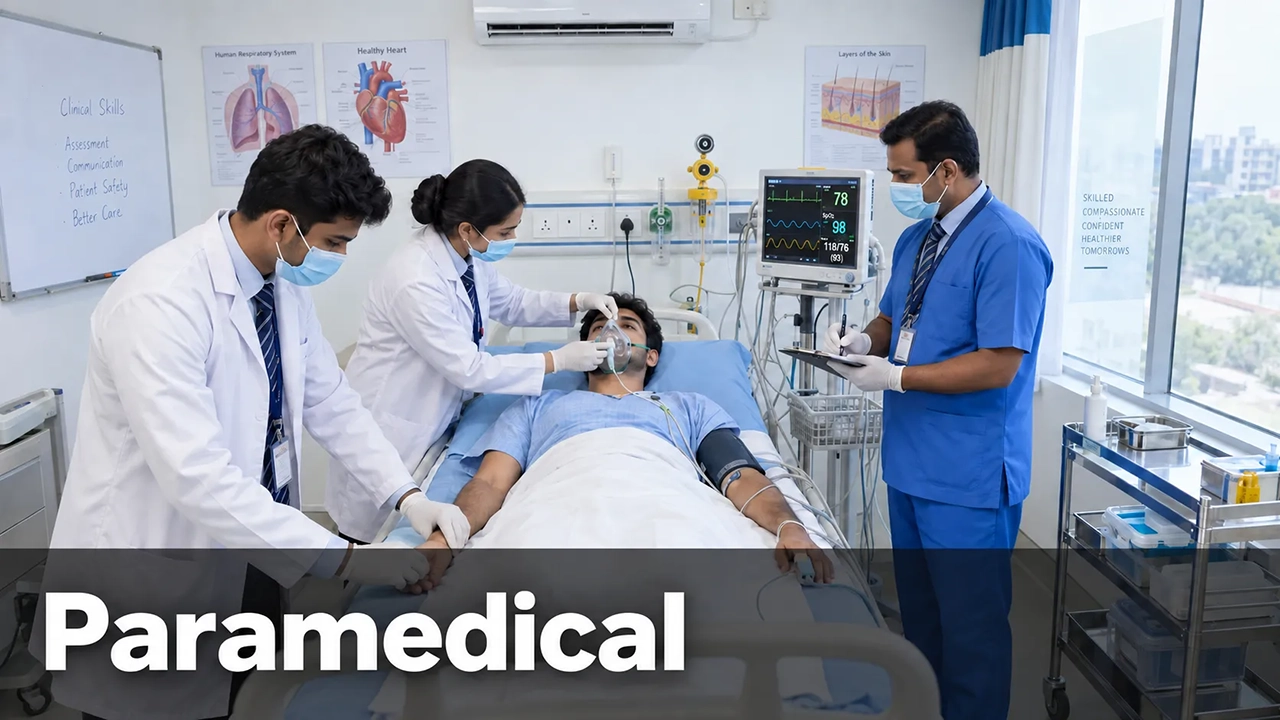
Healthcare today is built around multidisciplinary teams. Doctors and nurses remain central to patient care, but diagnosis, medical imaging, laboratory investigation, rehabilitation, critical care, vision care, operation theatre management and several other essential services depend on trained allied health professionals.
For students who are interested in healthcare and medical science, but want to explore professional pathways beyond conventional medicine, paramedical and allied health sciences open up a wide range of possibilities. These fields combine scientific knowledge, medical technology, clinical skills and patient interaction, making them an important part of modern healthcare delivery.
Brainware University’s Department of Allied Health Sciences offers undergraduate and postgraduate pathways across diagnostic science, medical imaging, vision care, physiotherapy, critical care, physician support and operation theatre technology. The emphasis is not limited to classroom learning; students are introduced to laboratory work, clinical environments, healthcare technologies and practical skill development that can prepare them for the realities of professional healthcare.
What Are Paramedical and Allied Health Sciences?
Paramedical and allied health sciences encompass healthcare disciplines that support the prevention, diagnosis, treatment, monitoring and rehabilitation of patients. Professionals in these fields often work alongside physicians, surgeons, nurses and other healthcare specialists.
Depending on their specialisation, allied health professionals may analyse biological samples, operate medical imaging equipment, support surgical and anaesthesia teams, work in intensive care environments, assess vision, assist physicians in clinical settings or help patients regain movement and functional independence.
This diversity makes allied health sciences particularly suitable for students who want a healthcare career aligned with their individual interests, whether those interests lie in laboratory science, technology, patient care, rehabilitation or clinical practice.
Why Are Allied Health Sciences Important in Modern Healthcare?
Modern healthcare depends increasingly on specialised diagnostics, advanced equipment, evidence-based rehabilitation and multidisciplinary patient management. A treatment decision may require laboratory reports, diagnostic imaging, physiological monitoring, vision assessment or rehabilitation planning before and after medical intervention.
Allied health professionals therefore work across many stages of the patient-care journey.
A medical laboratory professional contributes to diagnostic investigation. A radiology and imaging technologist helps produce diagnostic images. An optometrist focuses on vision and eye-care assessment. A physiotherapist works on mobility and rehabilitation. Critical care professionals support intensive monitoring, while operation theatre and anaesthesia technologists contribute to safe surgical environments.
For students, this means that pursuing allied health sciences is not about entering one single type of profession. It is about choosing from multiple specialised healthcare pathways.
Allied Health Science Programmes at Brainware University
Students should choose an allied health programme according to the kind of healthcare work that interests them. Brainware University currently offers programmes across the following areas:
| Programme | What the Field Primarily Focuses On | Professional Environment |
| Bachelor of Medical Laboratory Science | Clinical laboratory investigation, pathology, microbiology, biochemistry, haematology and diagnostic testing | Hospitals, diagnostic laboratories, blood banks, research and healthcare laboratories |
| Bachelor in Medical Radiology and Imaging Technology | Medical imaging, radiographic procedures, CT, MRI, diagnostic imaging systems and radiation safety | Hospitals, radiology departments, imaging centres and diagnostic facilities |
| Bachelor of Optometry | Vision assessment, refraction, ocular health, lenses and clinical eye-care practices | Eye hospitals, optometry clinics, vision centres and optical healthcare services |
| Bachelor of Physician Associate | Patient assessment and clinical support while working alongside physicians across healthcare departments | Hospitals, clinical departments, emergency care and multidisciplinary healthcare settings |
| Bachelor of Physiotherapy | Movement science, physical rehabilitation, therapeutic exercise and recovery of functional mobility | Hospitals, rehabilitation centres, physiotherapy clinics, sports and wellness settings |
| Bachelor in Anaesthesia & Operation Theatre Technology | Operation theatre procedures, anaesthesia support, surgical instrumentation, patient monitoring and infection-control practices | Operation theatres, surgical units, hospitals, trauma and critical-care environments |
| Bachelor of Science in Critical Care Technology | Critical-care support, patient monitoring and technologies used in intensive and emergency healthcare | ICUs, emergency departments, critical-care units and hospitals |
| Master of Medical Laboratory Science | Advanced laboratory diagnostics, clinical laboratory science, molecular approaches, research and laboratory management | Advanced diagnostic laboratories, hospitals, research organisations and healthcare institutions |
| Master of Optometry | Advanced clinical optometry, vision science, specialised eye care, diagnostics and research | Eye hospitals, advanced optometry practices, vision-care organisations, research and academia |
These programmes represent different parts of the healthcare system rather than interchangeable course options. Understanding the nature of each field is therefore more useful than selecting a programme simply because it belongs to the broader paramedical category.
Choosing the Right Allied Health Science Programme
The right programme depends largely on how a student wants to participate in healthcare.
Students fascinated by laboratory investigation and the science behind disease detection may find Bachelor of Medical Laboratory Science particularly relevant. The field brings together areas such as pathology, clinical biochemistry, microbiology, haematology and other forms of laboratory diagnostics.
Students who are attracted to medical equipment, imaging technology and diagnostic procedures can explore Bachelor in Medical Radiology and Imaging Technology. Modern radiology connects patient care with sophisticated imaging systems and requires an understanding of both technology and clinical protocols.
Those interested in eye health and vision science can consider Bachelor of Optometry, while students who want to work closely with doctors across different clinical departments may explore Bachelor of Physician Associate.
For students interested in movement, rehabilitation, exercise science and helping people regain physical function, Bachelor of Physiotherapy provides a different kind of patient-care pathway.
Students comfortable with surgical environments and precision-based clinical support may find Bachelor in Anaesthesia & Operation Theatre Technology better aligned with their interests. Similarly, students drawn towards intensive care, physiological monitoring and high-dependency healthcare environments may consider Bachelor of Science in Critical Care Technology.
The most suitable allied health programme, therefore, is the one that matches a student’s aptitude, preferred working environment and long-term professional interests.
Why Practical Learning Matters in Allied Health Education
Allied health sciences cannot be learned effectively from textbooks alone.
A student may understand a diagnostic principle theoretically but must also learn how instruments are handled, samples are processed, patients are positioned, clinical protocols are followed and healthcare environments operate. Similarly, physiotherapy requires practical assessment and therapeutic skills, while optometry depends heavily on clinical examination and diagnostic instrumentation.
This makes laboratories, clinics, demonstrations, clinical observation and hospital exposure important components of allied health education.
At Brainware University, the Department of Allied Health Sciences has developed licensed in-house clinical facilities for areas including Optometry, Physiotherapy, Pathology and Radiology. These facilities help connect academic learning with clinical observation and patient-oriented environments.
Such exposure is especially valuable because professional competence in healthcare involves more than technical knowledge. Students also need to understand patient communication, safety, ethics, documentation, teamwork and professional responsibility.
Learning Human Anatomy Beyond the Textbook
A strong understanding of human anatomy and physiology is fundamental to many allied health disciplines.
Brainware University’s Allied Health Sciences ecosystem includes an Anatomy Museum with original human anatomical specimens and a dissection facility. This gives students an opportunity to understand anatomical structures in a more direct and academically meaningful way.
For students entering laboratory science, radiology, physiotherapy, critical care, optometry, physician associate studies or operation theatre technology, this foundation can help them connect theoretical concepts with the actual structure and functioning of the human body.
Clinical Exposure and the Professional Healthcare Environment
Clinical learning introduces students to something that a classroom cannot fully recreate: the functioning of a real healthcare environment.
Hospitals and clinical facilities operate through coordination. Diagnostic teams, physicians, nurses, technologists, therapists and other professionals must communicate accurately and follow established protocols. Students who encounter these environments during their education can begin understanding workflow, professional discipline, patient interaction and interdisciplinary collaboration before entering full-time employment.
Brainware University’s Allied Health Sciences programmes incorporate practical and clinical exposure through its academic infrastructure, clinics and hospital-oriented training ecosystem. The university’s department also facilitates clinical internship opportunities for allied health students, helping bridge the transition between academic preparation and professional practice.
Technology Is Transforming Allied Health Careers
Healthcare technology is advancing rapidly, and allied health professionals increasingly work with digital systems rather than isolated instruments.
Diagnostic laboratories are becoming more automated. Radiology departments use digital imaging workflows and sophisticated CT and MRI systems. Rehabilitation is incorporating digital assessment and tele-rehabilitation technologies. Optometry is becoming increasingly connected with advanced ocular diagnostics, digital imaging and technology-assisted vision care. Operation theatres and ICUs depend on integrated monitoring systems and digitally managed clinical equipment.
As artificial intelligence and data-supported healthcare tools become more common, students also need to understand how technology can assist trained professionals without replacing professional judgement, patient safety or human supervision.
This is why contemporary allied health education must develop not only technical competence but also digital adaptability, analytical thinking and an understanding of evolving healthcare technologies.
From Undergraduate Study to Advanced Specialisation
Allied health education can also provide pathways for further academic and professional development.
A student completing Bachelor of Medical Laboratory Science, for example, can explore advanced study in laboratory science and related diagnostic or research areas. Brainware University offers the Master of Medical Laboratory Science, which moves towards more advanced laboratory diagnostics, research, molecular approaches, quality systems and laboratory management.
Similarly, graduates in optometry who want deeper clinical and research-oriented expertise can explore Master of Optometry. Postgraduate study can help students develop advanced knowledge in areas such as clinical optometry, ocular disease, specialised vision care, contact lenses, low-vision care and optometric research.
Students should always consult the respective programme page for current eligibility requirements and detailed academic information before deciding on a postgraduate pathway.
Research and Evidence-Based Healthcare
Healthcare practices evolve continuously because of scientific research. New diagnostic methods, imaging technologies, rehabilitation approaches, disease-monitoring systems and clinical protocols emerge from research and evidence.
Exposure to research can therefore be valuable even for students who ultimately choose clinical practice rather than academic careers.
Learning how to frame a research question, interpret clinical data, examine evidence and understand scientific literature encourages a more analytical approach to healthcare. At the postgraduate level, particularly in areas such as medical laboratory science and optometry, research skills become even more important for students considering advanced clinical, academic or scientific roles.
What Should Students Look for in an Allied Health Science University?
Choosing an institution should involve more than comparing course names.
Students should examine whether the learning environment provides meaningful laboratory experience, clinical exposure, access to appropriate equipment, knowledgeable faculty, opportunities to interact with healthcare professionals and structured preparation for professional life.
The connection between academic learning and healthcare practice is especially important. A strong allied health education should help students understand not only what a procedure is, but why it is performed, how it should be conducted safely and where it fits into the larger patient-care process.
Brainware University’s combination of specialised allied health programmes, discipline-specific laboratories, licensed in-house clinics, anatomy-learning facilities, hospital exposure and postgraduate pathways creates an ecosystem in which students can progress from foundational medical science towards specialised professional learning.
Career Scope in Paramedical and Allied Health Sciences
Career opportunities vary considerably according to the programme studied and the professional competencies developed.
Medical laboratory science can lead towards clinical diagnostics and laboratory-based work. Medical radiology and imaging technology can lead towards diagnostic imaging environments. Optometry creates pathways in vision care, while physiotherapy is connected with rehabilitation and movement health. Physician associate studies prepare students for clinical support roles, while anaesthesia and operation theatre technology and critical care technology lead towards specialised hospital environments.
Employment settings can include hospitals, diagnostic centres, rehabilitation facilities, eye-care organisations, laboratories, clinical services, healthcare companies, research institutions and other organisations connected with healthcare delivery.
Students should view career development as a combination of academic qualification, clinical competence, communication ability, practical exposure and continuous learning rather than as the automatic outcome of obtaining a degree.
Frequently Asked Questions About Allied Health Sciences
What is the difference between paramedical and allied health sciences?
The terms are often used together in the Indian higher-education context. Broadly, they refer to healthcare disciplines that contribute to diagnosis, treatment support, rehabilitation, clinical technology and patient care alongside doctors, nurses and other medical professionals. The exact professional role depends on the discipline studied.
Which allied health science programme is suitable after Class 12?
The answer depends on the student’s interests. Laboratory science may suit students interested in diagnostics; radiology may appeal to those interested in medical imaging; optometry focuses on vision care; physiotherapy focuses on rehabilitation; physician associate studies involve clinical support; while critical care and operation theatre technology are suited to specialised hospital environments. Programme-specific eligibility should always be checked on the official course page.
Are allied health sciences only about laboratory work?
No. Laboratory science is only one area. Allied health includes medical imaging, optometry, physiotherapy, physician associate studies, operation theatre and anaesthesia technology, critical care and several other healthcare specialisations.
Is practical training important in an allied health programme?
Yes. Allied health professionals work with patients, specimens, diagnostic instruments, clinical equipment or therapeutic procedures. Laboratory sessions, clinical observation and hospital exposure therefore help students connect theoretical knowledge with professional healthcare practice.
Can students pursue higher studies after an allied health bachelor’s degree?
Yes, depending on the discipline and eligibility requirements. Brainware University currently offers postgraduate pathways including Master of Medical Laboratory Science and Master of Optometry for students seeking advanced study in these fields.
How should I compare universities for allied health sciences?
Students should compare programme relevance, laboratory and clinical infrastructure, practical exposure, faculty expertise, healthcare linkages, research opportunities and career preparation. Detailed eligibility, duration, curriculum and admission information should then be checked directly on the official programme pages.
Building a Career That Supports Better Healthcare
Allied health professionals are integral to the functioning of contemporary healthcare. Behind a diagnosis, surgical procedure, rehabilitation programme, critical-care decision or vision-care intervention is often a team of trained professionals with specialised scientific and technical expertise.
For students exploring paramedical and allied health sciences, choosing the right programme is therefore the first important decision. The next is choosing a learning environment that connects medical science with practical experience, clinical understanding and evolving healthcare technology.
With specialised undergraduate programmes, postgraduate opportunities, practical laboratories, licensed in-house clinical facilities, anatomy-based learning and clinical exposure, Brainware University provides an integrated environment for students who want to build careers across different areas of allied healthcare.
Rather than viewing paramedical education as a single career route, students can explore the field as a spectrum of specialised professions—each contributing in its own way to diagnosis, treatment, recovery and better patient outcomes.