
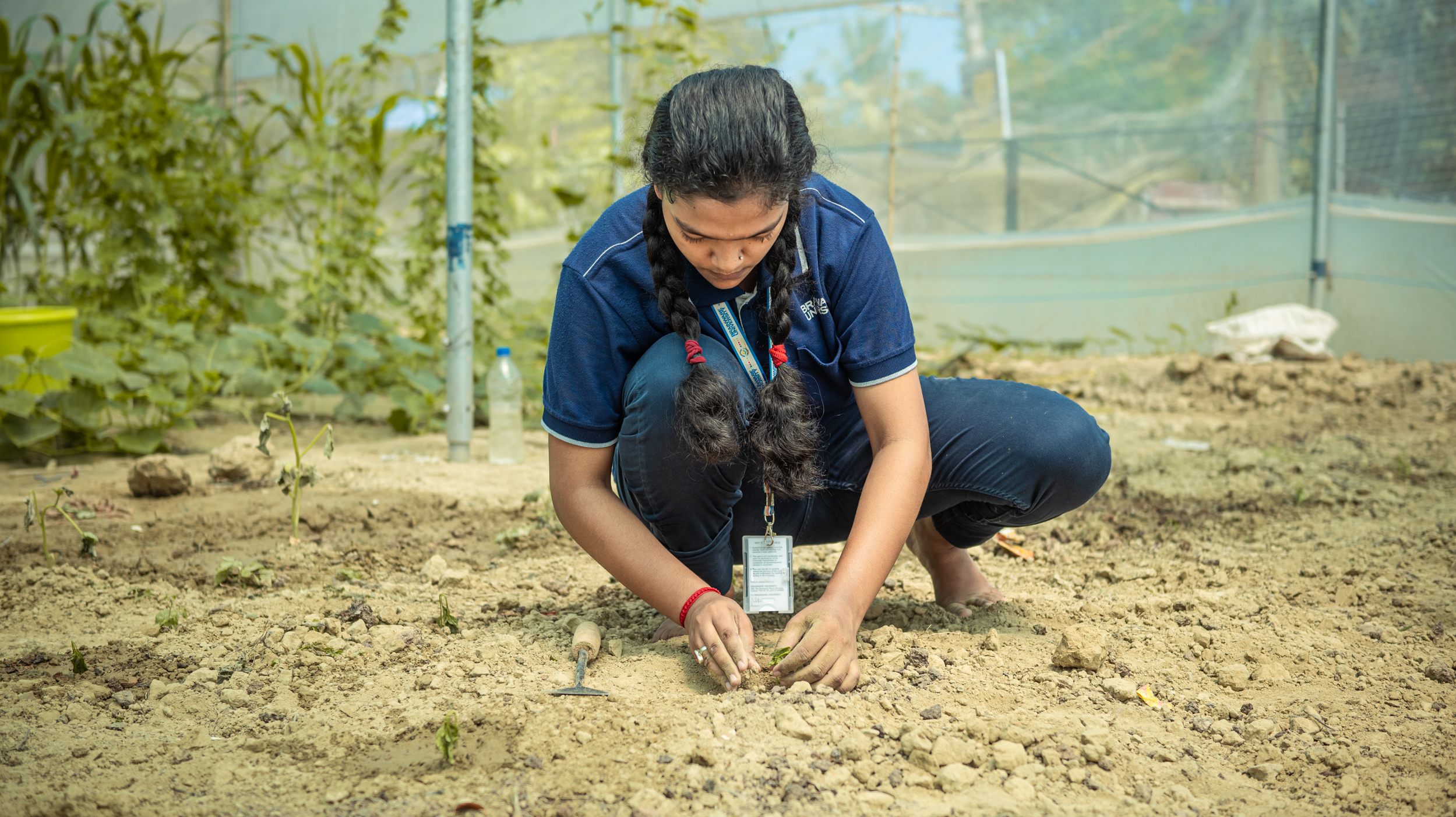
Agriculture is changing.
Farming today is increasingly connected with soil testing, weather data, biotechnology, drones, precision farming, irrigation technology, remote sensing and digital tools. Alongside traditional agricultural knowledge, modern agriculture requires professionals who can understand science, technology, markets and sustainable production.
This is where a BSc Agriculture course can offer a much broader learning experience than many students initially expect.
A Bachelor of Science in Agriculture combines plant science, soil science, crop production, horticulture, agricultural economics, agricultural engineering and modern farming technologies. It can prepare students for careers across farming, research, agri-business, government services, food processing and the growing agri-tech sector.
The current Bachelor of Science (Honours) in Agriculture at Brainware University is a four-year undergraduate programme covering crop production, soil and water management, plant breeding, horticulture, agricultural economics, agricultural engineering and emerging areas such as precision agriculture and smart farming.
What Is a BSc Agriculture Course?
BSc Agriculture is an undergraduate degree that applies scientific principles to agriculture and related industries.
It covers the complete agricultural ecosystem—from understanding soil and seeds to producing crops, managing resources, handling agricultural products and taking them to the market.
The discipline brings together:
- Agronomy
- Soil Science
- Plant Genetics
- Plant Breeding
- Horticulture
- Entomology
- Plant Pathology
- Agricultural Economics
- Agricultural Engineering
- Agricultural Meteorology
- Agricultural Extension
- Agri-business
- Precision Agriculture
- Sustainable Agriculture
The current programme at Brainware University is a four-year BSc (Honours) in Agriculture with field-based and practical learning alongside classroom education.
Why Is Agriculture Becoming More Technology-Driven?
Modern agriculture faces several challenges:
- Changing climate conditions
- Water management
- Soil degradation
- Crop diseases
- Pest management
- Increasing food requirements
- Efficient use of agricultural resources
- Post-harvest losses
Technology can help address some of these challenges.
Farmers and agricultural professionals can now use tools such as:
- Drones
- Remote sensing
- GIS
- Soil testing
- Weather forecasting
- Precision irrigation
- Data analytics
- Smart farming systems
- Agricultural machinery
- Digital advisory platforms
The current BSc Agriculture curriculum reflects this transition through subjects such as precision farming, GIS, remote sensing, agri-informatics, climate-smart agriculture and smart farming technologies.
Who Can Study BSc Agriculture?
The current eligibility for the BSc Agriculture programme requires 10+2 with Physics, Chemistry and Biology/Mathematics as compulsory subjects, or Physics and Chemistry along with specified vocational subjects related to Agriculture or Horticulture.
The programme currently specifies a minimum of 60% marks or equivalent grade, with applicable relaxation for reserved-category candidates. English must also be passed as specified by the university.
Students should check the latest admission requirements before applying.
What Do You Study in BSc Agriculture?
Agriculture is a multidisciplinary subject. A BSc Agriculture curriculum can include science, technology, management and field-based learning.
Agronomy
Agronomy deals with crop production and the management of agricultural fields.
Students can learn about:
- Kharif crops
- Rabi crops
- Crop production
- Weed management
- Irrigation
- Organic farming
- Sustainable agriculture
Soil Science
Healthy soil is fundamental to agricultural productivity.
Students study:
- Soil properties
- Soil fertility
- Soil chemistry
- Fertilisers
- Soil management
- Problematic soils
- Soil and water conservation
Plant Genetics and Breeding
Plant genetics helps explain heredity and variation, while plant breeding applies these principles to crop improvement.
Students can learn about:
- Genetics
- Plant breeding
- Seed technology
- Crop improvement
- Biotechnology fundamentals
Horticulture
Horticulture deals with the production and management of fruits, vegetables, flowers, spices, plantation crops and other horticultural products.
The curriculum also includes protected cultivation, high-tech horticulture, landscaping and commercial horticulture.
Entomology
Entomology focuses on insects and their relationship with agriculture.
Students learn about:
- Agricultural pests
- Beneficial insects
- Pest management
- Stored-grain pests
- Integrated pest management
Plant Pathology
Plant pathology deals with diseases affecting crops.
Students learn how crop diseases develop, how they are identified and how they can be managed.
Agricultural Economics
Agriculture is also a business.
Students can study:
- Farm management
- Agricultural finance
- Agricultural markets
- Trade
- Agribusiness
- Resource economics
This helps connect agricultural production with economics and markets.
Agriculture and Artificial Intelligence
Technology is becoming increasingly relevant to agriculture.
AI and data-driven systems can support areas such as:
- Crop monitoring
- Weather analysis
- Pest identification
- Yield prediction
- Soil analysis
- Resource optimisation
- Agricultural advisory systems
The current curriculum includes Agricultural Informatics and Artificial Intelligence, while later coursework also introduces system simulation and agro-advisory.
For agriculture students, this means learning is no longer limited to traditional farming methods. Understanding data and digital tools can increasingly complement knowledge of crops, soil and farming systems.
What Is Precision Agriculture?
Precision agriculture uses data and technology to manage agricultural resources more efficiently.
Instead of treating an entire field exactly the same way, farmers can use information about soil, moisture, crops and weather to make more targeted decisions.
Technologies associated with precision agriculture can include:
- GPS
- GIS
- Remote sensing
- Drones
- Sensors
- Satellite imagery
- Data analysis
The current BSc Agriculture curriculum specifically includes Geoinformatics, Nanotechnology and Precision Farming.
Sustainable Agriculture
Agriculture needs to produce food while managing natural resources responsibly.
Sustainable agriculture therefore considers:
- Soil health
- Water conservation
- Crop diversity
- Organic farming
- Resource efficiency
- Climate resilience
- Integrated pest management
The current curriculum includes Farming Systems and Sustainable Agriculture, Principles of Organic Farming, Rainfed Agriculture and Watershed Management and Climate Change-related learning.
Why Field-Based Learning Matters
Agriculture cannot be understood completely inside a classroom.
Students need to observe crops, soil, farming systems and agricultural processes directly.
The current programme includes practical crop production, field exposure, rural agricultural work experience and agro-industrial attachment.
This can help students connect concepts from subjects such as agronomy, soil science, horticulture and plant pathology with real agricultural situations.
What Skills Can You Develop?
A BSc Agriculture course can develop several scientific, technical and professional skills.
Crop Management
Students understand the principles behind crop production and management.
Soil and Water Management
They learn how soil and water resources influence agricultural productivity.
Field Observation
Agriculture requires careful observation of crops, pests, diseases and environmental conditions.
Scientific Analysis
Students learn to analyse soil, plant, water and agricultural data.
Technology Application
Modern agricultural education increasingly involves GIS, remote sensing, precision farming and digital tools.
Business Skills
Agricultural economics, farm management and entrepreneurship introduce students to the commercial side of agriculture.
Communication
Agricultural professionals often interact with farmers, businesses, researchers, government agencies and rural communities.
BSc Agriculture and Agribusiness
Agriculture does not end when a crop leaves the field.
There are entire industries around:
- Seeds
- Fertilisers
- Pesticides
- Food processing
- Agricultural machinery
- Supply chains
- Agricultural marketing
- Farm consultancy
- Agri-inputs
- Rural finance
This creates opportunities for graduates interested in the business side of agriculture.
The current curriculum includes agricultural marketing, trade and prices, agribusiness management, entrepreneurship development and agricultural finance.
Career Options After BSc Agriculture
A BSc Agriculture graduate can explore opportunities across government, private industry, research, agribusiness and agricultural services.
Possible roles include:
- Agriculture Officer
- Farm Manager
- Agricultural Research Analyst
- Horticulture Assistant
- Agriculture Inspector
- Food Inspector
- Junior Scientific Officer
- Agro-Meteorology Observer
- Agricultural Consultant
- Agribusiness Executive
- Crop Production Specialist
- Seed Industry Professional
- Agricultural Marketing Executive
The current university programme identifies career opportunities across agriculture departments, agri-tech companies, seed and fertiliser industries, food processing, rural development, research organisations, farm consultancy and agribusiness.
Government Career Pathways
Agriculture graduates can explore government-sector opportunities subject to the eligibility requirements of individual recruitment bodies.
Potential areas include:
- State agriculture departments
- Agriculture services
- Food-related government organisations
- Agricultural research institutions
- Rural development programmes
- Agricultural marketing bodies
- Public-sector agricultural institutions
The university’s agriculture programme specifically identifies organisations and sectors such as government agriculture departments, State Agriculture Services, FCI, NABARD, ICAR research centres and rural development missions as possible career areas.
Private-Sector Opportunities
The private agriculture ecosystem is much broader than traditional farming.
Graduates can explore opportunities in:
Agri-Tech
Technology companies developing digital farming solutions, precision agriculture tools and agricultural advisory systems.
Seed Industry
Seed production, testing, marketing and crop improvement.
Fertiliser and Agri-Input Industry
Product development, quality control, sales and technical support.
Food Processing
Post-harvest management, food safety, processing and value addition.
Agricultural Consultancy
Farm planning, crop management and agricultural advisory services.
Plantation and Horticulture
Crop production, farm management and horticultural operations.
Higher Studies After BSc Agriculture
Students who want to specialise can pursue postgraduate education.
Possible areas include:
- Agronomy
- Horticulture
- Soil Science
- Plant Breeding
- Agricultural Economics
- Plant Pathology
- Entomology
- Agricultural Engineering
- Agricultural Extension
- Agricultural Biotechnology
Brainware University currently lists MSc Agriculture – Agronomy and MSc Agriculture – Horticulture as postgraduate programmes.
Research-oriented students can also consider doctoral education after completing the required postgraduate qualifications.
BSc Agriculture at Brainware University
The Bachelor of Science (Honours) in Agriculture at Brainware University is a four-year programme designed around scientific agriculture, modern farming practices and field-oriented learning.
Its curriculum covers agronomy, soil science, genetics, plant breeding, horticulture, plant pathology, entomology, agricultural economics, agricultural engineering and agricultural meteorology.
It also introduces students to newer areas including precision agriculture, GIS, remote sensing, climate-smart agriculture, agri-informatics, smart farming, protected cultivation and agri-entrepreneurship.
Practical learning includes field visits, agricultural research plots, soil and crop laboratories, rural immersion, internships, practical crop production and agro-industrial exposure.
BSc Agriculture Course at a Glance
| Particular | Details |
|---|---|
| Programme | BSc (Honours) in Agriculture |
| Level | Undergraduate |
| Duration | 4 years |
| Eligibility | 10+2 with prescribed science/agriculture subjects |
| Current Minimum Marks | 60% |
| Core Areas | Agronomy, soil science, horticulture, genetics and crop production |
| Technology Areas | Precision farming, GIS, remote sensing and agricultural informatics |
| Practical Exposure | Fieldwork, crop production, laboratories and rural/agro-industrial experience |
| Career Areas | Government, agri-tech, research, agribusiness, food processing and agriculture industries |
| Higher Studies | MSc Agriculture and specialised postgraduate programmes |
Frequently Asked Questions
What is BSc Agriculture?
BSc Agriculture is a four-year undergraduate programme that combines agricultural science, crop production, soil science, horticulture, plant science, agricultural economics and modern agricultural technologies.
Can I study BSc Agriculture after 12th?
Yes. The current programme requires the prescribed 10+2 subjects and marks. Physics, Chemistry and Biology/Mathematics are listed as compulsory subjects, with an alternative route involving specified Agriculture/Horticulture vocational subjects.
What subjects are taught in BSc Agriculture?
Major areas include agronomy, soil science, plant genetics, horticulture, entomology, plant pathology, agricultural economics, agricultural engineering and agricultural meteorology.
Is technology included in BSc Agriculture?
Yes. The current curriculum includes agricultural informatics and AI, precision farming, GIS, remote sensing, smart farming and related technology-oriented areas.
What jobs can I get after BSc Agriculture?
Graduates can explore roles such as Agriculture Officer, Farm Manager, Horticulture Assistant, Agriculture Inspector, Research Analyst, Food Inspector and Agribusiness Executive.
Can I work in an agri-tech company after BSc Agriculture?
Yes. Agri-tech is one of the emerging areas where agricultural knowledge can be combined with technology, data and precision-farming tools.
Can I pursue higher studies after BSc Agriculture?
Yes. Students can pursue postgraduate specialisations such as Agronomy, Horticulture, Soil Science, Plant Breeding and other agricultural disciplines.
Is BSc Agriculture only about farming?
No. The programme covers science, technology, economics, business, research, food processing, resource management and agricultural industries alongside crop production.
Does BSc Agriculture include practical training?
Yes. The current programme includes practical crop production, field exposure, rural agricultural work experience and agro-industrial attachment.
Agriculture Is Becoming a Science-and-Technology Profession
Agriculture is moving from a purely traditional activity towards a field increasingly shaped by science, data, technology and sustainable resource management.
A modern agriculture professional may work with crops and soil one day, analyse agricultural data the next, and work with an agri-tech company, research organisation or food-processing business later in their career.
That is what makes a BSc Agriculture course broader than simply learning how to grow crops.
For students interested in plant science, technology, sustainability, agribusiness and scientific problem-solving, agriculture can offer multiple directions—from field-based careers and government services to research, agri-tech and entrepreneurship.
The future of farming will depend not only on the land, but also on the knowledge and technology used to manage it.