Agriculture has always been one of the most important sectors shaping human civilisation. From ensuring food security to supporting rural economies, environmental sustainability and technological innovation, agriculture continues to play a vital role in the development of societies.
However, modern agriculture is no longer limited to traditional farming practices. The sector today combines biological sciences, technology, data analysis, environmental studies, biotechnology, business management and sustainable resource utilisation.
This transformation has created a growing need for professionals who understand both the scientific foundations of agriculture and the challenges of modern food production.
Agricultural education today focuses not only on crop cultivation but also on areas such as soil management, plant science, horticulture, agronomy, sustainable farming, agricultural technology, research and agribusiness.
For students interested in building a career in this evolving sector, choosing the right agricultural learning environment is important. A strong agriculture education system should provide scientific knowledge, practical exposure, research opportunities, field-based learning and awareness of emerging agricultural technologies.
Brainware University offers agricultural education pathways through programmes such as B.Sc. Agriculture, M.Sc. Agronomy and M.Sc. Agriculture & Horticulture, designed to help students understand modern agricultural science and its applications.
Why Is Agricultural Education Important Today?
Agriculture faces several complex challenges in the modern world.
Increasing population, climate change, changing consumer needs, soil degradation, water scarcity and the demand for sustainable food production require scientific solutions.
Agricultural professionals contribute to solving these challenges through:
- crop improvement;
- sustainable farming practices;
- soil and water management;
- pest and disease control;
- agricultural research;
- food production planning;
- horticultural development;
- agribusiness management; and
- technology-based farming solutions.
Agricultural education helps students understand how scientific knowledge can be applied to improve productivity while protecting natural resources.
How Has Agriculture Changed in the Modern Era?
Traditional farming depended largely on experience and inherited practices. While traditional knowledge remains valuable, modern agriculture increasingly integrates science and technology.
Today, agriculture includes:
| Area | Role in Modern Agriculture |
| Agronomy | Studies crop production, soil management and sustainable cultivation practices |
| Horticulture | Focuses on fruits, vegetables, flowers and plantation crops |
| Soil Science | Helps improve soil health and nutrient management |
| Agricultural Technology | Uses tools, machinery and digital solutions to improve farming efficiency |
| Biotechnology | Supports crop improvement and biological research |
| Agricultural Research | Develops solutions for productivity and sustainability |
| Agribusiness | Connects agricultural production with markets and management |
This multidisciplinary nature has expanded the scope of agricultural careers.
What Skills Does a Modern Agricultural Professional Need?
Agriculture today requires professionals with scientific understanding as well as practical abilities.
Important skills include:
| Skill | Importance |
| Scientific Knowledge | Helps understand crops, plants, soil and agricultural systems |
| Field Management | Enables practical application of agricultural techniques |
| Research Ability | Supports innovation and problem-solving |
| Data Interpretation | Helps analyse agricultural information and trends |
| Environmental Awareness | Encourages sustainable agricultural practices |
| Technology Skills | Helps adopt modern farming solutions |
| Communication Skills | Useful for extension services and professional collaboration |
| Problem-Solving Ability | Helps address agricultural challenges |
A future-ready agriculture professional needs to combine scientific knowledge with practical decision-making.
Understanding Agronomy: The Science of Crop Production
Agronomy is one of the central areas of agricultural science.
It focuses on the principles and practices involved in crop production and soil management.
Agronomy includes:
- crop selection;
- cultivation methods;
- nutrient management;
- irrigation practices;
- weed management;
- sustainable farming techniques; and
- improving crop productivity.
Agronomists play an important role in developing efficient agricultural systems that balance productivity with environmental responsibility.
Advanced study in agronomy helps learners understand how scientific principles can improve farming practices under changing environmental conditions.
Importance of Horticulture in Modern Agriculture
Horticulture focuses on the cultivation and management of:
- fruits;
- vegetables;
- flowers;
- medicinal plants; and
- plantation crops.
The horticulture sector has gained importance because of increasing demand for nutritional food, processed agricultural products and sustainable cultivation methods.
Professionals in horticulture work on:
- crop improvement;
- plant propagation;
- protected cultivation;
- post-harvest management;
- disease control; and
- commercial crop production.
Horticulture combines biological science with practical agricultural management.
Soil Science and Sustainable Farming
Healthy soil is the foundation of productive agriculture.
Soil science helps understand:
- soil composition;
- fertility;
- nutrient requirements;
- soil conservation;
- organic matter management; and
- sustainable land use.
Excessive use of resources can negatively affect agricultural productivity.
Modern agricultural practices therefore focus on maintaining soil health through scientific approaches.
Sustainable farming aims to achieve a balance between:
| Agricultural Goal | Sustainable Approach |
| Productivity | Improved crop management and scientific techniques |
| Soil Health | Balanced nutrient management |
| Water Conservation | Efficient irrigation methods |
| Environmental Protection | Reduced ecological impact |
| Long-Term Farming | Responsible resource utilisation |
Technology and the Future of Agriculture
Technology is transforming agriculture in several ways.
Modern farming increasingly uses:
- remote sensing;
- agricultural drones;
- precision farming;
- digital monitoring systems;
- automated machinery;
- data-based decision-making; and
- smart agricultural tools.
Technology helps farmers make better decisions regarding:
- irrigation;
- crop health;
- pest management;
- weather conditions; and
- resource utilisation.
Future agricultural professionals need awareness of both biological science and technological applications.
What Is Precision Agriculture?
Precision agriculture uses technology and data to improve farming efficiency.
Instead of treating an entire field in the same way, precision farming analyses specific conditions and helps apply resources more accurately.
It can support:
- efficient fertiliser use;
- improved irrigation;
- crop monitoring;
- reduced resource wastage;
- better productivity; and
- sustainable farming.
Precision agriculture demonstrates how modern farming combines science, technology and environmental responsibility.
Role of Research and Innovation in Agriculture
Agricultural research is essential for addressing future challenges.
Research contributes to:
- improved crop varieties;
- climate-resilient agriculture;
- pest management solutions;
- sustainable farming methods;
- soil improvement;
- food security; and
- agricultural innovation.
Students interested in advanced agricultural study can explore research-oriented learning in areas connected with agronomy, horticulture, plant science and agricultural systems.
Research encourages students to understand problems deeply and develop scientific solutions.
Agriculture and Climate Change
Climate change has created new challenges for agriculture.
Changing rainfall patterns, temperature variations and extreme weather events can affect:
- crop production;
- soil conditions;
- water availability;
- pest patterns; and
- farming decisions.
Agricultural professionals contribute by developing strategies such as:
- climate-resilient crops;
- sustainable farming practices;
- efficient water management;
- soil conservation;
- improved cultivation methods.
Future agriculture must focus not only on production but also on resilience.
Agriculture and Food Security
Food security depends on the ability to produce sufficient, safe and nutritious food sustainably.
Agricultural professionals contribute by improving:
- crop productivity;
- farming efficiency;
- resource management;
- supply chains;
- agricultural practices; and
- food production systems.
With global challenges increasing, scientific agricultural education has become more important than ever.
Role of Biotechnology in Agriculture
Biotechnology has introduced new possibilities in agricultural science.
It contributes to:
- crop improvement;
- disease resistance;
- improved productivity;
- plant research;
- sustainable agricultural solutions.
Biotechnology-based approaches help researchers understand plant systems and develop improved agricultural practices.
Agriculture and Entrepreneurship
Agriculture is no longer limited to farming alone.
The sector offers opportunities in:
- agribusiness;
- agricultural consultancy;
- food processing;
- organic farming;
- agricultural technology;
- seed industries;
- horticulture enterprises;
- farm management; and
- rural entrepreneurship.
Students with agricultural knowledge can explore opportunities across both traditional and emerging sectors.
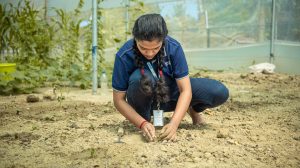
Importance of Practical Learning in Agriculture
Agriculture is a field where practical experience is essential.
Students need opportunities to apply classroom concepts through:
- field visits;
- laboratory work;
- crop studies;
- agricultural projects;
- research activities;
- practical demonstrations; and
- industry exposure.
Practical learning helps students understand how agricultural theories work in real conditions.
Difference Between Undergraduate and Postgraduate Agricultural Study
Students can choose agricultural education pathways based on their academic goals.
| Level | Focus |
| Undergraduate Agriculture Study | Builds foundational knowledge in agricultural science, crop production, soil science and related areas |
| Postgraduate Agronomy Study | Provides deeper understanding of crop science, production systems and advanced agricultural practices |
| Postgraduate Agriculture & Horticulture Study | Focuses on advanced concepts related to plant production, horticultural science and agricultural research |
The choice depends on a student’s interests, career objectives and desired area of specialisation.
What Should Students Look for in an Agriculture University?
Before choosing an agricultural university, students should consider:
| Factor | Importance |
| Experienced Faculty | Helps students develop strong scientific foundations |
| Practical Facilities | Supports field-based learning |
| Research Opportunities | Encourages innovation and problem-solving |
| Laboratory Infrastructure | Enables scientific experimentation |
| Agricultural Exposure | Connects classroom learning with real farming conditions |
| Industry Interaction | Provides professional understanding |
| Sustainability Focus | Prepares students for future agricultural challenges |
| Technology Integration | Helps students understand modern farming methods |
A good agricultural education environment should prepare students for both current and future challenges.
Agricultural Education at Brainware University
Brainware University’s agricultural education ecosystem focuses on developing professionals with scientific knowledge, practical understanding and awareness of modern agricultural challenges.
Students can explore different learning pathways through:
- B.Sc. Agriculture, focusing on foundational agricultural science and practical understanding;
- M.Sc. Agronomy, providing advanced knowledge of crop production, soil management and agricultural practices;
- M.Sc. Agriculture & Horticulture, focusing on advanced agricultural and horticultural concepts.
The learning approach combines:
- agricultural science;
- practical exposure;
- research orientation;
- sustainability awareness;
- modern agricultural concepts; and
- professional skill development.
Students should refer to the official programme pages for the latest information regarding admission, eligibility, duration, fees, curriculum and other programme-specific details.
Career Opportunities After Agricultural Education
Agricultural education can open opportunities across multiple sectors.
| Career Area | Role |
| Agricultural Research | Developing scientific solutions for farming challenges |
| Agronomy | Improving crop production and cultivation methods |
| Horticulture | Managing plant production and horticultural systems |
| Agribusiness | Connecting agriculture with markets and management |
| Agricultural Consultancy | Providing scientific farming guidance |
| Government Sector | Supporting agricultural development programmes |
| Research Organisations | Working on agricultural innovation |
| Teaching and Academia | Sharing agricultural knowledge and conducting research |
Career growth depends on skills, experience, specialisation and professional development.
Frequently Asked Questions About Agricultural Education
What is agricultural education?
Agricultural education develops scientific knowledge and practical skills related to farming, crop production, soil management, horticulture, research and modern agricultural systems.
Is agriculture only about farming?
No. Modern agriculture includes research, technology, agribusiness, biotechnology, sustainability, horticulture and agricultural innovation.
Why is agronomy important?
Agronomy helps improve crop production through scientific approaches involving soil management, cultivation techniques and sustainable farming practices.
How is technology changing agriculture?
Technology supports precision farming, crop monitoring, digital agriculture, resource management and data-based decision-making.
What skills are important for agricultural professionals?
Scientific understanding, research ability, field knowledge, technology awareness, communication skills and problem-solving abilities are important.
Why is sustainable agriculture important?
Sustainable agriculture helps maintain productivity while protecting soil, water and environmental resources for future generations.
What career opportunities are available after studying agriculture?
Agriculture graduates can explore careers in research, agronomy, horticulture, agribusiness, consultancy, government services, academia and agricultural industries.
What should students look for in an agriculture university?
Students should consider faculty expertise, practical exposure, research opportunities, laboratories, field learning, technology integration and sustainability-focused education.
Preparing for the Future of Agriculture
Agriculture is entering a new era where science, technology and sustainability are becoming increasingly connected.
The agricultural professional of the future will need to understand crops, soil, environment, research and technology together.
The strongest agricultural education combines:
Scientific knowledge + Practical learning + Research ability + Technology awareness + Sustainability
For students choosing an agriculture university, the most important question is not simply:
“Which university offers agriculture?”
The better question is:
“Which learning environment will help me develop the scientific knowledge, practical skills and innovative thinking required to contribute to the future of agriculture?”
That approach creates a stronger foundation for building a meaningful career in one of the world’s most important sectors.