
Vision is one of the most important aspects of human health. The ability to see clearly influences learning, communication, mobility, productivity and overall quality of life. With increasing screen usage, changing lifestyles, ageing populations and growing awareness about preventive healthcare, the demand for qualified eye care professionals is continuously increasing.
Optometry has emerged as an important healthcare discipline that focuses on vision care, eye health assessment, correction of visual problems and support for maintaining better eye wellness.
Modern optometry is not limited to prescribing spectacles. Today, optometrists work with advanced diagnostic technologies, vision assessment techniques, contact lens solutions, low vision care, rehabilitation services and preventive eye health programmes.
For students interested in healthcare and vision sciences, choosing the right learning environment is an important decision. A strong optometry education should combine scientific knowledge, clinical skills, practical exposure, technology-based learning and an understanding of patient care.
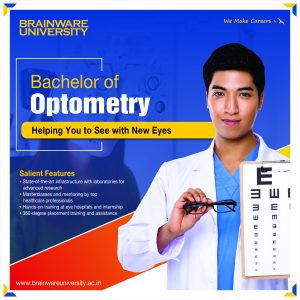
Brainware University provides specialised learning opportunities through programmes such as Bachelor of Optometry and Master of Optometry, helping students develop knowledge and skills required for modern vision care.
Why Is Optometry Important in Modern Healthcare?
Optometry plays a crucial role in maintaining eye health and improving quality of life.
Eyes are affected by several factors, including:
- increased digital screen exposure;
- lifestyle changes;
- ageing-related vision problems;
- environmental factors;
- increasing awareness about preventive healthcare; and
- demand for specialised eye care services.
Optometrists contribute to healthcare by helping with:
- vision assessment;
- detection of visual problems;
- correction of refractive errors;
- contact lens care;
- low vision management;
- binocular vision assessment;
- eye health counselling; and
- patient education.
As healthcare systems increasingly focus on prevention and early detection, optometry professionals are becoming an important part of primary eye care.
What Is Optometry?
Optometry is a healthcare profession concerned with examining, diagnosing and managing vision-related conditions.
An optometrist is trained to evaluate visual functions and provide solutions for various vision problems.
Optometry involves understanding areas such as:
| Area | Importance in Optometry |
|---|---|
| Vision Science | Helps understand how the eye and visual system function |
| Optics | Provides knowledge about lenses and vision correction |
| Eye Health | Supports identification of vision-related conditions |
| Clinical Practice | Develops patient examination and care skills |
| Contact Lens Practice | Helps provide suitable vision correction solutions |
| Low Vision Care | Supports individuals with reduced vision |
| Binocular Vision | Helps assess coordination between both eyes |
The field combines healthcare knowledge with scientific principles and technology.
How Has Optometry Changed Over Time?
Earlier, optometry was mainly associated with vision testing and spectacle correction.
Today, the field has expanded significantly.
Modern optometry includes:
| Emerging Area | Role in Eye Care |
|---|---|
| Digital Eye Care | Addresses vision challenges related to modern lifestyles |
| Advanced Diagnostics | Uses technology for better assessment of eye conditions |
| Contact Lens Technology | Provides specialised vision correction options |
| Low Vision Rehabilitation | Supports people with visual limitations |
| Vision Therapy | Helps manage certain visual difficulties |
| Preventive Eye Care | Encourages early detection and awareness |
This transformation has created new opportunities for professionals with advanced knowledge and clinical skills.
What Skills Does an Optometrist Need?
Optometry requires a combination of scientific understanding, clinical ability and patient-focused communication.
Important skills include:
| Skill | Importance |
|---|---|
| Clinical Knowledge | Helps understand vision and eye-related conditions |
| Observation Skills | Supports accurate assessment of patients |
| Technical Ability | Helps operate diagnostic equipment effectively |
| Communication Skills | Enables better patient interaction |
| Problem-Solving Ability | Helps provide suitable vision solutions |
| Attention to Detail | Important for accurate eye examination |
| Patient Care Approach | Builds trust and professional relationships |
| Technology Awareness | Helps adapt to modern eye care tools |
A successful optometrist combines medical understanding with empathy and professional responsibility.
Understanding Vision Science
Vision science studies how humans see and process visual information.
It includes understanding:
- eye anatomy;
- visual pathways;
- visual perception;
- eye movements;
- focusing mechanisms;
- coordination between both eyes; and
- factors affecting visual performance.
Knowledge of vision science helps optometrists understand not only vision correction but also the complex relationship between the eyes and the brain.
Role of Optometrists in Eye Care
Optometrists play an important role in the healthcare system.
Their responsibilities may include:
- conducting eye examinations;
- assessing vision problems;
- identifying refractive errors;
- recommending corrective solutions;
- assisting in contact lens selection;
- providing patient guidance;
- supporting preventive eye care; and
- collaborating with other healthcare professionals.
They often serve as the first point of contact for individuals experiencing vision-related concerns.
Importance of Clinical Training in Optometry Education
Optometry is a practice-oriented healthcare profession.
While theoretical knowledge provides the foundation, clinical exposure helps students understand real patient situations.
Practical training helps students develop skills in:
- eye examination procedures;
- vision assessment;
- diagnostic techniques;
- patient communication;
- clinical decision-making;
- equipment handling; and
- professional healthcare practices.
A strong optometry education environment should therefore provide opportunities to apply classroom knowledge in practical settings.
Role of Technology in Modern Optometry
Technology has transformed the way eye care is delivered.
Modern optometry uses advanced tools for:
- vision testing;
- eye measurements;
- diagnostic assessment;
- contact lens evaluation;
- monitoring eye health;
- digital record management; and
- patient care.
Technology helps optometrists improve accuracy and provide more personalised solutions.
Future optometrists need to understand both healthcare principles and technological developments.
Digital Eye Strain and Changing Vision Challenges
The increasing use of smartphones, computers and digital devices has created new concerns related to eye comfort and visual health.
Digital eye strain may involve:
- eye discomfort;
- tired eyes;
- temporary blurred vision;
- difficulty focusing;
- headaches; and
- visual fatigue.
Optometrists play an important role in creating awareness and providing guidance for maintaining healthy visual habits.
Contact Lens Practice in Optometry
Contact lenses are an important area of vision correction.
Optometrists help patients understand:
- suitable lens options;
- proper usage;
- hygiene practices;
- comfort factors;
- eye safety; and
- follow-up care.
Contact lens practice requires scientific knowledge, technical understanding and careful patient evaluation.
Low Vision Care and Rehabilitation
Some individuals experience vision loss that cannot be fully corrected through ordinary spectacles or contact lenses.
Low vision care focuses on helping individuals use their remaining vision effectively.
Optometrists working in this area may support:
- visual assessment;
- assistive solutions;
- rehabilitation guidance;
- lifestyle adaptation; and
- improved independence.
This makes low vision care an important area within healthcare.
Research and Innovation in Optometry
Research helps improve the future of eye care.
Optometry research contributes to:
- improved diagnostic methods;
- better vision correction solutions;
- understanding eye conditions;
- advanced clinical practices;
- innovative technologies; and
- patient care improvement.
Advanced education in optometry allows students to explore deeper areas of vision science and research.
Difference Between Undergraduate and Postgraduate Optometry Study
Students can choose different academic pathways depending on their career goals.
| Study Level | Focus |
|---|---|
| Undergraduate Optometry Education | Builds foundational knowledge in vision science, optics, eye care and clinical practice |
| Postgraduate Optometry Education | Provides advanced understanding, specialised learning and deeper professional development |
Students should choose a pathway based on their interests, career objectives and desired area of expertise.
Career Opportunities After Optometry Education
Optometry offers career opportunities across healthcare, research and specialised vision care sectors.
| Career Area | Role |
|---|---|
| Clinical Optometry | Providing vision assessment and patient care |
| Eye Care Centres | Supporting comprehensive eye care services |
| Optical Industry | Working with vision correction products and solutions |
| Contact Lens Practice | Specialising in lens assessment and management |
| Low Vision Care | Supporting individuals with visual challenges |
| Research | Contributing to vision science and healthcare innovation |
| Academia | Teaching and developing future professionals |
| Community Eye Care | Supporting public awareness and preventive eye health |
Career growth depends on professional skills, experience, specialisation and continuous learning.
What Should Students Look for in an Optometry University?
Choosing an optometry university requires evaluating several factors.
| Factor | Importance |
|---|---|
| Experienced Faculty | Helps develop strong scientific foundations |
| Clinical Exposure | Builds practical healthcare skills |
| Laboratory Facilities | Supports hands-on learning |
| Modern Equipment | Provides familiarity with diagnostic tools |
| Research Opportunities | Encourages innovation and deeper learning |
| Practical Training | Connects theory with patient care |
| Healthcare Environment | Develops professional confidence |
| Skill Development | Improves career readiness |
A good optometry education environment should prepare students for both current healthcare needs and future developments.
Optometry Education at Brainware University
Brainware University’s optometry education approach focuses on developing skilled healthcare professionals with scientific knowledge, clinical understanding and practical abilities.
Students can explore:
- Bachelor of Optometry, which builds foundational knowledge in vision science, optics, eye care and clinical practices.
- Master of Optometry, which supports advanced learning and professional development in optometry and vision sciences.
The learning approach focuses on:
- scientific understanding;
- practical exposure;
- clinical skills;
- patient care;
- healthcare technology;
- research awareness; and
- professional development.
Students should refer to the official programme pages for the latest information regarding admission, eligibility, duration, fees, curriculum and other programme-specific details.
Why Optometry Is a Promising Healthcare Career
The demand for eye care professionals continues to increase because vision health has become an important part of overall healthcare.
Optometry offers opportunities for individuals who are interested in:
- healthcare;
- science;
- patient interaction;
- technology;
- research; and
- community service.
It is a profession that combines scientific knowledge with the ability to improve people’s quality of life.
Frequently Asked Questions About Optometry Education
What is optometry?
Optometry is a healthcare profession focused on vision assessment, eye care, correction of visual problems and supporting overall eye health.
What does an optometrist do?
An optometrist examines vision, identifies visual problems, provides corrective solutions and supports preventive eye care.
Is optometry only about prescribing spectacles?
No. Modern optometry includes vision assessment, contact lenses, low vision care, diagnostic practices, eye health awareness and advanced vision science.
Why is optometry important in healthcare?
Optometry supports early detection of vision problems and provides essential primary eye care services.
What skills are important for optometrists?
Clinical knowledge, communication skills, observation ability, technical understanding and patient care skills are important.
How is technology changing optometry?
Technology is improving eye examinations, diagnostics, vision correction methods and patient care approaches.
What career opportunities are available after studying optometry?
Optometry graduates can explore careers in clinical practice, eye care centres, research, optical industries, academia and community healthcare.
What should students look for in an optometry university?
Students should consider faculty expertise, clinical training, laboratories, equipment, research opportunities and practical exposure.
Preparing for the Future of Optometry
Optometry is evolving with advancements in healthcare, technology and vision science.
The optometrist of the future will need to combine:
Scientific Knowledge + Clinical Skills + Technology Awareness + Patient Care + Continuous Learning
For students choosing an optometry university, the most important question is not simply:
“Which university offers optometry?”
The better question is:
“Which learning environment will help me develop the scientific knowledge, clinical skills and professional confidence required to contribute to the future of eye care?”
That approach creates a strong foundation for building a meaningful career in optometry and vision sciences.