Allied health careers offer several ways to contribute to patient care, from testing laboratory samples and assessing vision to supporting clinical teams and delivering specialised treatment. Each profession requires a different combination of scientific knowledge, practical training, and communication skills.
If you are considering an allied health science course after Class 12, start by understanding the work involved. Do you enjoy laboratory analysis, direct interaction with patients, or working with medical equipment? Comparing these interests with course content can help you make a more informed choice.
1. Physician Assistant or Physician Associate
Physician assistants or associates support doctors in clinical settings. Their work can include assisting with patient assessment, maintaining clinical records, and supporting care under physician supervision. Responsibilities depend on their training, the workplace, and the applicable scope of practice.
Brainware University’s Bachelor of Physician Associate combines basic medical sciences with supervised clinical training. The university lists three years of academic study followed by a one-year internship.
When exploring this pathway, ask how clinical rotations are organised, who supervises students, and how practical competence is assessed. Consider whether you would enjoy communicating with patients while working closely with a clinical team.
2. Optometrist
Optometry focuses on vision and eye care. It includes assessing visual function, measuring refractive errors, and providing appropriate optical correction. Optometrists also help identify concerns that require referral for further medical assessment.
Students interested in this field can explore Brainware University’s Bachelor of Optometry. The programme covers vision science and clinical optometry, combining academic learning with practical training.
Before choosing a course, ask about supervised patient interaction, access to diagnostic equipment, and internship arrangements. A useful question is how students progress from practising examination techniques to applying them in a clinical setting.
3. Radiation Therapist
Radiation therapists work within cancer-care teams to help deliver prescribed radiation treatment. The role requires precision, patient communication, and close attention to safety.
Training involves substantial theoretical study as well as supervised clinical practice. The International Atomic Energy Agency’s education guidance includes anatomy, radiation physics, radiobiology, treatment-related knowledge, and radiation protection. Practical experience builds on this scientific foundation.
Students considering this profession should look specifically for an appropriate radiation therapy qualification. Diagnostic imaging and radiation therapy are distinct fields, so a course involving medical imaging should not automatically be treated as preparation for radiation therapy practice.
4. Medical Laboratory Technologist
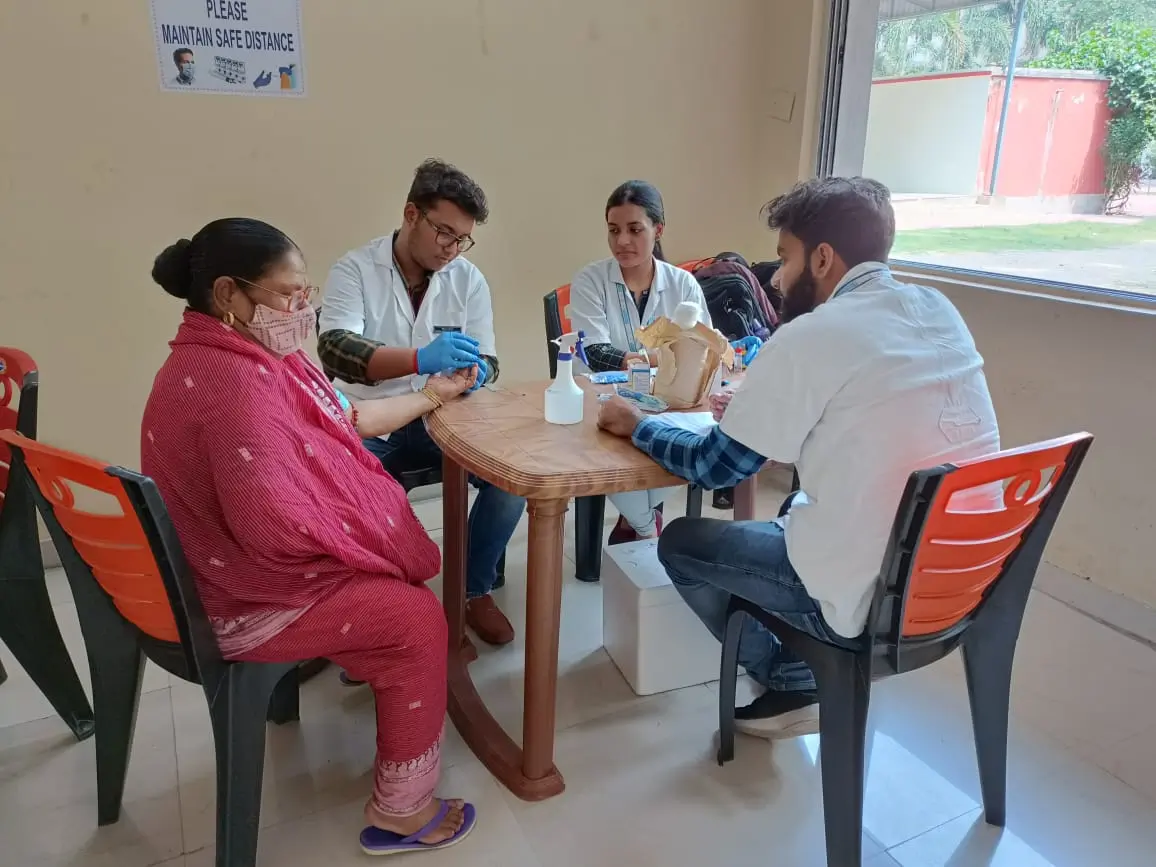
Medical laboratory professionals analyse samples and produce results that support clinical decisions. Their work involves careful sample handling, laboratory equipment, quality control, and accurate documentation.
Brainware University’s Bachelor of Medical Laboratory Science includes subjects such as clinical biochemistry, microbiology, haematology, and pathology. The published structure comprises three years of academic learning and a one-year internship.
This pathway is worth investigating if you enjoy methodical scientific work. When comparing programmes, ask how students learn to recognise errors, follow laboratory procedures, and maintain reliable records.
How should you choose an allied health science course?
Look beyond the course title and examine how learning is organised. Before applying, check:
-
Eligibility: Required Class 12 subjects, marks, age criteria, and any entrance requirements.
-
Course recognition: The current recognition and professional requirements relevant to your intended role.
-
Practical training: How much supervised laboratory or clinical experience the programme provides.
-
Internships: Their duration, location, supervision, and assessment.
-
Costs: Tuition, examination charges, equipment, accommodation, and travel to training sites.
-
Career support: Recent programme-specific recruitment information and the preparation provided to students.
Ask for written details where possible. A campus visit can also help you understand the learning environment and discuss the course with faculty.
What should you know about career prospects?
Assess career prospects for the particular profession and location you are considering. An allied health qualification does not guarantee a specific salary or immediate employment.
Review recent job advertisements to see which qualifications and skills employers request. Ask institutions for course-specific placement information, including the roles offered and the period covered by the data. This gives you a firmer basis for comparison than broad claims about unlimited demand.
Exploring allied health courses at Brainware University
For students comparing allied health science courses in Kolkata and nearby areas, Brainware University in Barasat offers options including the Bachelor of Physician Associate, Bachelor of Optometry, and Bachelor of Medical Laboratory Science.
Use the official course pages to compare current admission requirements and study structures. Then discuss the practical training with the department. Choose a pathway whose daily responsibilities interest you and whose academic demands you are prepared to meet.