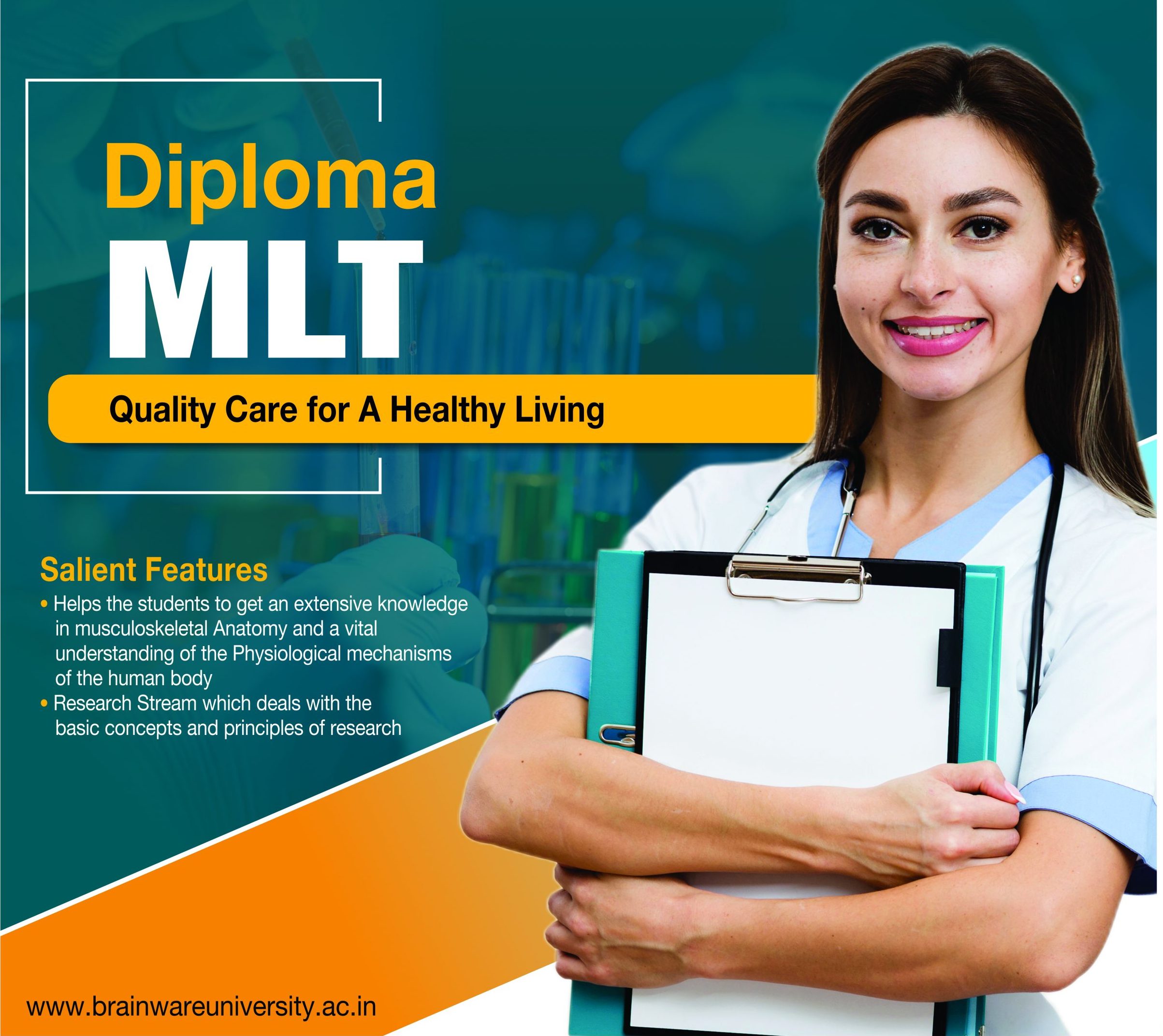
Healthcare is supported by much more than doctors and nurses. Behind many medical diagnoses is a laboratory where blood, tissue and other biological samples are collected, processed and analysed. Medical laboratory professionals help generate the diagnostic information that healthcare teams use to understand diseases, monitor treatment and support patient care.
For students who have completed Class 12 with Physics, Chemistry and Biology (PCB) and want to enter the healthcare sector, a DMLT course can be a practical pathway into medical laboratory services.
But what is DMLT? What is the eligibility for a DMLT course after 12th? Which subjects are taught? What jobs can you get after DMLT? And can you continue your studies after completing the diploma?
This guide covers the DMLT course after 12th, eligibility, syllabus, practical training, career options, job roles and higher-study opportunities.
What Is DMLT?
DMLT commonly refers to Diploma in Medical Laboratory Technology, while institutions may use related titles such as Diploma in Medical Laboratory Science (DMLS).
A diploma-level medical laboratory programme prepares students for technical work involving:
- Sample collection and processing
- Clinical pathology
- Haematology
- Clinical biochemistry
- Microbiology
- Immunology
- Serology
- Blood banking
- Histopathology
- Laboratory instrumentation
- Phlebotomy
- Infection control
- Quality assurance
The current Diploma in Medical Laboratory Science at Brainware University consists of two years of academic study followed by six months of internship-based clinical exposure.
Can You Do DMLT After 12th?
Yes, students meeting the required science-subject and institutional eligibility criteria can pursue a diploma in medical laboratory science after Class 12.
For the current programme, applicants need:
- 10+2 qualification from a recognised board
- Physics, Chemistry and Biology
- Pass marks in theory and practical examinations in the required subjects
- Pass marks in English
- Minimum 50% marks or equivalent grade
- The prescribed age requirements
Reserved-category candidates receive the applicable relaxation under the university’s admission norms.
Because eligibility can vary between institutions, students should always check the specific programme requirements before applying.
Why Choose a Medical Laboratory Course After 12th?
A medical laboratory career can suit students who are interested in biology, diagnostic science, laboratory work and healthcare but prefer a technical role rather than direct clinical practice.
Medical laboratory professionals can contribute to diagnostic services by working with patient samples and laboratory procedures.
The field offers exposure to areas such as:
- Pathology
- Blood testing
- Microbiology
- Biochemistry
- Blood banking
- Histopathology
- Sample collection
- Laboratory equipment
- Quality control
The current programme also introduces students to laboratory safety, infection control, biomedical waste management and quality assurance.
What Are the Subjects in DMLT?
The exact syllabus varies by institution, but the current Diploma in Medical Laboratory Science curriculum covers a range of diagnostic laboratory subjects.
| Semester | Major Areas |
|---|---|
| Semester I | Anatomy and Physiology, Clinical Pathology, Basic Haematology, Microbiology, Clinical Biochemistry |
| Semester II | Medical Ethics, Patient Care, Haematology, Bacteriology, Clinical Biochemistry |
| Semester III | Cytopathology, Histopathology, Immunology, Serology, Virology, Mycology |
| Semester IV | Histopathology, Blood Banking, Parasitology, Clinical Microbiology, Clinical Biochemistry |
| Semester V | Internship |
Students also receive practical training alongside several of the theoretical subjects.
What Skills Do You Learn in DMLT?
A medical laboratory programme is strongly practical.
Students can develop skills in:
Sample Handling
Correct collection, identification, processing and storage of biological samples are fundamental laboratory skills.
Laboratory Testing
Students learn procedures associated with areas such as haematology, pathology, microbiology and biochemistry.
Equipment Handling
Modern laboratories use specialised instruments and analysers. Students therefore need familiarity with laboratory equipment and procedures.
Quality Control
Accuracy and consistency are important in diagnostic testing. Quality-control practices help maintain reliable laboratory processes.
Infection Control
Laboratory professionals work with biological materials, making safety, hygiene and infection-control practices essential.
Documentation
Laboratory work involves recording samples, procedures, observations and test-related information accurately.
Communication
Laboratory professionals work as part of healthcare teams and need to communicate effectively with doctors, technicians and other professionals.
Career Options After DMLT
A Diploma in Medical Laboratory Science can lead to entry-level opportunities across diagnostic and healthcare settings.
| Job Role | Main Work Area |
|---|---|
| Medical Laboratory Technician | Laboratory testing and sample processing |
| Pathology Laboratory Technician | Pathology investigations |
| Clinical Laboratory Technician | Clinical diagnostic testing |
| Blood Bank Technician | Blood testing and processing |
| Microbiology Technician | Microbiological investigations |
| Biochemistry Technician | Biochemical testing |
| Diagnostic Laboratory Technician | Diagnostic sample processing |
| Laboratory Assistant | Laboratory support |
| Phlebotomy Technician | Blood and sample collection |
| Sample Processing Technician | Sample preparation |
| Quality Control Technician | Laboratory quality monitoring |
The exact job title and responsibilities depend on the employer, qualification requirements and applicable regulations.
1. Medical Laboratory Technician
Medical Laboratory Technician is one of the most direct career paths after a medical laboratory diploma.
The role can involve:
- Receiving samples
- Processing specimens
- Performing laboratory tests
- Operating equipment
- Recording results
- Following safety procedures
- Maintaining laboratory standards
Accuracy and attention to detail are particularly important.
2. Pathology Laboratory Technician
Pathology laboratories process samples to support the diagnosis of different diseases and conditions.
Technicians may work with procedures related to clinical pathology, haematology, histopathology and other diagnostic areas.
3. Blood Bank Technician
Blood banks require trained personnel for technical procedures involving blood collection, testing, processing and storage.
This work requires careful sample identification, documentation, safety practices and quality control.
4. Microbiology Laboratory Technician
Microbiology focuses on microorganisms and their role in disease.
A technician may assist with laboratory procedures involving:
- Bacteria
- Fungi
- Microbial cultures
- Infection-related investigations
- Laboratory identification procedures
5. Biochemistry Laboratory Technician
Clinical biochemistry involves laboratory analysis of biological samples to generate information relevant to patient health.
Professionals may work with automated analysers and biochemical testing procedures.
6. Phlebotomy and Sample Collection
Phlebotomy involves collecting blood samples for laboratory investigations.
Proper patient identification, sample collection, labelling, handling and safety procedures are important parts of this work.
Where Can DMLT Graduates Work?
Medical laboratory professionals can work across different healthcare and research environments.
| Workplace | Possible Work |
|---|---|
| Hospitals | Clinical laboratory services |
| Diagnostic Centres | Routine and specialised testing |
| Pathology Laboratories | Pathology investigations |
| Blood Banks | Blood testing and processing |
| Medical Colleges | Laboratory services and academic support |
| Research Laboratories | Research and sample processing |
| Pharmaceutical Companies | Laboratory and quality-related work |
| Clinical Research Organisations | Research-support activities |
| Public Health Laboratories | Diagnostic and surveillance support |
| Biotechnology Laboratories | Laboratory testing and research |
The current programme identifies hospitals, diagnostic laboratories, pathology centres, blood banks, medical colleges, research centres, pharmaceutical companies, clinical research organisations and biotechnology laboratories among potential employment settings.
Government Jobs After DMLT
Medical laboratory diploma holders may also explore government and public-sector laboratory opportunities when they meet the requirements of specific recruitment notifications.
Possible areas include:
- Government hospitals
- Public health laboratories
- Blood banks
- Medical colleges
- Disease-control programmes
- Diagnostic facilities
- Health research projects
However, government recruitment requirements vary by organisation and post. Candidates should always check the official notification for the required qualification, registration, experience and other conditions.
DMLT and Modern Diagnostic Technology
Medical laboratories are becoming increasingly technology-driven.
Modern developments include:
- Automated analysers
- Digital pathology
- Laboratory Information Management Systems
- Point-of-care testing
- Molecular diagnostics
- Advanced infection detection
- Digital microscopy
- Quality-management systems
The current programme identifies these as evolving areas within Medical Laboratory Science.
This means future laboratory professionals may need both core diagnostic knowledge and digital/technological awareness.
Is AI Relevant to Medical Laboratory Science?
Artificial intelligence and automation are increasingly relevant to diagnostic workflows.
Technology can support areas such as:
- Automated laboratory analysis
- Pattern recognition
- Digital pathology
- Laboratory data management
- Quality monitoring
- Diagnostic workflow optimisation
However, laboratory professionals continue to require technical knowledge, quality control, safety awareness and responsible professional judgement.
Practical Training and Internship
Medical laboratory education cannot be limited to theory.
Students need opportunities to work with laboratory procedures, equipment and real diagnostic workflows.
The current Diploma in Medical Laboratory Science includes two years of academic learning followed by six months of internship. The programme provides practical exposure in areas such as pathology, microbiology, haematology, biochemistry, blood banking and laboratory instrumentation.
The earlier Brainware University article also highlights hands-on laboratory training, equipment use, internships and practical exposure as important components of the programme.
Higher Studies After DMLT
A diploma does not necessarily have to be the end of a student’s academic journey.
Depending on eligibility, graduates can explore:
- BSc/Bachelor’s programmes in Medical Laboratory Technology
- Bachelor of Medical Laboratory Science
- Allied Health Sciences programmes
- Specialised laboratory certifications
- Phlebotomy certifications
- Blood banking training
- Microbiology-related certifications
- Quality-assurance training
- Laboratory instrumentation training
Brainware University currently lists a B.Sc. Medical Lab Technology lateral-entry pathway for eligible diploma holders, subject to its stated qualification requirements.
DMLT Course at a Glance
| Particular | Details |
|---|---|
| Programme | Diploma in Medical Laboratory Science |
| Common Terms | DMLS / DMLT / Diploma in MLT |
| Level | Diploma |
| Academic Duration | 2 years |
| Internship | 6 months |
| Eligibility | 10+2 with Physics, Chemistry and Biology |
| Minimum Marks | 50% |
| Major Areas | Pathology, microbiology, haematology, biochemistry and blood banking |
| Practical Exposure | Laboratory training and clinical internship |
| Career Areas | Hospitals, diagnostic centres, laboratories and blood banks |
| Higher Studies | Medical Laboratory Technology/Science and related Allied Health Sciences |
Diploma in Medical Laboratory Science at Brainware University
The Diploma in Medical Laboratory Science at Brainware University is structured around diagnostic laboratory education, combining academic study with practical training and a six-month internship.
The programme covers clinical pathology, haematology, microbiology, clinical biochemistry, immunology, serology, histopathology, blood banking, laboratory instrumentation, phlebotomy, infection control and quality assurance.
Students receive practical exposure through laboratory-based learning and clinical internship, helping them understand how diagnostic laboratories operate in professional healthcare environments.
The current eligibility requires 10+2 with Physics, Chemistry and Biology, a minimum of 50% marks or equivalent grade, pass marks in the required theory and practical examinations, and pass marks in English, along with the prescribed age requirements.
Frequently Asked Questions
What is DMLT?
DMLT commonly stands for Diploma in Medical Laboratory Technology. It is a diploma-level healthcare programme that prepares students for technical work in medical laboratories.
Can I do DMLT after 12th?
Yes. The current Diploma in Medical Laboratory Science requires 10+2 with Physics, Chemistry and Biology and the specified eligibility conditions.
How long is the DMLT course?
The current programme consists of two years of academic study followed by six months of internship.
What subjects are taught in DMLT?
Major subjects include clinical pathology, haematology, microbiology, biochemistry, immunology, serology, histopathology, blood banking and laboratory instrumentation.
What jobs can I get after DMLT?
Possible roles include Medical Laboratory Technician, Pathology Laboratory Technician, Clinical Laboratory Technician, Blood Bank Technician, Microbiology Technician, Biochemistry Technician, Laboratory Assistant and Phlebotomy Technician.
Can DMLT graduates work in hospitals?
Yes. Hospitals are among the major employment settings for medical laboratory professionals.
Can I work in a diagnostic centre after DMLT?
Yes. Diagnostic centres and pathology laboratories are important employment areas for diploma-level medical laboratory professionals.
Is internship included in DMLT?
Yes. The current programme includes a six-month internship after the academic component.
Can I study further after DMLT?
Yes. Depending on eligibility, graduates can pursue bachelor’s-level Medical Laboratory Technology/Science or related Allied Health Sciences programmes.
Is DMLT a medical degree?
No. DMLT is a diploma-level healthcare qualification for medical laboratory work. It does not make a graduate a doctor or pathologist.
What is the future scope of DMLT?
The field is evolving with laboratory automation, digital pathology, advanced diagnostic equipment, laboratory information systems, molecular diagnostics and AI-supported workflows.
Building a Career in Medical Laboratory Science
Medical laboratory work combines biology, technology, accuracy and healthcare service. For students who want to enter the healthcare sector through a technical and laboratory-focused pathway, a DMLT programme can provide foundational knowledge in diagnostic science and practical laboratory procedures.
The most important areas to develop are technical accuracy, sample handling, equipment familiarity, laboratory safety, quality control, communication and practical experience.
As diagnostic laboratories become increasingly automated and technology-driven, professionals who combine core laboratory knowledge with awareness of modern diagnostic systems can continue developing their skills through higher education and specialised training.
For students searching for a DMLT course after 12th, the choice of programme should therefore be based not only on the course title, but also on its curriculum, laboratory facilities, practical training, internship structure, clinical exposure and opportunities for further study.