
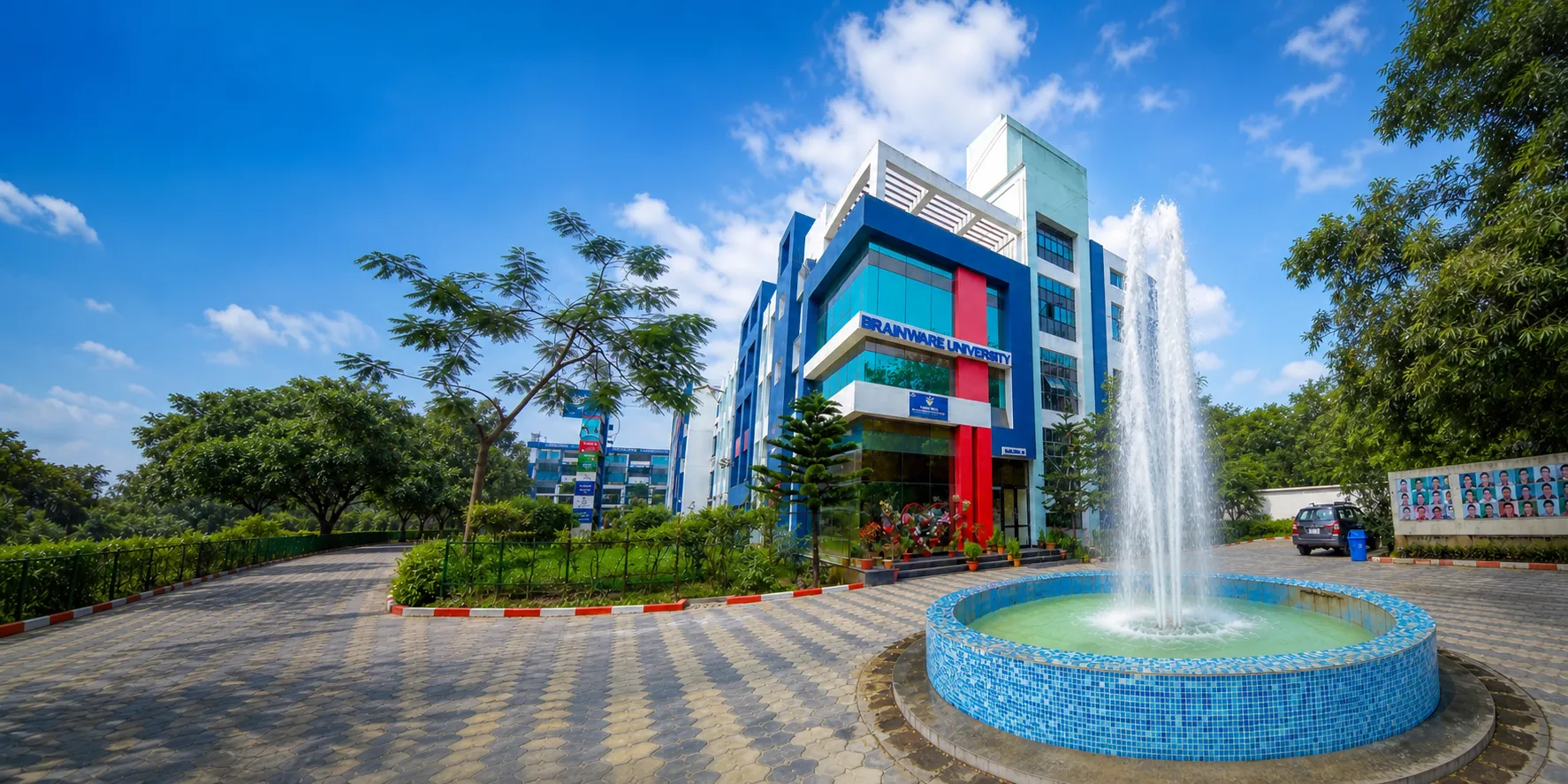
Top BTech Cyber Security Colleges in Kolkata: Admission, Eligibility, Placement and Career Guide
Best BTech Cyber Security Colleges in Kolkata: An Overview
Students searching for the top BTech Cyber Security colleges in Kolkata should compare the strength of the Computer Science foundation, cyber security curriculum, ethical hacking and penetration testing exposure, specialised laboratories, industry partnerships, certifications, internships and placement preparation. Kolkata and its adjoining education hubs have several institutions offering BTech Cyber Security or CSE with Cyber Security specialisation.
Brainware University, Kolkata offers a four-year Bachelor of Technology in Computer Science & Engineering - Cyber Security. The programme combines core computing with network security, cryptography, ethical hacking, penetration testing, cyber forensics, Security Operations Centre practices, cloud security and AI-driven cyber defence.
Students comparing a top college in Kolkata or the best college in WB for Cyber Security should examine what students actually practise in the lab, the technologies they use, the quality of industry exposure and the relevance of placement preparation before taking admission.

What is BTech Cyber Security?
BTech Cyber Security is an undergraduate engineering programme that combines Computer Science and Engineering with specialised study of digital security.
Students learn how computer systems, networks, applications and data can be protected against unauthorised access, attacks, malware, fraud and other digital threats.
A strong BTech Cyber Security programme commonly covers:
- Programming
- Data Structures and Algorithms
- Operating Systems
- Computer Networks
- Database Management Systems
- Network Security
- Cryptography
- Ethical Hacking
- Vulnerability Assessment
- Penetration Testing
- Web Application Security
- Cyber Forensics
- Malware Analysis
- Security Operations Centre
- Cloud Security
- IoT Security
- Cyber Law
- Risk Management
- Incident Response
- DevSecOps
- Artificial Intelligence in Cyber Security
Students should examine the practical component of these subjects because cyber security requires regular hands-on work, not only theoretical understanding.
Departments and Offered Courses with Cyber Security Specialisation
Brainware University currently offers Bachelor of Technology in Computer Science & Engineering - Cyber Security as a four-year engineering programme.
Students interested in cyber technologies can also explore related pathways available at the university.
| Programme | Primary Academic Focus |
|---|---|
| BTech CSE - Cyber Security | Computer Science, network security, ethical hacking, penetration testing, cyber forensics and digital defence |
| BTech CSE - Cyber Security Lateral Entry | Three-year pathway for eligible Diploma, BSc or BCA candidates |
| BSc (Honours) Advanced Networking & Cyber Security | Networking, cyber defence, ethical hacking and security operations |
| MSc Advanced Networking & Cyber Security | Advanced cyber security and networking study |
| BTech CSE | Broad Computer Science and software engineering |
| BTech CSE - AI & ML | Artificial Intelligence and Machine Learning |
| BTech CSE - Data Science & Artificial Intelligence | Data Science, AI and analytical computing |
These pathways allow students to choose between an engineering-focused Cyber Security degree and other computing programmes according to their academic background and career plans.
BTech CSE Cyber Security at Brainware University: Programme at a Glance
| Programme Feature | Details |
|---|---|
| Programme | Bachelor of Technology in Computer Science & Engineering - Cyber Security |
| Duration | 4 years |
| Level | Undergraduate Engineering |
| Core Foundation | Computer Science and Engineering |
| Major Areas | Network Security, Ethical Hacking, Cyber Forensics, Cryptography and Penetration Testing |
| Emerging Areas | AI-driven Cyber Defence, Cloud Security, IoT Security and DevSecOps |
| Practical Exposure | Cyber labs, simulations, vulnerability assessment, penetration testing and projects |
| Certification Orientation | Courses mapped with recognised global cyber security certifications |
| Academia Partnership | EC-Council Academia Partner |
| Admission | Merit, BET and applicable engineering entrance routes under current university guidelines |
| Listed Programme Fee | ₹5,79,600, subject to change |
| Lateral Entry | Three-year option for eligible candidates |
College Curriculum and Cyber Security Learning Environment
Students comparing the best BTech Cyber Security colleges in Kolkata should first examine whether the curriculum gives adequate importance to Computer Science fundamentals
Cyber security specialists need to understand the systems they are protecting. Programming, operating systems, computer networks, databases and algorithms should therefore come before or alongside advanced security study.
Brainware University's current syllabus combines fundamental engineering and computing subjects with specialised Cyber Security areas.
Its curriculum progresses into subjects connected with:
- Network Security
- Cryptography
- Cyber Laws and Ethics
- Ethical Hacking
- Penetration Testing
- Web Application Penetration Testing
- Security Operations Centre Management
- Cyber Forensics
- Incident Response
- AI and Machine Learning
- Cloud and IoT Security
- Secure Infrastructure
- Hardware and Firmware Security
The current syllabus also includes laboratory and project components designed to develop practical security skills.
Core Areas Students Should Look for in a Cyber Security Curriculum
A good programme should develop competence across the following areas:
- Programming:
Security professionals need programming and scripting skills to understand software behaviour and automate tasks. - Computer Networks:
Students should understand routing, switching, network protocols and infrastructure. - Operating Systems:
Knowledge of Windows and Linux environments is important for security analysis. - Cryptography:
Students should understand encryption, authentication and secure communication. - Ethical Hacking:
Ethical hacking teaches students to identify weaknesses under legal and authorised conditions. - Vulnerability Assessment:
Students should learn how systems are assessed for weaknesses. - Penetration Testing:
Practical testing helps students understand how vulnerabilities may be exploited and corrected. - Web Application Security:
Modern organisations rely heavily on web applications, making application security an important skill. - Digital Forensics:
Students should understand how digital evidence can be collected and analysed. - Security Operations:
SOC-oriented learning prepares students to monitor and respond to security events. - Cloud Security:
Students should understand security issues affecting cloud infrastructure and applications. - Incident Response:
Learners should know how organisations respond when a security incident occurs. - AI in Cyber Security:
AI increasingly supports anomaly detection, malware identification and automated threat analysis. - Cyber Law and Ethics:
Security professionals must understand the legal and ethical boundaries of their work.
Key Highlights of BTech Cyber Security Programmes
Students can compare Cyber Security programmes using the following framework:
| Factor | Why It Matters |
|---|---|
| Recognition | Confirms the legal validity of the degree |
| Core CSE Curriculum | Builds the computing foundation needed for security |
| Cyber Security Depth | Determines how specialised the programme actually is |
| Ethical Hacking | Provides controlled exposure to offensive security techniques |
| Network Security | Builds understanding of infrastructure protection |
| Cyber Forensics | Develops skills related to digital evidence |
| SOC Training | Introduces monitoring and incident response workflows |
| Cyber Lab or Laboratory | Provides practical security experience |
| Tools | Allows students to work with real security technologies |
| Certifications | Can support professional skill validation |
| Projects | Develops applied problem-solving ability |
| Internship | Provides exposure to real organisations |
| Industry Collaboration | Connects students with current security practice |
| Placement | Helps students understand graduate outcomes |
| Campus | Supports the wider four-year student experience |
| Hostel | Important for outstation students |
| Fees | Determines the overall cost of the degree |
Students should give particular attention to the lab or laboratory ecosystem because Cyber Security is one of the most practice-dependent areas of Computer Science.
BTech Cyber Security College Kolkata: Admission Process and Eligibility
Students looking for BTech Cyber Security admission in Kolkata should check the Class 12 subject combination, minimum marks, accepted entrance examination, fee structure and seat availability before applying.
Brainware University BTech Cyber Security Eligibility
For its four-year BTech CSE Cyber Security programme, Brainware University currently requires:
- Minimum 60% marks or equivalent grade in 10+2
- Minimum 45% marks or equivalent grade in any three relevant subjects taken together
- Physics and Mathematics are mandatory
- One additional subject from the eligible group specified by the university
- Individual pass marks in theory and practical components where applicable
- Pass marks in English
- A 5% relaxation in marks for reserved category candidates under the stated university policy
Eligible additional subjects include areas such as Chemistry, Computer Science, Electronics, Information Technology, Biology, Informatics Practice, Biotechnology, approved technical vocational subjects, Agriculture, Engineering Graphics, Business Studies and Entrepreneurship.
For BTech Cyber Security lateral entry, Brainware University currently lists minimum 45% marks or equivalent grade in a relevant Diploma, BSc or BCA, with the applicable reserved-category relaxation.
Entrance Examination and Admission
Brainware University's current Cyber Security admission information states that admission may be based on:
- Academic merit
- Brainware Entrance Test, or BET
- Applicable state or national engineering entrance examinations
The university also mentions merit-based direct admission for eligible candidates subject to its current admission conditions and seat availability.
Students should confirm the applicable route for the current admission session before applying.
General Admission Process
- Select BTech CSE Cyber Security.
- Check Class 12 eligibility and subject requirements.
- Complete the university application or enquiry form.
- Verify the applicable entrance examination.
- Complete counselling and eligibility verification.
- Submit required academic and identity documents.
- Review course fees and scholarship opportunities.
- Pay the applicable admission amount.
- Complete enrolment within the stated deadline.
Students should always use the Official Admission Portal and confirm the current Admission Process, Application Form and Last Date before making payment.
BTech Cyber Security Fees at Brainware University
Brainware University currently lists the total programme fee for its four-year BTech CSE Cyber Security course as ₹5,79,600.
| Semester | Published Fee |
|---|---|
| Semester 1 | ₹98,200 |
| Semester 2 | ₹96,200 |
| Semester 3 | ₹75,200 |
| Semester 4 | ₹75,200 |
| Semester 5 | ₹69,200 |
| Semester 6 | ₹64,200 |
| Semester 7 | ₹58,200 |
| Semester 8 | ₹43,200 |
| Total | ₹5,79,600 |
The university states that fees are subject to change. The application fee of ₹5,000 is non-refundable under the currently published terms.
Students should confirm the latest fee structure before admission.
Campus Life and Facilities
A BTech student spends four years on campus, so the learning environment should be evaluated alongside the course syllabus.
Brainware University's campus facilities include:
- 1 Gbps Wi-Fi connectivity
- Central Library
- Departmental libraries
- Seminar halls
- Auditorium
- Incubation support
- Boys' and girls' hostels
- Food court and canteen
- Gymnasium
- Common rooms
- Indoor games
- Sports infrastructure
- Medical support
- Counselling facilities
- 24x7 emergency car service
For Cyber Security students, reliable internet access and computing infrastructure are particularly important because practical learning involves network environments, security software, documentation, virtual machines, cloud services and online technical resources.
Student Accommodation and Hostel Facilities
Hostel facilities are useful for students coming to Kolkata from other districts of West Bengal or neighbouring states.
Brainware University provides separate boys' and girls' accommodation on campus.
| Hostel Factor | What to Verify |
|---|---|
| Hostel Fee | Monthly accommodation cost |
| Food | Whether food is included |
| Security | Entry, exit, and visitor regulations |
| Wi-Fi | Access conditions |
| Medical Support | First aid and emergency arrangements |
| Campus Access | Distance from academic areas and laboratories |
| Caution Deposit | Amount and refund terms |
| Joining Fee | One-time charge |
| Availability | Current hostel seat status |
Current Brainware University Hostel Fee Reference
Brainware University's proposed 2026-27 rates for students other than Nursing currently state:
| Accommodation | Proposed Fee |
|---|---|
| 4-bed Sharing Room | ₹10,000 per month |
| 2-bed Sharing Room | ₹12,000 per month, girls only |
| Single Room | ₹15,000 per month, girls only |
| Caution Deposit | ₹10,000 refundable |
| Hostel Joining Fee | ₹10,000 non-refundable |
The rates include food and lodging and are payable quarterly. The university notes that rates are subject to change.
State-of-the-Art Cyber Security Laboratories and Libraries
The quality of the Cyber Security laboratory should be a major factor when choosing a college.
Brainware University's BTech Cyber Security programme describes a specially designed Cyber Security lab and a Centre of Excellence laboratory for advanced Cyber Security research.
Its practical learning framework includes:
- Ethical hacking exercises
- Vulnerability assessment
- Penetration testing
- Security simulations
- Network security work
- Cyber forensics
- SOC-oriented training
- Scripting
- Web application security
- AI-assisted security analysis
The programme also identifies Value-Added Courses related to Ethical Hacking, NPT I & II and SOC.
Brainware University's wider Cyber Science ecosystem describes advanced networking laboratories, cyber-range style training and SOC simulation environments.
Cyber Security Tools and Technologies Students Should Learn
Students comparing colleges should ask whether practical exposure includes tools and environments such as:
| Tool or Technology | Typical Use |
|---|---|
| Linux | Security administration and command-line work |
| Python | Security scripting and automation |
| Shell Scripting | System and security automation |
| Wireshark | Network packet analysis |
| Nmap | Network discovery and security assessment |
| Burp Suite | Web application security testing |
| Nessus | Vulnerability assessment |
| Metasploit | Controlled penetration-testing exercises |
| SIEM Platforms | Security event monitoring |
| Virtual Machines | Isolated security practice environments |
| Firewalls | Network access control |
| IDS/IPS | Threat detection and prevention |
| Cloud Security Tools | Protection of cloud infrastructure |
| Digital Forensics Tools | Evidence analysis and investigation |
Brainware University's current programme specifically identifies Burp Suite, Nessus, Shell and PentestGPT among specialised security technologies featured in the course environment.
Students should confirm which tools they will use directly during laboratory sessions rather than relying only on a software list.
Extracurricular Activities, Cyber Challenges and Innovation
Cyber Security students should have opportunities to practise beyond formal coursework.
Relevant activities include:
- Cyber security competitions
- Capture the Flag challenges
- Ethical hacking exercises
- Hackathons
- Vulnerability assessment challenges
- Coding competitions
- Technical workshops
- Cyber awareness programmes
- Research projects
- Security boot camps
- Expert talks
- Project exhibitions
Brainware University's department reports activities such as Cyber Security boot camps, technical workshops, hackathons, certification training, research projects and expert sessions.
These activities help students build practical confidence and technical portfolios for internships and jobs.
Industry Collaborations and MoUs
Industry exposure matters because cyber threats, tools and defensive methods change rapidly.
Brainware University's cyber ecosystem currently identifies relationships and academic exposure connected with organisations and professional platforms such as:
- EC-Council
- Cisco
- Red Hat Academy
- CompTIA
- CREST
- ISOAH
- GitHub
- OWASP
- TCS iON
The university is an authorised EC-Council Academia Partner.
Its Cyber Security programme states that industry tie-ups support:
- Internships
- Expert sessions
- Certification-oriented training
- Technical workshops
- Live projects
- Practical security exposure
Students should ask how these collaborations are used during their specific BTech programme and whether they result in practical training, certification preparation, projects or internships.
Job Opportunities for BTech Cyber Security Students
Cyber Security graduates can pursue career and job opportunities wherever organisations need to protect information, networks, applications and infrastructure.
Major employment sectors include:
- IT services
- Cyber Security companies
- Banking and fintech
- Consulting
- Telecommunications
- E-commerce
- Cloud services
- Healthcare IT
- Government technology units
- Defence-linked technology
- Managed security services
- Software companies
- Data centres
- Digital forensics
- Enterprise security teams
Popular Career Roles After BTech Cyber Security
| Career Role | Main Area of Work |
|---|---|
| Cyber Security Analyst | Monitoring and protecting systems against threats |
| Information Security Analyst | Managing organisational information security |
| Ethical Hacker | Legally testing systems for security weaknesses |
| Penetration Tester | Assessing applications and networks through authorised testing |
| SOC Analyst | Monitoring security alerts and incidents |
| Network Security Engineer | Protecting enterprise networks |
| Security Engineer | Designing and maintaining defensive systems |
| Cyber Forensics Analyst | Investigating digital evidence |
| Incident Response Analyst | Responding to Cyber Security incidents |
| Vulnerability Analyst | Identifying and assessing weaknesses |
| Cloud Security Analyst | Protecting cloud infrastructure and applications |
| Application Security Analyst | Assessing software security |
| Malware Analyst | Examining malicious software and behaviour |
| Threat Intelligence Analyst | Analysing emerging digital threats |
| Security Consultant | Advising organisations on security controls |
| Governance, Risk and Compliance Analyst | Supporting security policy and compliance |
| DevSecOps Engineer | Integrating security into software development processes |
Students can also pursue postgraduate study and professional certifications in Cyber Security, Information Security, Digital Forensics, Cloud Security and related fields.
Placement Records and Career Support
Placement is important when selecting a Cyber Security programme, but students should examine placement claims carefully.
| Placement Indicator | University-Level Figure |
|---|---|
| Students Placed in 2025 | 98% |
| Highest CTC Offered | ₹36 LPA |
| Average Package | ₹4+ LPA |
| Campus Drives | 1,542+ |
| Global Recruiters | 1,000+ |
These are university-level figures and should not be treated as BTech Cyber Security-specific placement statistics.
Brainware University also describes:
- Placement training from the beginning of the student journey
- Soft skills development
- Technical preparation
- Mock interviews
- Industry interaction
- Live projects
- Internship opportunities
- Career mentoring
- How many BTech Cyber Security students were eligible for placement?
- How many received offers?
- What was the programme-specific average or median salary?
- Which roles were directly related to Cyber Security?
- How many students were placed as SOC analysts, security analysts or security engineers?
- Which Cyber Security companies participated?
- How many students received internships?
- Were security certifications supported?
- Was practical interview preparation provided?
- Were students trained for technical security assessments?
- TCS
- Infosys
- Wipro
- IBM
- Deloitte
- PwC
- Accenture
- Palo Alto Networks
- Kaspersky
- Government Cyber Cells
- Network Security
- Cryptography
- Ethical Hacking
- Penetration Testing
- Cyber Forensics
- SOC Operations
- Web Application Security
- Cloud Security
- IoT Security
- Hardware and Firmware Security
- DevSecOps
- AI and Machine Learning in Cyber Security
- A specially designed Cyber Security lab
- Centre of Excellence laboratory
- Ethical hacking exercises
- Penetration testing
- Vulnerability assessment
- Cyber Security simulations
- Security Operations Centre-oriented learning
- Advanced Cyber Security research exposure
- Ethical Hacking
- NPT I
- NPT II
- SOC
- Internships
- Expert sessions
- Technical workshops
- Security simulations
- Industry projects
- Hackathons
- Cyber Security boot camps
- Research activities
- A recognised engineering degree.
- Strong Computer Science fundamentals.
- Network and infrastructure security.
- Ethical hacking and penetration-testing education.
- Cryptography and secure communication.
- Cyber forensics and incident response.
- SOC-oriented learning.
- Cloud and application security.
- A dedicated Cyber Security laboratory.
- Access to relevant security tools.
- Practical projects and simulations.
- Internship opportunities.
- Certification-oriented learning.
- Industry interaction.
- Technical placement preparation.
- Transparent programme-level placement information.
- Suitable campus and hostel facilities.
- Clear fees and scholarship conditions.
- BTech CSE Cyber Security
- BTech CSE Cyber Security Lateral Entry
- BSc Advanced Networking & Cyber Security
- MSc Advanced Networking & Cyber Security
- BTech Computer Science & Engineering
- BTech CSE Artificial Intelligence & Machine Learning
- BTech CSE Data Science & Artificial Intelligence
- Engineering Programmes
- Brainware Entrance Test
- Official Admission Portal
- Admission 2026-27
- Scholarships
- Course Fees
- Placement Overview
- Industry MoUs
- Campus Services
- Hostel Fees
- Central Library
- Recognition and Rankings
- Education Guide
What Students Should Ask About Cyber Security Placement
Before choosing a college, students should ask:
This gives a clearer picture than relying on a university-wide highest salary.
Top Recruiters for BTech Cyber Security Graduates
Brainware University's current BTech Cyber Security programme information identifies potential recruiter names and categories, including:
Students should interpret such recruiter lists carefully. Recruiter participation, programmes hired from, and job roles can change every year.
Before admission, ask for the latest BTech Cyber Security-specific recruiter list and role-wise placement information.
Key Factors to Evaluate Before Selecting a BTech Cyber Security College
Students and parents can use the following checklist before selecting from the list of top colleges in Kolkata.
| Factor | What to Check |
|---|---|
| Recognition | Is the institution recognised by the appropriate authority? |
| Admission | Which entrance examinations are accepted? |
| Eligibility | Does the student meet Class 12 marks and subject requirements? |
| CSE Foundation | Does the programme teach programming, networks, OS and databases properly? |
| Cyber Security Curriculum | Does it cover ethical hacking, forensics, SOC, cryptography and cloud security? |
| Cyber Lab | Are practical security environments available? |
| Tools | Do students use current Cyber Security technologies? |
| Certifications | Is the curriculum aligned with recognised professional certifications? |
| Faculty | Are teachers qualified in Cyber Security and computing? |
| Projects | Do students complete practical security projects? |
| Internship | Is structured internship support available? |
| Industry Tie-ups | Do partnerships create practical student opportunities? |
| Research | Are Cyber Security research opportunities available? |
| Placement | Is programme-specific placement data available? |
| Career Training | Are technical interviews and security skills addressed? |
| Campus | Does the campus provide a suitable learning environment? |
| Hostel | Is accommodation available for outstation students? |
| Fees | What is the complete four-year cost? |
| Scholarship | What financial support is available? |
| Location | Is the college accessible and suitable for the student? |
The right college should connect Computer Science fundamentals with substantial practical Cyber Security experience.
Why Brainware Stands Out as a Strong Destination for BTech Cyber Security in Kolkata
Brainware University offers several verifiable features for students comparing top BTech Cyber Security colleges in Kolkata.
Dedicated BTech CSE Cyber Security Programme
Brainware offers a four-year BTech in Computer Science & Engineering - Cyber Security.
The programme combines core Computer Science with:
EC-Council Academia Partnership
Brainware University is an authorised EC-Council Academia Partner.
This provides an important academic reference point for students interested in security education connected with professional Cyber Security training standards.
Specialised Cyber Security Laboratory Exposure
The programme highlights:
Practical training is especially important in this discipline because students need to understand how defensive techniques work in real systems.
Certification-Oriented Learning
Brainware University's programme describes courses mapped towards major global Cyber Security certifications and Value-Added Courses connected with:
The university's broader Cyber Security ecosystem also references certification pathways such as CEH, Security+, and networking certifications.
Professional certification preparation can supplement an engineering degree, although certification eligibility, examinations and fees should always be checked independently.
Industry and Project Exposure
The programme describes exposure through:
Brainware's wider Cyber Security ecosystem also maintains relationships with technology and security organisations and professional platforms.
Placement and Career Preparation
Brainware University provides pre-placement and soft skills training, career mentoring, mock interviews, internships and recruiter access.
The university's published placement figures should be read as institutional results unless a separate BTech Cyber Security placement report is provided.
Engineering Recognition
Brainware University's current engineering information reports an AA+ rating in India's Best Engineering Institutes from Careers360.
The university also reports that it was ranked No. 1 Engineering College under a Private University in West Bengal in the IIRF Rankings 2026.
These recognitions relate to the university's engineering performance. They should not be presented as a separate No. 1 ranking specifically for the BTech Cyber Security programme.
For students searching for the best college in WB, such recognition can be one comparison point. Cyber Security curriculum, cyber labs, industry exposure, fees and programme-specific placement evidence should remain central to the final decision.
Quick Checklist for Choosing a BTech Cyber Security College
Before taking admission, check whether the college provides: