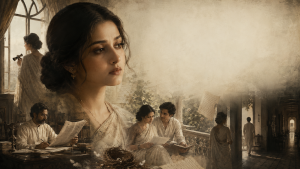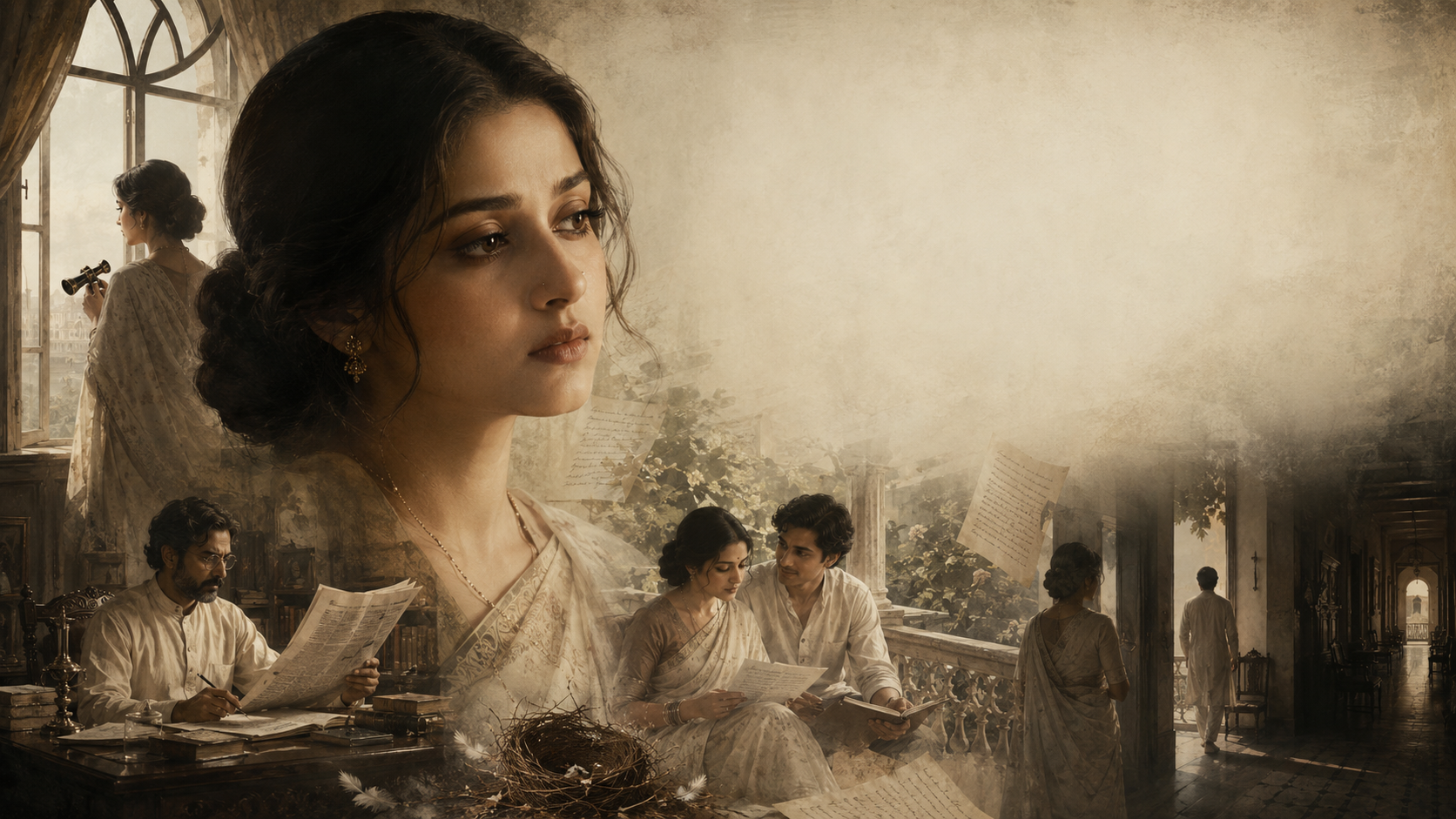
For centuries, a woman’s mind was treated like a locked room. Within the traditional home, her worth was measured by her silence, her obedience, and how well she managed the daily chores. Education wasn’t just neglected; it was feared. To be a woman with intellectual curiosity was to be a threat to the natural order. When we look back at the history of Bengali literature, we aren’t just looking at books. We are looking at the slow, painful birth of a woman’s right to say, ‘I think, and therefore I am’.
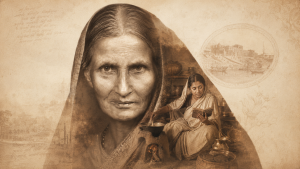
The silence first began to crack with Rassundari Devi. Her autobiography, Amar Jiban, is a testament to a hunger that couldn’t be starved. A woman in the 1800s, exhausted by endless household chores, stealing pages from books, and memorising letters in the flickering shadows of a kitchen. For Rassundari, literacy wasn’t a classroom luxury; it was a battle. She was stealing back her own identity from a system that told her she didn’t need one.
Then came the Bengal Renaissance, bringing a whirlwind of reform, newspapers, and ‘progress.’ On the surface, things looked better. Elite women were finally invited into the light, encouraged to learn music, art, and literature. But this education wasn’t meant to set them free; it was meant to make them better companions for their educated husbands. It was progress, nevertheless, but with a leash. The world changed, but the power dynamic stayed the same: Education entered the home long before equality could keep up.
We see the heartbreak of this era most clearly in Tagore’s Nastanirh. The protagonist, Charu, is the polar opposite of Rassundari. She is refined, cultured, and intellectually sharp. She has the books Rassundari dreamed of, yet she is suffocating. Her husband, Bhupati, isn’t a villain. He’s a good man, liberal, busy, and provider-focused. But he is emotionally unavailable towards his partner. He sees his newspaper, his politics, and his business, but he never truly sees his wife. Tagore’s genius was showing us that cruelty isn’t always a blow or a shout; sometimes, it’s just the quiet, steady hum of being ignored. When the character Amal enters the picture, he doesn’t just offer romance; he offers a mirror. He notices her mind. He listens. He proves that the deepest human ache isn’t for literacy or intimacy, but for recognition.
“এতদিন দুজনে আকাশকুসুমের চয়নে নিযুক্ত ছিল, এখন কাব্যকুসুমের চাষ আরম্ভ হইয়া উভয়ে আর-সমস্তই ভুলিয়া গেল।”
– গল্পগুচ্ছ / নষ্টনীড় / দ্বিতীয় পরিচ্ছেদ
This wasn’t just fiction. It lived in the flesh of Kadambari Devi, the enigmatic figure in Tagore’s own life. Surrounded by the highest heights of art and culture, she remained profoundly alone. Her tragic suicide haunts Bengali history because it exposes an uncomfortable truth. You can be surrounded by brilliance and still die of emotional starvation.
One might think these stories are relics of a bygone Bengal, but they feel eerily modern. Today, women have the degrees, the careers, and the digital connections that earlier generations could not even dream of. Yet, the ‘paradox of modernity’ is real. We are more ‘connected’ than ever, but many of us are living in modern-day Nastanirhs. We share calendars, bank accounts, and Netflix passwords, but we don’t always share our inner worlds. We’ve mastered the art of ‘routine coordination,’ but we’re still failing at the art of intimacy. The emotional labour, the heavy lifting of keeping a relationship’s heart beating, still falls disproportionately on women.
“যে সময়ে স্বামী স্ত্রী প্রেমোন্মেষের প্রথম অরুণালোকে পরস্পরের কাছে অপরূপ মহিমায় চিরনূতন বলিয়া প্রতিভাত হয়, দাম্পত্যের সেই স্বর্ণপ্রভামণ্ডিত প্রত্যুষকাল অচেতন অবস্থায় কখন অতীত হইয়া গেল কেহ জানিতে পারিল না”
– গল্পগুচ্ছ / নষ্টনীড় / প্রথম পরিচ্ছেদ
The journey from Rassundari Devi to Charu is the story of a shifting battleground. Rassundari fought for the right to read; Charu fought for the right to be seen. The ‘Bengal Renaissance’ succeeded in educating women’s minds, but it failed to transform the hearts of the men and the structures around them. These texts still resonate today because they point to an ache that hasn’t gone away. True empowerment isn’t just a seat at the table or a degree on the wall. It’s the simple, profound, and still-elusive need to be genuinely seen by the people we love.
Authored by Ritabrata Basu and Jaydeep Mondal