
Top Robotics Engineering Colleges in Kolkata: Admission, Eligibility, Placement and Career Guide
Best Robotics Engineering Colleges in Kolkata: An Overview
Students searching for the top Robotics Engineering colleges in Kolkata should compare more than the course title. Current programmes may be offered as BTech Robotics Engineering, BTech Robotics & Artificial Intelligence, BTech CSE Robotics & AI or BTech CSE Artificial Intelligence & Robotics. A strong programme should combine programming, electronics, embedded systems, sensors, control engineering, Artificial Intelligence, Machine Learning, computer vision, robotic programming and substantial laboratory work.
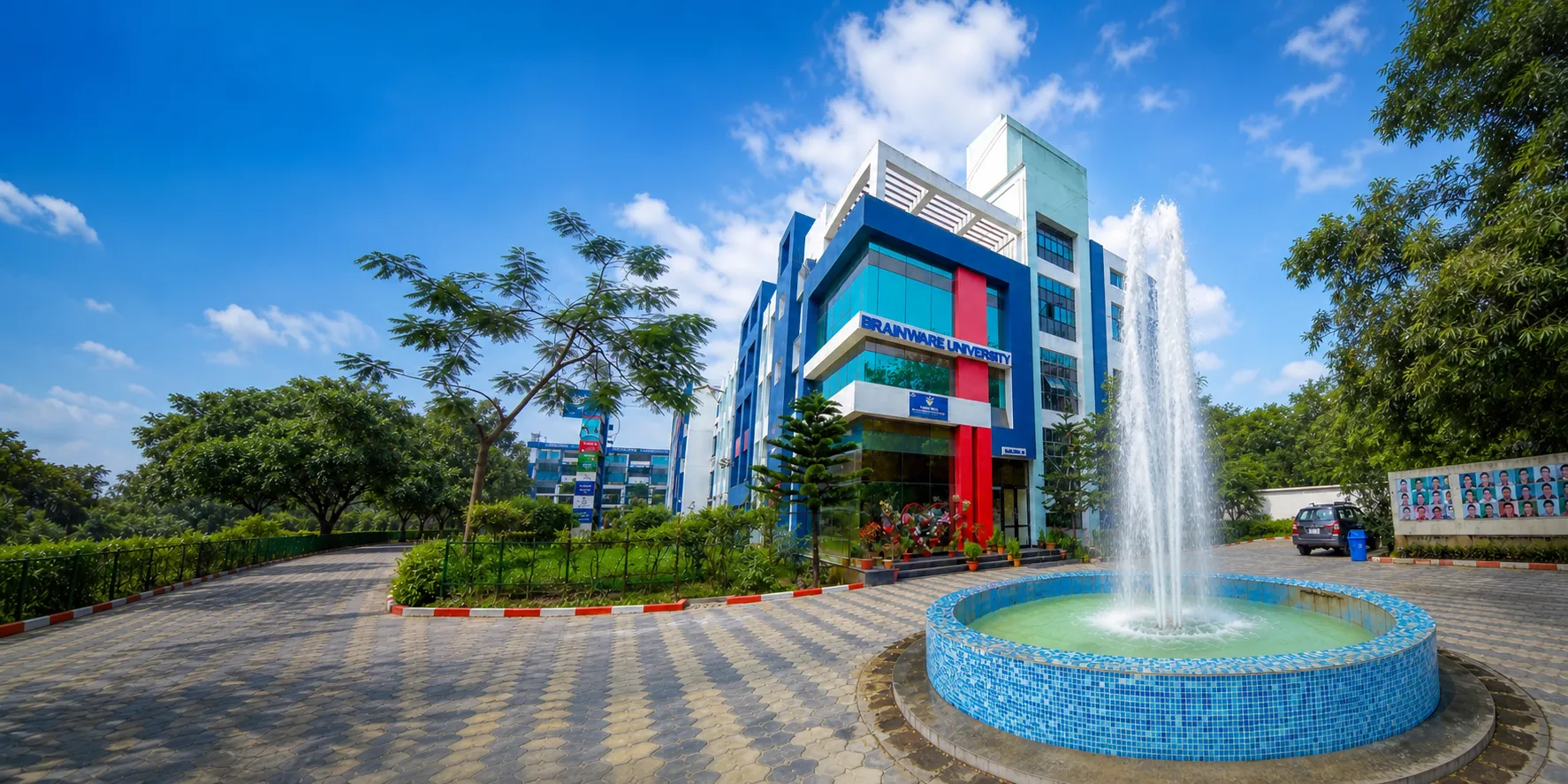
Current options in the Kolkata region include Brainware University, IEM Kolkata, UEM Kolkata, Adamas University and Sister Nivedita University, among others offering robotics-related engineering pathways.
Brainware University offers a four-year BTech in Computer Science & Engineering - Artificial Intelligence & Robotics, combining CSE foundations with Robotics, AI, automation and intelligent-system development.
Students comparing a top college in Kolkata or the best college in WB for Robotics should examine curriculum, laboratory infrastructure, tools, projects, internships, admission, eligibility, placement evidence, campus and hostel facilities before making a decision.
What is Robotics Engineering?
Robotics Engineering is an interdisciplinary branch of engineering concerned with designing, programming, controlling and operating robots and intelligent automated systems.
It combines knowledge from:
- Computer Science
- Artificial Intelligence
- Mechanical systems
- Electronics
- Electrical engineering
- Embedded systems
- Control engineering
- Sensors and actuators
- Machine Learning
- Computer Vision
- Internet of Things
- Automation
Modern Robotics programmes increasingly integrate AI because autonomous machines need more than mechanical movement. They need to sense their environment, process information, make decisions and respond intelligently.
Students should therefore distinguish between a conventional Robotics programme and an AI-integrated Robotics programme when comparing colleges.
Departments and Offered Courses with Robotics Specialisation
Colleges use several titles for Robotics-oriented BTech programmes.
Common variations include:
- BTech Robotics Engineering
- BTech Robotics and Artificial Intelligence
- BTech CSE Robotics and Artificial Intelligence
- BTech CSE Artificial Intelligence & Robotics
- BTech Mechatronics Engineering
- BTech Automation and Robotics
Although these programmes overlap, their emphasis can differ.
A CSE-based Robotics programme usually gives greater weight to programming, Artificial Intelligence, Machine Learning and intelligent software. A conventional Robotics or Mechatronics programme may devote comparatively more attention to mechanics, electronics, actuators and industrial systems.
Brainware University BTech AI & Robotics at a Glance
| Programme Feature | Current Details |
|---|---|
| Programme | BTech CSE - Artificial Intelligence & Robotics |
| Duration | 4 years |
| Level | Undergraduate Engineering |
| Core Foundation | Computer Science & Engineering |
| Focus Areas | AI, Robotics, Machine Learning, Computer Vision, Embedded Systems and Automation |
| Robotics Areas | Kinematics, dynamics, robotic programming, autonomous systems and control |
| Platforms | ROS, Arduino, Raspberry Pi and embedded controllers |
| Programming | Python, C++ and MATLAB |
| AI Frameworks | TensorFlow, Keras, PyTorch and Scikit-learn |
| Simulation | MATLAB, Simulink, Gazebo and robotics simulators |
| Current Listed Fee | ₹5,79,600 |
| Lateral Entry | 3-year route for eligible candidates |
| Admission | BET, with JEE Main/WBJEE also stated as applicable routes on the programme page |
Robotics Engineering Curriculum and Learning Environment
A Robotics Engineering curriculum should combine hardware, software and intelligent control.
Brainware University’s programme describes a progression from programming, mathematics, electronics and control fundamentals into robotics algorithms, sensors, embedded systems, Machine Learning, robot programming, cognitive robotics, kinematics, robot dynamics, industrial automation and robot-system design.
Its current syllabus also includes project work and industrial training in the later semesters.
Core Areas Students Should Look for in a Robotics Curriculum
- Programming
Students should learn languages such as Python and C++ because robotic systems require substantial software development. - Robotics Algorithms
Algorithms control motion, planning, navigation and robotic decision-making. - Sensors and Actuators
Robots depend on sensors to understand their environment and actuators to interact with it. - Embedded Systems
Microcontrollers and embedded computing connect software with physical robotic hardware. - Control Systems
Control engineering determines how robots maintain stability, movement and precision. - Kinematics and Dynamics
Students need to understand how robotic arms, joints and mobile systems move. - Artificial Intelligence
AI enables robots to perform intelligent decision-making and adaptive tasks. - Machine Learning
Machine Learning allows robotic systems to learn patterns and improve performance from data. - Computer Vision
Computer Vision helps robots interpret images, recognise objects and navigate environments. - Robot Operating System
ROS is widely used as a software framework for robotics development and system integration. - Industrial Automation
Industrial robotics involves manufacturing systems, production automation and smart factories. - Autonomous Systems
Students may study drones, autonomous vehicles, mobile robots and intelligent navigation.
Key Highlights of Robotics Engineering Programmes
| Factor | Why It Matters |
|---|---|
| Recognition | Confirms the academic standing of the institution |
| Programme Structure | Shows whether Robotics is a full specialisation or only an elective |
| CSE Foundation | Important for AI-driven Robotics |
| Electronics | Supports hardware and embedded-system knowledge |
| Control Systems | Essential for robot movement and stability |
| AI & ML | Enables intelligent and autonomous systems |
| Robotics Lab | Provides practical robot-building experience |
| Embedded Systems Lab | Supports hardware-software integration |
| Simulation Tools | Allow students to design and test systems virtually |
| Programming | Builds the software foundation for robotics |
| Projects | Helps students create working robotic systems |
| Internship | Provides industry exposure |
| Research | Supports advanced Robotics and AI work |
| Industry Interaction | Connects students with automation practice |
| Placement | Helps evaluate career outcomes |
| Campus | Supports four years of engineering study |
| Hostel | Important for outstation students |
| Fees | Determines total financial commitment |
Robotics Engineering College Kolkata: Admission Process and Eligibility
Students researching Robotics Engineering admission in Kolkata should first check Class 12 subject requirements, minimum marks, accepted entrance examinations and seat availability.
Admission routes vary across institutions. Current Robotics and AI & Robotics programmes in Kolkata use combinations of WBJEE, JEE Main, university examinations and institution-specific admission systems. IEM’s current BTech CSE Robotics & AI listing, for example, states selection through WBJEE and JEE Main, while Sister Nivedita University’s programme listing identifies JEE Main and WBJEE.
Brainware University BTech AI & Robotics Eligibility
Brainware University currently requires:
- Minimum 60% marks or equivalent grade in 10+2
- Minimum 45% marks or equivalent grade in three relevant subjects taken together
- Physics and Mathematics are mandatory
- One eligible additional subject from the university’s approved list
- Individual pass marks in theory and practical components where applicable
- Pass marks in English
- 5% relaxation in marks for reserved category candidates under the stated policy
The third subject can come from the university’s approved group, including Chemistry, Computer Science, Electronics, IT, Biology, Informatics Practice, Biotechnology, technical vocational subjects, Agriculture, Engineering Graphics, Business Studies or Entrepreneurship.
For lateral entry, Brainware currently requires a minimum of 45% marks or equivalent grade in a relevant Diploma, BSc or BCA, with the stated reserved-category relaxation.
Entrance Examination and Admission
Brainware University identifies the Brainware Entrance Test, or BET, as its official qualifying examination for BTech CSE Artificial Intelligence & Robotics.
Its current programme page also states that valid JEE Main or WBJEE routes may be considered, subject to current university admission rules and counselling.
General Admission Process
- Shortlist Robotics and AI & Robotics colleges.
- Check the exact programme title.
- Verify Class 12 eligibility.
- Check accepted entrance examinations.
- Complete the official application.
- Appear for the applicable entrance test.
- Complete counselling and document verification.
- Review fees and scholarship conditions.
- Confirm the programme before paying the admission amount.
Students should verify the current Official Admission Portal, Application Form, Admission Process and Last Date before payment.
Robotics Engineering College Kolkata: Admission Process and Eligibility
Brainware University currently lists the four-year BTech CSE Artificial Intelligence & Robotics programme at ₹5,79,600.
| Semester | Current Listed Fee |
|---|---|
| Semester 1 | ₹98,200 |
| Semester 2 | ₹96,200 |
| Semester 3 | ₹75,200 |
| Semester 4 | ₹75,200 |
| Semester 5 | ₹69,200 |
| Semester 6 | ₹64,200 |
| Semester 7 | ₹58,200 |
| Semester 8 | ₹43,200 |
| Total | ₹5,79,600 |
Fees are subject to change. The programme page also states that the application fee is non-refundable.
Students comparing costs should consider laboratory access, hardware, software, project requirements, certifications, internship support, hostel and scholarships rather than tuition alone.
Campus Life and Facilities
A Robotics student needs access to more than classrooms. Projects often require laboratories, computing infrastructure, workshop time, group collaboration and reliable internet connectivity.
Brainware University’s current campus facilities include 1 Gbps Wi-Fi, a Central Library, departmental libraries, incubation support, seminar halls, an auditorium, food facilities, gymnasium, sports facilities, medical support, counselling and separate hostels for boys and girls.
Incubation support can be particularly relevant to Robotics students working on prototypes, automation products or start-up ideas.
Student Accommodation and Hostel Facilities
Hostel availability matters for students coming to Kolkata from other districts of West Bengal or other states.
Brainware University provides separate boys’ and girls’ hostels.
| Hostel Option | Proposed Fee |
|---|---|
| 4-bed Sharing Room | ₹10,000 per month |
| 2-bed Sharing Room | ₹12,000 per month, girls only |
| Single Room | ₹15,000 per month, girls only |
| Caution Deposit | ₹10,000 refundable |
| Hostel Joining Fee | ₹10,000 non-refundable |
The published rates include food and lodging and are payable quarterly. Rates are subject to change.
State-of-the-Art Robotics Laboratories and Libraries
A Robotics programme should provide substantial lab or laboratory exposure because students need to integrate software with physical systems.
Students should examine:
- Robotics hardware
- Sensors
- Actuators
- Microcontrollers
- Embedded systems
- Robot arms
- Mobile robots
- AI workstations
- Simulation environments
- IoT hardware
- Automation systems
- Computer Vision tools
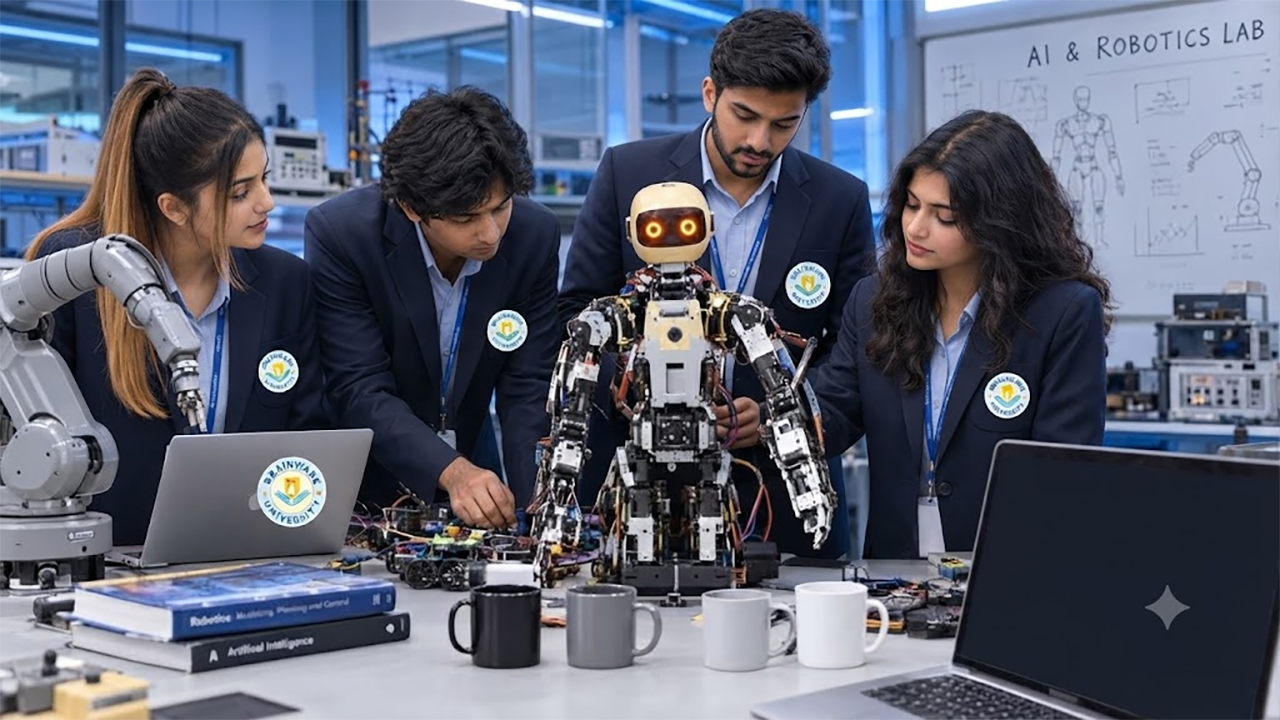
Robotics Labs at Brainware University
Brainware’s current programme page lists practical facilities including:
- Electronic Devices Lab
- Digital System Design Lab
- Analog and Digital Communication Lab
- Microcontrollers Lab
- Digital Signal Processing Lab
- VLSI Design Lab
- Electronic Measurement Lab
- Robotics Lab
- AI Lab
- Embedded System for Robotics Lab
- IoT Application Development on Cloud Lab
- IoT and its Applications using Raspberry Pi Lab
- Artificial Intelligence in Robotics Lab
The programme also describes Robotics hardware laboratories, embedded-system integration labs, AI and Deep Learning simulation environments and industrial automation modules.
Robotics Tools and Technologies Students Should Learn
| Technology | Typical Application |
|---|---|
| Python | AI, Machine Learning and robotic programming |
| C++ | Real-time Robotics and control |
| ROS | Robotics software development and system integration |
| Arduino | Microcontroller-based prototyping |
| Raspberry Pi | Embedded computing and IoT Robotics |
| MATLAB | Modelling and engineering computation |
| Simulink | Control-system simulation |
| TensorFlow | AI and Deep Learning |
| PyTorch | Machine Learning and Computer Vision |
| OpenCV | Image processing and Computer Vision |
| Gazebo | Robotics simulation |
| SolidWorks | Mechanical and robot-system design |
| PLC | Industrial automation |
| IoT Platforms | Connected robotic systems |
Brainware’s current programme specifically identifies ROS, Python, C++, MATLAB, Arduino, Raspberry Pi, TensorFlow, PyTorch, OpenCV, Gazebo and related embedded and automation technologies.
Extracurricular Activities, Robotics Competitions and Innovation
Robotics is particularly suited to project-based extracurricular learning.
Students should look for opportunities involving:
- Robotics competitions
- Hackathons
- Drone challenges
- AI competitions
- Automation projects
- IoT challenges
- Robot-design contests
- Project exhibitions
- Research presentations
- Innovation competitions
- Start-up incubation
- Technical workshops
These activities help students practise design, programming, electronics, troubleshooting and teamwork.
Brainware’s programme describes research projects, hackathons, innovation activities and incubation support as part of its wider Robotics learning environment.
Industry Collaborations and MoUs
Industry exposure is particularly important in Robotics because the field connects software, electronics, automation and manufacturing.
Brainware’s current AI & Robotics programme identifies industry-academia relationships with:
- CodeClouds IT Solutions
- Consilio Intelligence Research Lab
- DCPL Tech
- Tata Consultancy Services
- Webskitters Technology Solutions
The university states that these relationships support activities such as technical workshops, internships, industry projects, certification programmes and practical exposure to AI, automation and related technologies.
Students should still ask what each collaboration has produced for current Robotics students rather than judging a college by the number of MoUs alone.
Job Opportunities for Robotics Engineering Students
Robotics graduates can work in industries where intelligent machines, automation and autonomous systems are being developed or deployed.
Important sectors include:
- Industrial automation
- Manufacturing
- Automotive
- Aerospace
- Healthcare technology
- Electronics
- Logistics
- Warehousing
- Agriculture technology
- Defence technology
- Drones
- Smart infrastructure
- Consumer electronics
- Artificial Intelligence
- Research and development
Popular Career Roles After Robotics Engineering
| Career Role | Main Area of Work |
|---|---|
| Robotics Engineer | Designing and developing robotic systems |
| Robotics Software Engineer | Programming robotic platforms |
| AI Engineer | Building intelligent decision systems |
| Automation Engineer | Designing automated industrial systems |
| Embedded Systems Engineer | Integrating computing with electronic hardware |
| Control Systems Engineer | Developing robot motion and control systems |
| Computer Vision Engineer | Building visual perception systems |
| Machine Learning Engineer | Developing intelligent models for autonomous systems |
| Robot Design Engineer | Designing robotic hardware and system architecture |
| IoT Engineer | Connecting robotic and smart devices |
| Autonomous Systems Engineer | Developing self-operating systems |
| Mechatronics Engineer | Integrating mechanics, electronics and control |
| Research Engineer | Developing advanced Robotics technologies |
| Industrial Automation Developer | Building automation solutions for manufacturing |
Brainware’s engineering pages also identify Robotics Engineer, Automation Engineer and IoT Developer among relevant technology career pathways.
Placement Records and Career Support
Placement is important, but Robotics applicants should distinguish between university-wide placement statistics and programme-specific outcomes.
Brainware University Placement Context
| Placement Indicator | University-Wide Figure |
|---|---|
| Placement | 98% |
| Highest CTC Offered | ₹36 LPA |
| Average CTC | ₹4 LPA |
| Pan-India Recruiters | 1,000+ |
These figures apply to Brainware University’s overall placement ecosystem. They should not be interpreted as BTech AI & Robotics-specific placement statistics.
The university also highlights industry collaboration, hands-on training and participation in live projects as part of its placement model.
Questions to Ask About Robotics Placement
Students should ask:
- How many AI & Robotics students were eligible for placement?
- How many students were placed?
- What was the programme-specific average salary?
- What was the programme-specific median salary?
- Which Robotics or automation roles were offered?
- Which companies hired from the Robotics cohort?
- How many students received internships?
- Which projects were developed with industry mentors?
- Were students recruited for core Robotics roles or general software roles?
- Does the university publish a programme-level placement report?
This gives a much clearer picture than relying on a university-wide highest package.
Top Recruiters and Employment Sectors for Robotics Graduates
Robotics Engineering graduates may find roles with:
- Automation companies
- Automotive manufacturers
- Industrial engineering firms
- Robotics start-ups
- IT and software companies
- Electronics manufacturers
- Aerospace organisations
- Drone companies
- Healthcare technology firms
- Logistics and warehousing companies
- AI product companies
- Research organisations
Brainware University’s overall recruiter network currently includes organisations such as TCS, Adobe, Capgemini, Amazon, Deloitte and Accenture. These are university-wide recruiter relationships and should not be interpreted as confirmation that each organisation recruits specifically from BTech AI & Robotics every year.
Students interested specifically in industrial Robotics should also research employers operating in automation, industrial control, robotics hardware, embedded systems and intelligent manufacturing.
Key Factors to Evaluate Before Selecting a Robotics Engineering College
| Factor | What Students Should Check |
|---|---|
| Recognition | Academic and legal status of the institution |
| Programme Name | Robotics, Robotics & AI, CSE Robotics or Mechatronics |
| Eligibility | Class 12 subjects and minimum marks |
| Admission | Entrance examination and counselling |
| Programming | Python, C++, algorithms and software development |
| Electronics | Digital systems, sensors and embedded hardware |
| Control Systems | Robot control, motion and automation |
| Artificial Intelligence | AI and Machine Learning depth |
| Robotics Lab | Availability of dedicated Robotics infrastructure |
| Simulation | ROS, Gazebo, MATLAB or equivalent tools |
| Hardware | Arduino, Raspberry Pi, PLCs, sensors and actuators |
| Projects | Robot-building and autonomous-system projects |
| Internship | Industry exposure before graduation |
| Research | Robotics, AI and automation research opportunities |
| Industry Connect | Practical outcomes of collaborations |
| Placement | Programme-specific data where available |
| Campus | Academic and student facilities |
| Hostel | Accommodation for outstation students |
| Fees | Complete four-year programme cost |
| Scholarship | Eligibility and continuation conditions |
Before applying, compare:
- Exact programme title
- Robotics versus CSE emphasis
- Admission route
- Eligibility
- Fees
- Robotics laboratory
- Hardware availability
- ROS and simulation exposure
- Projects
- Internships
- Placement data
- Faculty
- Campus
- Hostel
- Scholarships
Why Brainware Stands Out as a Strong Robotics Engineering Option in Kolkata
Brainware University offers several current features relevant to students comparing top Robotics Engineering colleges in Kolkata.
Dedicated AI & Robotics Engineering Programme
Brainware offers a dedicated four-year BTech CSE Artificial Intelligence & Robotics rather than limiting Robotics to a single elective.
The programme combines:
- Computer Science
- Artificial Intelligence
- Machine Learning
- Robotics
- Embedded Systems
- Computer Vision
- Sensors
- Control Systems
- IoT
- Industrial Automation
- Autonomous Systems
Robotics and AI Laboratory Ecosystem
The programme lists dedicated facilities such as:
- Robotics Lab
- AI Lab
- Embedded System for Robotics Lab
- Artificial Intelligence in Robotics Lab
- Microcontrollers Lab
- IoT and Raspberry Pi Lab
- Communication and DSP laboratories
This combination is relevant because modern Robotics requires interaction between computing, AI, electronics and physical hardware.
Current Robotics Technology Stack
Students are exposed to tools and platforms including:
- ROS
- Python
- C++
- MATLAB
- Simulink
- Arduino
- Raspberry Pi
- TensorFlow
- PyTorch
- OpenCV
- Gazebo
- SolidWorks
- PLC systems
Students comparing colleges should check whether these tools are used in actual lab assignments and projects.
Industry and Project Exposure
Brainware’s programme describes:
- Industry-oriented projects
- Industrial training
- Internships
- Capstone projects
- Robotics workshops
- Technical interaction
- Research and innovation activities
Its industry tie-up section identifies CodeClouds, Consilio Intelligence Research Lab, DCPL Tech, TCS and Webskitters Technology Solutions.
Higher Study Pathway in Robotics
Brainware also currently offers a two-year MTech Robotics & Automation programme, giving students an internal postgraduate pathway after appropriate undergraduate study. This can be useful for students interested in advanced Robotics, automation, research or further specialisation.
Placement and Career Preparation
Brainware’s wider placement system reports:
- 98% placement
- ₹36 LPA highest CTC offered
- ₹4 LPA average CTC
- 1,000+ pan-India recruiters
These are university-wide figures and should not be presented as BTech AI & Robotics-specific outcomes.
The more useful question for a Robotics applicant is how many graduates obtain roles specifically involving Robotics, AI, embedded systems, automation, software or intelligent systems.
Engineering Recognition
Brainware University’s engineering page reports an AA+ rating in India’s Best Engineering Institutes from Careers360. The current Careers360 AI & Robotics college directory also displays Brainware with an AA+ rating.
Brainware’s official engineering page further reports that the IIRF Rankings 2026 placed it as No. 1 Engineering College under a Private University in West Bengal. This is an institutional engineering recognition and should not be interpreted as a separate No. 1 ranking specifically for Robotics Engineering.
For students searching for the best college in WB, this recognition can provide one reference point. Curriculum, robotics laboratories, practical hardware exposure, projects, fees and programme-specific placement evidence should remain central to the decision.
Quick Checklist for Choosing a Robotics Engineering College
Before taking admission, check whether the college provides:
- A recognised BTech programme
- Clear Robotics specialisation
- Strong programming foundation
- Electronics and embedded systems
- Sensors and actuators
- Control-system education
- AI and Machine Learning
- Computer Vision
- Dedicated Robotics laboratory
- ROS exposure
- Arduino or Raspberry Pi platforms
- Robotics simulation
- Industrial automation
- Practical robot-building projects
- Internship opportunities
- Industry interaction
- Research and innovation support
- Programme-specific placement evidence
- Suitable campus and hostel facilities
- Transparent fees and scholarships
- BTech CSE Artificial Intelligence & Robotics
- BTech CSE Artificial Intelligence & Machine Learning
- BTech Computer Science & Engineering
- BTech CSE Data Science & Artificial Intelligence
- MTech Robotics & Automation
- Engineering Programmes
- Brainware Entrance Test
- Official Admission Portal
- Admission 2026-27
- Course Fees
- Scholarships
- Placement Overview
- Internship
- Industry Collaborations and MoUs
- Campus Services
- Hostel Fees
- Central Library
- Recognition and Rankings
- Education Guide