Medical diagnosis depends on more than doctors and clinical treatment. Behind many diagnoses is a laboratory where blood, urine, tissue and other biological samples are collected, processed and analysed. Accurate laboratory investigations can play an important role in identifying diseases, monitoring treatment and supporting clinical decisions.
This makes Medical Laboratory Science an important part of modern healthcare.
For students who have completed Class 12 with Physics, Chemistry and Biology and want to enter the healthcare sector, a Diploma in Medical Laboratory Science (DMLS) can provide a practical route into diagnostic laboratory services.
The field is also changing. Modern laboratories increasingly use automated analysers, digital systems, advanced instrumentation and data-driven workflows. As a result, today’s laboratory professional needs more than basic testing skills. They also need to understand sample management, laboratory safety, quality control, technology and responsible use of digital diagnostic systems.
What Is a Diploma in Medical Laboratory Science?
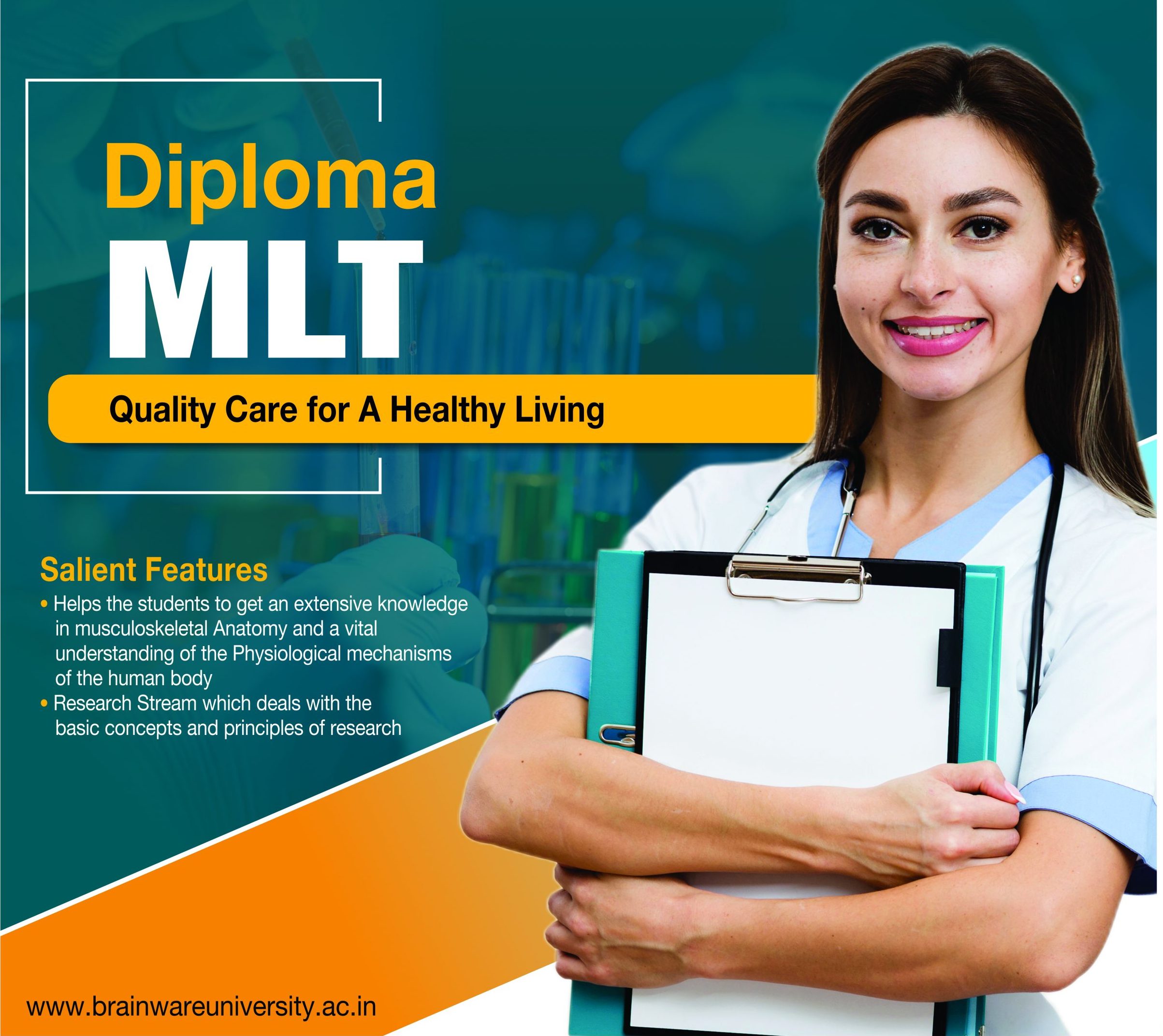
A Diploma in Medical Laboratory Science, commonly associated with terms such as DMLS, DMLT or Diploma in MLT, is a healthcare-focused programme that prepares students for technical work in medical laboratories.
Students learn how biological samples are collected, processed, tested, documented and reported according to established laboratory procedures.
Major areas of learning include:
- Clinical pathology
- Haematology
- Clinical biochemistry
- Medical microbiology
- Immunology
- Serology
- Blood banking
- Histopathology
- Phlebotomy
- Specimen collection
- Laboratory instrumentation
- Quality assurance
- Infection control
- Biomedical waste management
The current Diploma in Medical Laboratory Science programme at Brainware University is structured as two years of academic study followed by six months of internship-based clinical exposure.
Why Is Medical Laboratory Science Important?
Doctors often depend on laboratory investigations to support diagnosis and treatment decisions.
Laboratory professionals may handle samples and investigations related to:
- Blood disorders
- Infections
- Metabolic conditions
- Liver and kidney function
- Microbial infections
- Blood grouping and compatibility
- Tissue abnormalities
- Other diagnostic investigations
This means laboratory work requires accuracy, discipline and attention to detail.
A small error in sample identification, handling, testing or documentation can affect the reliability of a result. For this reason, medical laboratory education places strong emphasis on technical procedures, safety, quality control and professional responsibility.
Who Can Study DMLS After Class 12?
The current eligibility criteria at Brainware University require candidates to have completed 10+2 with Physics, Chemistry and Biology, with pass marks in both theory and practical examinations in each of these subjects and pass marks in English.
The minimum requirement is 50% marks or equivalent grade. A 5% relaxation is stated for reserved-category candidates.
The current page also specifies a minimum age of 17 years as of 31 December of the admission year and an upper age limit of 40 years as of the same date.
Students should verify the latest admission requirements before applying.
How Long Is the Diploma in Medical Laboratory Science?
The current DMLS programme consists of:
| Particular | Details |
|---|---|
| Programme | Diploma in Medical Laboratory Science |
| Academic Duration | 2 years |
| Internship | 6 months |
| Total Structure | 2 years + 6 months internship |
| Eligibility | 10+2 with PCB |
| Minimum Marks | 50% |
| Major Areas | Pathology, microbiology, haematology, biochemistry and more |
| Practical Training | Laboratory and clinical exposure |
| Location | Barasat, Kolkata |
The six-month internship is particularly important because it provides exposure to real laboratory workflows, sample processing and professional responsibilities.
What Do You Study in DMLS?
A Medical Laboratory Science diploma covers several branches of diagnostic laboratory practice.
| Subject Area | What Students Learn |
|---|---|
| Clinical Pathology | Examination of biological samples |
| Haematology | Blood and blood-related investigations |
| Clinical Biochemistry | Biochemical analysis of samples |
| Microbiology | Microorganisms and laboratory diagnosis |
| Immunology | Immune responses and related testing |
| Serology | Detection and analysis of antibodies and antigens |
| Blood Banking | Blood grouping, testing and related procedures |
| Histopathology | Examination of tissues |
| Phlebotomy | Blood collection techniques |
| Laboratory Instrumentation | Use and handling of laboratory equipment |
| Quality Assurance | Accuracy and consistency of laboratory processes |
| Infection Control | Safe laboratory practices |
| Biomedical Waste | Safe handling and disposal of laboratory waste |
This combination gives students a foundation across several diagnostic areas rather than restricting them to one type of laboratory test.
Practical Training in Medical Laboratory Science
Medical laboratory education cannot be entirely classroom-based.
Students need practical experience with:
- Sample collection
- Sample identification
- Sample processing
- Laboratory equipment
- Microscopy
- Testing procedures
- Documentation
- Quality control
- Safety protocols
- Infection control
The current programme highlights hands-on laboratory training, hospital exposure, equipment training, sample-processing practice and a six-month clinical internship.
Brainware University’s listed Medical Laboratory Technology laboratories include equipment such as microscopes, centrifuges, autoclaves, pH meters, pipettes, semi-automatic analysers and colorimeters, providing exposure to laboratory instruments used in diagnostic work.
Career Options After Diploma in Medical Laboratory Science
A DMLS qualification can open pathways across hospitals, diagnostic centres, pathology laboratories, blood banks and other healthcare settings.
| Career Role | Typical Work Area |
|---|---|
| Medical Laboratory Technician | Diagnostic laboratory testing |
| Clinical Laboratory Technician | Clinical sample analysis |
| Pathology Laboratory Technician | Pathology investigations |
| Blood Bank Technician | Blood testing and processing |
| Microbiology Technician | Microbiological investigations |
| Biochemistry Technician | Biochemical testing |
| Diagnostic Laboratory Technician | Diagnostic sample processing |
| Laboratory Assistant | Laboratory support |
| Phlebotomy Technician | Blood/sample collection |
| Sample Processing Technician | Sample preparation and processing |
| Quality Control Technician | Laboratory quality monitoring |
The exact job title and responsibilities depend on the employer, work setting, qualification requirements and experience.
1. Hospitals and Clinical Laboratories
Hospitals require laboratory professionals to support diagnostic services.
A medical laboratory technician may work with samples and laboratory procedures associated with different departments and clinical requirements.
The role can involve:
- Sample collection
- Sample identification
- Processing
- Testing
- Equipment operation
- Recording results
- Following safety procedures
2. Diagnostic Centres and Pathology Laboratories
Independent diagnostic centres and pathology laboratories are another major employment area.
Professionals may work in departments such as:
- Haematology
- Biochemistry
- Microbiology
- Clinical pathology
- Histopathology
This makes DMLS relevant for students interested in diagnostic healthcare rather than direct bedside care.
3. Blood Banks
Blood banks require trained technical personnel for laboratory procedures associated with blood collection, testing, grouping and storage.
This area requires particular attention to:
- Sample identification
- Testing accuracy
- Documentation
- Safety
- Quality control
Students interested in blood banking can also pursue specialised training or certifications.
4. Microbiology Laboratories
Microbiology laboratories investigate microorganisms associated with infections and other health conditions.
Professionals may work with laboratory procedures involving:
- Bacteria
- Fungi
- Other microorganisms
- Culture-based investigations
- Microbiological testing
Medical microbiology is therefore an important specialisation within laboratory science.
5. Research and Clinical Research
Medical laboratory professionals can also find opportunities in research-support environments.
Possible workplaces include:
- Research laboratories
- Medical colleges
- Clinical research organisations
- Pharmaceutical companies
- Biotechnology laboratories
Additional qualifications and specialised experience may be required for advanced research positions.
6. Healthcare Quality and Laboratory Management
Modern laboratories need systems to ensure that test procedures remain accurate and consistent.
Quality-focused roles can involve:
- Quality control
- Documentation
- Equipment records
- Standard operating procedures
- Safety compliance
- Process monitoring
With experience and further education, professionals can move towards more responsible laboratory-management roles.
Where Can DMLS Graduates Work?
The scope of Medical Laboratory Science extends beyond conventional hospitals.
Potential employment settings include:
- Government hospitals
- Private hospitals
- Diagnostic centres
- Pathology laboratories
- Blood banks
- Medical colleges
- Nursing homes
- Public health laboratories
- Research centres
- Pharmaceutical companies
- Clinical research organisations
- Fertility clinics
- Biotechnology laboratories
- Healthcare chains
- Community health programmes
DMLS and Modern Diagnostic Technology
Medical laboratories are becoming increasingly automated.
Automated analysers can process large numbers of samples, while digital systems can help track specimens, record information and manage laboratory workflows.
This is changing the skill requirements of laboratory professionals.
Students increasingly need to understand not only what a test does, but also how technology supports the complete laboratory process.
AI in Medical Laboratory Science
Artificial intelligence is beginning to influence laboratory medicine and diagnostic workflows.
AI and automation can support areas such as:
- Automated blood analysers
- Digital microscopy
- Digital pathology
- Laboratory Information Management Systems
- Barcode-based sample tracking
- Automated quality control
- Pattern recognition
- Molecular diagnostic workflows
- Infection surveillance
- Equipment maintenance alerts
- Electronic reporting
The current DMLS programme introduces students to AI and digital innovation in laboratory workflows.
However, technology does not remove the need for trained laboratory professionals.
Human oversight remains important for sample integrity, quality control, safety, validation, clinical context and ethical responsibility. AI should therefore be viewed as a tool that can support laboratory professionals rather than simply replace them.
What Skills Should a Medical Laboratory Student Develop?
A successful laboratory professional needs more than textbook knowledge.
Accuracy
Laboratory testing requires careful attention to procedures and measurements.
Sample Handling
Correct collection, identification, storage and processing are essential.
Equipment Handling
Students should become comfortable with laboratory instruments and their operating procedures.
Quality Control
Testing must follow established quality standards.
Laboratory Safety
Professionals need to understand infection control, personal safety and biomedical waste management.
Documentation
Accurate records are an essential part of laboratory work.
Communication
Laboratory professionals work with doctors, nurses, technicians and other healthcare personnel.
Digital Literacy
Modern laboratories increasingly depend on automated analysers, laboratory information systems and electronic records.
What Is the Future Scope of Medical Laboratory Science?
The future of laboratory diagnostics is likely to be increasingly connected with technology.
Laboratory Automation
Automated analysers can improve processing capacity and workflow efficiency.
Digital Pathology
Digital imaging can support tissue and pathology analysis.
Molecular Diagnostics
Advanced diagnostic techniques are increasing the importance of laboratory-based molecular testing.
Point-of-Care Testing
Some diagnostic procedures are increasingly being performed closer to patients.
AI-Assisted Diagnostics
AI can assist with pattern recognition, image analysis and laboratory data interpretation.
Laboratory Information Systems
Digital systems help laboratories manage samples, reports, records and workflows.
Quality Management
As diagnostic services become more complex, quality assurance remains essential.
For students, this means the strongest career preparation combines traditional laboratory science with practical knowledge of modern diagnostic technology.
DMLS Career Growth and Professional Development
A diploma can provide an entry point into laboratory work, but professional growth generally depends on experience, additional training and specialisation.
A graduate may begin in an entry-level laboratory role and gradually develop expertise in areas such as:
- Haematology
- Clinical biochemistry
- Microbiology
- Blood banking
- Histopathology
- Phlebotomy
- Laboratory quality management
- Diagnostic instrumentation
Additional qualifications can help professionals move towards more specialised responsibilities.
Higher Studies After DMLS
A diploma can also serve as a foundation for further education.
Eligible graduates may explore:
- Bachelor’s degree in Medical Laboratory Technology
- Bachelor’s degree in Medical Laboratory Science
- Allied Health Sciences programmes
- Specialised certifications
- Phlebotomy certification
- Blood banking certification
- Microbiology-related training
- Clinical pathology training
- Quality assurance
- Infection-control training
- Laboratory instrumentation
The current programme information identifies bachelor’s-level Medical Laboratory Technology/Science and related Allied Health Sciences pathways as possible higher-study directions, subject to eligibility.
Brainware University also lists a B.Sc. in Medical Lab Technology – Lateral Entry pathway for eligible diploma holders, structured as two years plus six months of internship.
DMLS at Brainware University
The Diploma in Medical Laboratory Science at Brainware University is designed around academic learning, practical laboratory training and clinical exposure.
The programme lasts two years followed by six months of internship and covers pathology, haematology, clinical biochemistry, microbiology, immunology, serology, blood banking, histopathology, phlebotomy, laboratory instrumentation, infection control and quality assurance.
Students receive exposure to laboratory equipment, hospital-based practical training, sample-processing workflows and pre-placement preparation.
DMLS Course at a Glance
| Particular | Details |
|---|---|
| Programme | Diploma in Medical Laboratory Science |
| Common Terms | DMLS / DMLT / Diploma in MLT |
| Academic Duration | 2 years |
| Internship | 6 months |
| Eligibility | 10+2 with Physics, Chemistry and Biology |
| Minimum Marks | 50% |
| Major Areas | Pathology, microbiology, haematology, biochemistry, blood banking |
| Practical Training | Laboratory and clinical exposure |
| Career Areas | Hospitals, diagnostic centres, pathology labs, blood banks and research |
| Higher Studies | BMLT/BMLS and related Allied Health Sciences pathways |
| Location | Barasat, Kolkata |
Frequently Asked Questions
What is DMLS?
DMLS stands for Diploma in Medical Laboratory Science. It is a healthcare diploma that trains students in laboratory testing, sample handling, diagnostic procedures, laboratory equipment and quality practices.
Is DMLS the same as DMLT?
DMLS and DMLT are commonly used to describe diploma-level Medical Laboratory Technology/Science education. However, students should check the exact programme title, curriculum and recognition of the institution before admission.
Can I study DMLS after Class 12?
Yes. The current eligibility requires 10+2 with Physics, Chemistry and Biology, along with the specified marks and subject-wise theory/practical requirements.
How long is the Diploma in Medical Laboratory Science?
The current programme consists of two years of academic study plus six months of internship.
What subjects are taught in DMLS?
Major areas include clinical pathology, haematology, biochemistry, microbiology, immunology, serology, blood banking, histopathology, phlebotomy, laboratory instrumentation and quality assurance.
What jobs can I get after DMLS?
Possible roles include medical laboratory technician, pathology laboratory technician, clinical laboratory technician, blood bank technician, microbiology technician, biochemistry technician, diagnostic laboratory technician, laboratory assistant and phlebotomy technician.
Can DMLS graduates work in hospitals?
Yes. Hospitals are among the major employment settings for medical laboratory professionals.
Can I work in a diagnostic centre after DMLS?
Yes. Diagnostic laboratories and pathology centres are important career areas for DMLS graduates.
Is there an internship in DMLS?
Yes. The current programme includes a six-month internship following two years of academic study.
Can I study further after DMLS?
Yes. Eligible graduates can pursue bachelor’s-level Medical Laboratory Technology/Science or related Allied Health Sciences programmes, along with specialised certifications.
Is AI relevant to Medical Laboratory Science?
Yes. AI and automation are increasingly relevant to automated analysers, digital pathology, sample tracking, quality control, laboratory data and diagnostic workflows.
What is the future scope of DMLS?
The field is evolving with laboratory automation, digital pathology, molecular diagnostics, advanced instrumentation, laboratory information systems and AI-assisted diagnostic workflows.
Starting a Career Behind the Diagnosis
Medical Laboratory Science offers a healthcare career for students who are interested in biology, diagnostic testing, laboratory technology and scientific procedures but prefer a technical laboratory environment.
The role of the laboratory professional is evolving. Alongside traditional pathology, microbiology, haematology and biochemistry, laboratories are adopting automation, digital records, advanced instruments, molecular workflows and AI-supported systems.
For students, this makes practical training especially important. Learning how to handle samples correctly, operate equipment, maintain quality and follow safety procedures provides the foundation; understanding modern laboratory technology can help build on it.
A Diploma in Medical Laboratory Science can therefore be a starting point for employment in diagnostic healthcare as well as further study in Medical Laboratory Technology, Medical Laboratory Science and related Allied Health Sciences.
In a healthcare system where accurate diagnosis increasingly depends on reliable laboratory information, skilled laboratory professionals remain an essential part of the healthcare team.