
Top Engineering Colleges in West Bengal: Admission, Eligibility, Placement and Career Guide
Best Engineering Colleges in West Bengal: An Overview
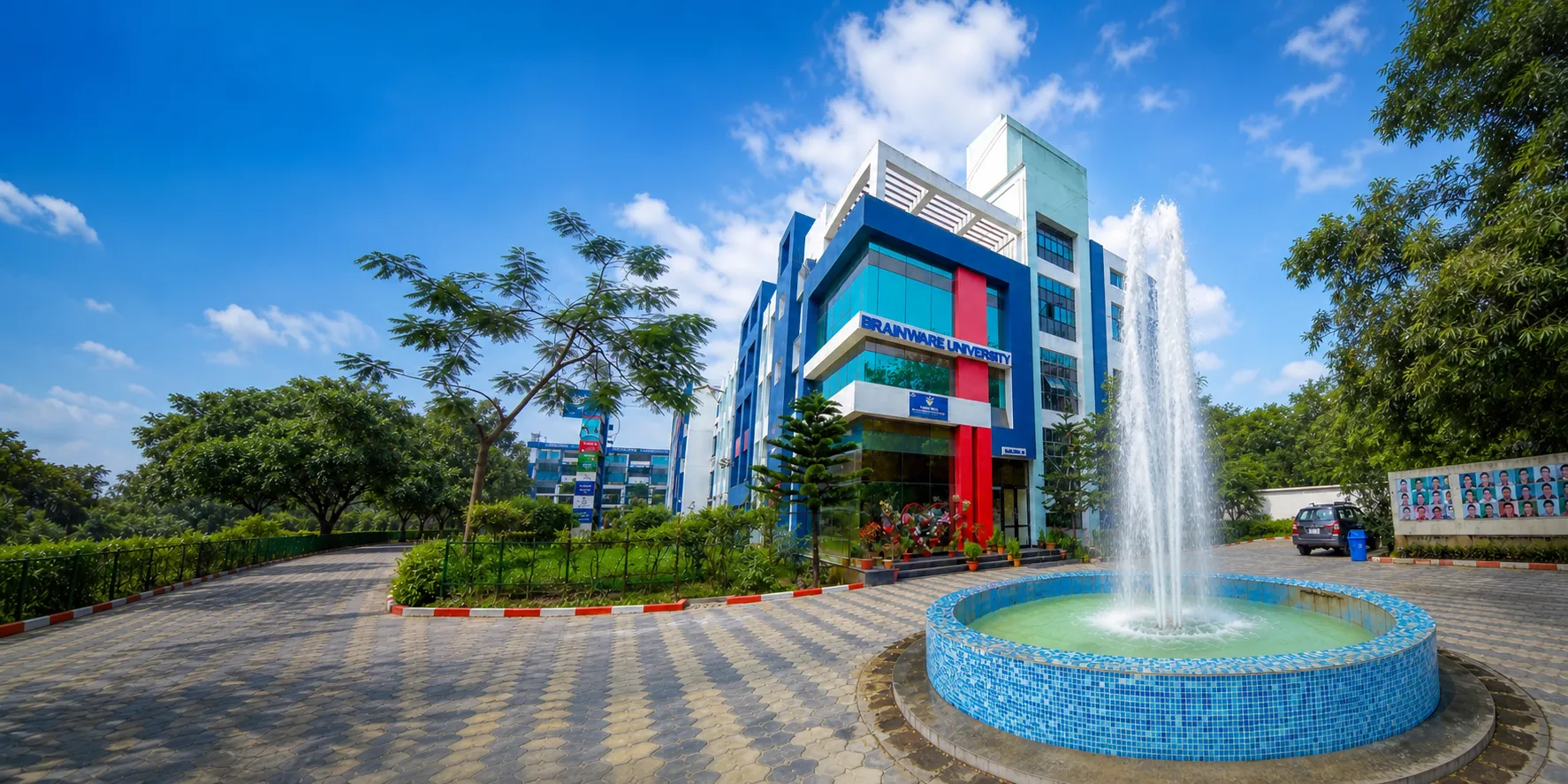
Students searching for the top engineering colleges in West Bengal can choose from IITs, NITs, public universities, government engineering colleges, private colleges and private universities. IIT Kharagpur, Jadavpur University, NIT Durgapur and IIEST Shibpur are among the state's nationally recognised engineering institutions, while IEM, MAKAUT, Haldia Institute of Technology, JIS College of Engineering, Narula Institute of Technology, Brainware University and other institutions expand the range of private and state-level options.
The best college in WB depends on the student's preferred branch, entrance score, budget, curriculum, laboratory facilities, placement record, campus, hostel requirements and career plans. Students should therefore compare institutions systematically instead of relying on a single ranking or highest-package figure.
Engineering Departments and Offered Courses with Specialisation
Engineering education in West Bengal covers traditional disciplines as well as technology-focused specialisations.
Common undergraduate engineering options include:
- Computer Science and Engineering
- Artificial Intelligence and Machine Learning
- Data Science
- Cyber Security
- Information Technology
- Artificial Intelligence and Robotics
- Electronics and Communication Engineering
- Electrical Engineering
- Mechanical Engineering
- Civil Engineering
- Chemical Engineering
- Biotechnology
- Aerospace Engineering
- Agricultural Engineering
- Metallurgical and Materials Engineering
- Mining Engineering
- Marine Engineering
- Production Engineering
Not every institution offers every branch. IIT Kharagpur, Jadavpur University, NIT Durgapur and IIEST Shibpur have broad engineering portfolios, while many private institutions increasingly focus on CSE and emerging digital technologies.
Students should select a college only after confirming that the preferred branch is available and that its laboratories, faculty, projects and placement ecosystem support that particular discipline.
Brainware University BTech Programmes at a Glance
Brainware University's current 2026-27 programme catalogue includes the following four-year BTech options.
| Programme | Primary Focus | Current Listed Fee |
|---|---|---|
| BTech Computer Science & Engineering | Programming, software systems, computing and emerging technologies | ₹5,79,600 |
| BTech CSE - Artificial Intelligence & Machine Learning | AI, Machine Learning and intelligent computing | ₹5,79,600 |
| BTech CSE - Artificial Intelligence & Robotics | Artificial Intelligence, robotics and automation | ₹5,79,600 |
| BTech CSE - Data Science & Artificial Intelligence | Data Science, analytics, AI and Machine Learning | ₹5,79,600 |
| BTech CSE - Cyber Security | Network security, ethical hacking, security systems and cyber defence | ₹5,79,600 |
| BTech Biotechnology | Biotechnology, biological sciences and applied engineering | ₹5,59,600 |
The university also offers lateral-entry routes for eligible candidates in selected engineering programmes.
Fees and eligibility criteria are subject to change, so applicants should confirm the current details during admission.
Engineering Curriculum and Learning Environment
A strong engineering curriculum should combine theoretical knowledge, mathematics, scientific principles and practical application.
Students should gradually move from foundational subjects into branch-specific learning, laboratory experiments, software or equipment-based practice, mini projects, major projects, internships and research.
For CSE and technology-oriented engineering, contemporary areas increasingly include:
- Artificial Intelligence
- Machine Learning
- Data Science
- Cyber Security
- Cloud Computing
- Internet of Things
- Robotics
- Automation
- Blockchain
- Data Mining
- Software Engineering
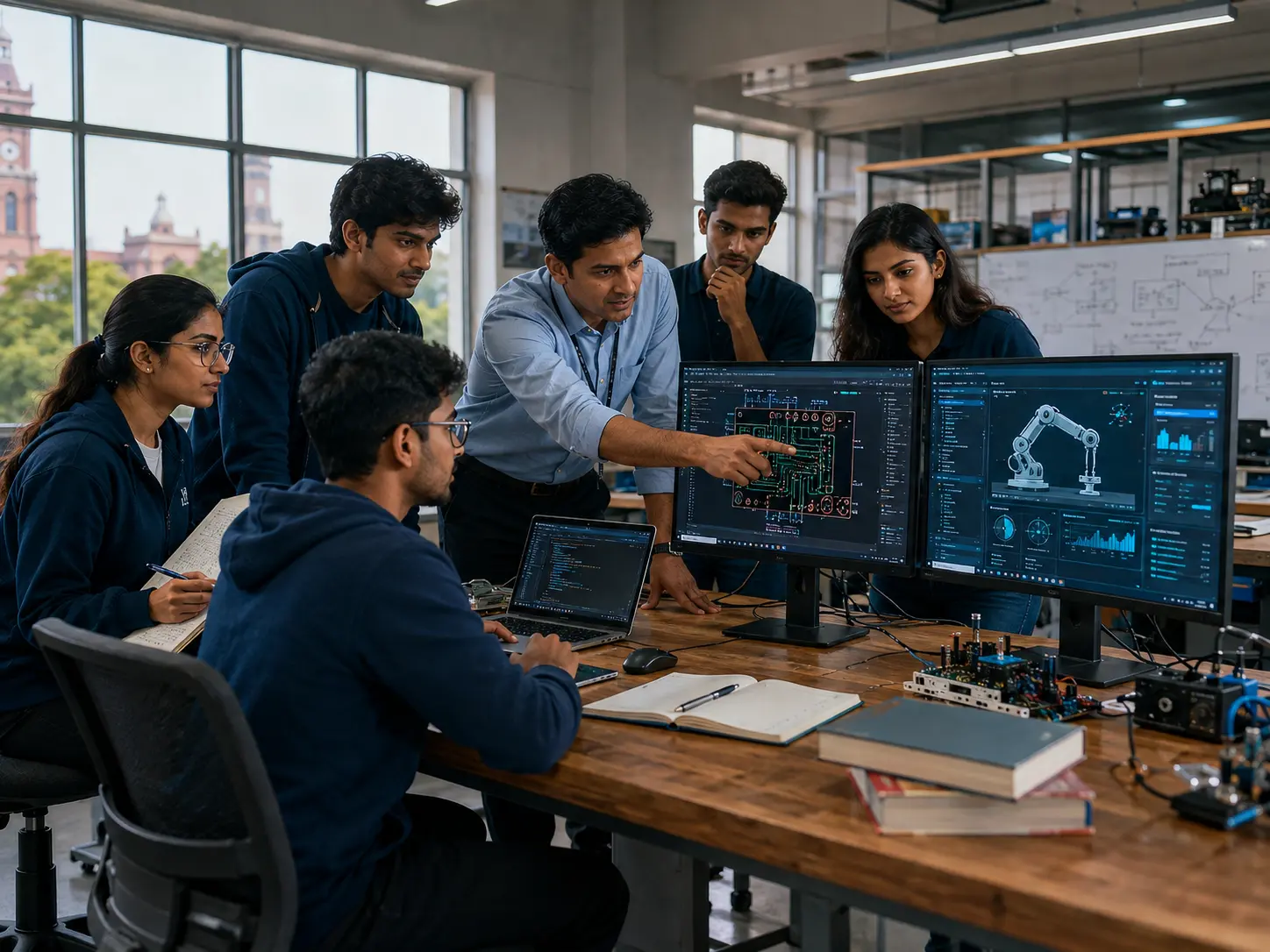
Brainware University's current engineering page highlights laboratories, coding practice, mini projects, major projects, internships, workshops and hands-on industry exposure as part of its engineering learning model.
What Should a Strong Engineering Curriculum Include?
A useful engineering programme should provide:
-
Scientific and Mathematical Foundations
Students need a clear understanding of mathematics, physics and relevant science subjects. -
Core Engineering Knowledge
Each branch should provide adequate depth in its essential technical subjects. -
Laboratory Training
Theory should be supported by regular practical work. -
Problem-Solving Skills
Engineering education should teach students how to analyse and solve problems systematically. -
Programming and Digital Skills
Computing skills are increasingly valuable even outside conventional CSE programmes. -
Mini and Major Projects
Projects help students convert theoretical concepts into working solutions. -
Internships
Internships expose students to professional expectations and workplace practices. -
Industry Interaction
Guest lectures, technical workshops, industrial visits and industry-guided projects can strengthen practical understanding. -
Research Opportunities
Research exposure is useful for students interested in higher studies, innovation and R&D. -
Communication and Career Skills
Engineers need technical knowledge as well as communication, teamwork and presentation ability.
Key Highlights of Engineering Programmes
Students comparing a top college in Kolkata or elsewhere in West Bengal should evaluate several factors together.
| Factor | Why It Matters |
|---|---|
| Recognition | Confirms the academic and legal standing of the institution |
| Engineering Branches | Determines whether the preferred programme is available |
| Curriculum | Shows the academic depth and relevance of the course |
| Faculty | Influences teaching, mentoring and research |
| Lab / Laboratory | Provides practical engineering experience |
| Projects | Develops application and problem-solving skills |
| Internship | Provides professional exposure |
| Industry Collaboration | Connects classroom study with workplace practice |
| Research | Supports innovation and higher studies |
| Placement | Provides evidence of graduate career outcomes |
| Recruiters | Shows the types of employers visiting the institution |
| Career Training | Helps students prepare for aptitude, technical and HR rounds |
| Campus | Shapes the four-year student experience |
| Hostel | Important for students living away from home |
| Fees | Determines the financial commitment |
| Scholarships | Can reduce educational costs for eligible students |
| Location | Influences travel, accessibility and industry exposure |
Engineering College in West Bengal: Admission Process and Eligibility
Engineering admission in West Bengal takes place through several routes depending on the institution.
Students should check:
- Class 12 eligibility
- Mandatory subjects
- Minimum aggregate marks
- Entrance examination
- Counselling process
- Reservation policy
- Application deadline
- Seat availability
- Fees
- Required documents
Major Engineering Entrance Exams in West Bengal
The principal entrance routes include:
| Entrance Exam | Common Use |
|---|---|
| JEE Advanced | IIT admission, including IIT Kharagpur |
| JEE Main | NITs, IIEST and several other engineering institutions |
| WBJEE | Jadavpur University and many government/private engineering colleges in West Bengal |
| JELET | Lateral entry into eligible engineering programmes |
| University Entrance Tests | Used by selected private universities |
Careers360's current West Bengal engineering guide identifies WBJEE, JEE Main, JEE Advanced and JELET among the major engineering admission routes in the state.
Brainware University BTech Eligibility
For BTech CSE and its main CSE specialisations, Brainware University currently requires:
- Minimum 60% marks or equivalent grade in 10+2
- Minimum 45% marks or equivalent grade in any three eligible subjects taken together
- Physics and Mathematics as mandatory subjects
- One additional subject from the university's approved list
- Individual pass marks in theory and practical components where applicable
- Pass marks in English
- 5% relaxation in marks for reserved category candidates under the university's stated policy
Approved additional subjects include Chemistry, Computer Science, Electronics, Information Technology, Biology, Informatics Practice, Biotechnology, technical vocational subjects, Agriculture, Engineering Graphics, Business Studies and Entrepreneurship.
BTech Biotechnology follows a different subject combination. Physics and Chemistry are mandatory, along with Mathematics or Biology.
Brainware University Engineering Admission Process
Brainware University's current BTech CSE page states that engineering candidates may apply through JEE Main, WBJEE or the Brainware Entrance Test (BET). Eligible candidates may also be considered for direct admission based on Class 12 merit and counselling, subject to university rules and seat availability.
A typical process is:
- Select the engineering programme.
- Check programme-specific eligibility.
- Complete the online application or enquiry.
- Submit the required academic details.
- Appear for BET or submit an applicable valid entrance score.
- Complete counselling and document verification.
- Review the current fee and scholarship options.
- Complete admission within the specified period.
Students should always check the current Official Admission Portal, Application Form, Admission Process and Last Date before making payment.
Engineering Fees in West Bengal: What Students Should Compare
Engineering fees vary widely between IITs, NITs, public universities, state government colleges, private colleges and private universities.
A lower tuition fee does not automatically mean a lower total cost, particularly when hostel, food, travel and other charges are included.
Students should compare:
- Tuition fee
- Admission fee
- Examination charges
- Laboratory charges
- Hostel fee
- Food expenses
- Transport
- Certification costs
- Project expenses
- Scholarship opportunities
- Refund conditions
Brainware University currently lists most of its four-year CSE-based BTech programmes at ₹5,79,600, while BTech Biotechnology is listed at ₹5,59,600.
Students should confirm the latest fee schedule before admission.
Campus Life and Facilities
A four-year engineering degree involves substantial time outside the classroom, so campus infrastructure matters.
Students need access to laboratories, libraries, project spaces, internet connectivity, technical events, seminars, recreation and student support.
Brainware University's current campus facilities include:
- 1 Gbps Wi-Fi connectivity
- Central Library
- Departmental libraries
- Seminar halls
- Auditorium
- Incubation support
- Boys' and girls' hostels
- Food court and canteen
- Gymnasium
- Common rooms
- Indoor games
- Sports infrastructure
- Medical support
- Counselling facilities
- 24x7 emergency car service
The university's official services page confirms these facilities, including 1 Gbps Wi-Fi, library resources, hostels, sports infrastructure and medical support.
Student Accommodation and Hostel Facilities
A hostel is an important consideration for students coming from districts such as Darjeeling, Jalpaiguri, Cooch Behar, Malda, Murshidabad, Birbhum, Purulia, Bankura, East and West Burdwan, East and West Midnapore, Nadia and other parts of West Bengal.
Brainware University provides separate boys' and girls' hostel accommodation on campus.
Students and parents should check:
| Hostel Factor | What to Verify |
|---|---|
| Room Type | Sharing pattern and occupancy |
| Monthly Fee | Current fooding and lodging charge |
| Security | Entry, exit and visitor rules |
| Wi-Fi | Access and applicable conditions |
| Food | Meal arrangements |
| Medical Support | First aid and emergency facilities |
| Campus Access | Distance from classrooms and laboratories |
| Caution Deposit | Amount and refund conditions |
| Joining Fee | One-time charge |
| Availability | Current hostel seat status |
Brainware University Hostel Fee Reference
Brainware University's proposed 2026-27 rates for students other than Nursing currently state:
| Accommodation | Proposed Fee |
|---|---|
| 4-bed Sharing Room | ₹10,000 per month |
| 2-bed Sharing Room | ₹12,000 per month, girls only |
| Single Room | ₹15,000 per month, girls only |
| Caution Deposit | ₹10,000 refundable |
| Hostel Joining Fee | ₹10,000 non-refundable |
The published rates include fooding and lodging and are payable quarterly. Rates are subject to change.
State-of-the-Art Laboratories and Libraries
A good lab or laboratory ecosystem is essential to engineering education.
Laboratory requirements differ considerably between branches. Computer Science students need computing and networking facilities, while Mechanical, Civil, Electrical, Biotechnology and other programmes require specialised equipment and practical spaces.
Brainware University's current engineering information highlights modern laboratories and research exposure in areas such as:
- Artificial Intelligence
- Computer Graphics
- Linux Administration
- Data Mining
- Internet of Things
- Cloud Computing
- Machine Learning
- Blockchain
Its engineering framework also highlights curriculum mapping or academic exposure involving Microsoft, Red Hat Academy, Oracle and TCS iON.
The university's Central Library and departmental libraries contain textbooks, journals, research reports, project reports and e-resources. The library uses Koha and provides an Online Public Access Catalogue and RFID-supported services.
Laboratories to Check Before Choosing an Engineering College
| Engineering Field | Important Laboratory Exposure |
|---|---|
| Computer Science | Programming, DBMS, operating systems, networks and software development |
| Artificial Intelligence | AI programming, Machine Learning and advanced computing |
| Data Science | Data analysis, databases, Machine Learning and big-data tools |
| Cyber Security | Network security, ethical hacking and security systems |
| Robotics | Robotics, sensors, embedded systems, control and automation |
| Electronics | Digital electronics, circuits and communication systems |
| Electrical | Machines, power systems and control systems |
| Mechanical | Manufacturing, thermal engineering, mechanics and CAD |
| Civil | Surveying, materials, structures and geotechnical engineering |
| Biotechnology | Microbiology, molecular biology, biochemistry and bioprocessing |
Students should ask how often laboratories are used and whether project students can access them outside routine practical classes.
Extracurricular Activities, Technical Clubs and Innovation
Engineering students benefit from activities that go beyond examination-oriented study.
Useful opportunities include:
- Coding competitions
- Hackathons
- Robotics challenges
- AI competitions
- Technical clubs
- Project exhibitions
- Innovation competitions
- Entrepreneurship programmes
- Research presentations
- Workshops
- Seminars
- Industry talks
- Sports and cultural activities
These experiences can develop teamwork, communication, leadership and practical problem-solving.
Incubation facilities are also valuable for students interested in product development, start-ups and entrepreneurship.
Industry Collaborations and MoUs
Industry relationships are useful when they lead to meaningful student participation.
Students should look for outcomes such as:
- Internships
- Live projects
- Technical workshops
- Industrial visits
- Certifications
- Guest lectures
- Research collaboration
- Capstone mentoring
- Faculty-industry interaction
- Placement preparation
Brainware University's current engineering page describes curriculum or academic alignment with Microsoft, Red Hat Academy and Oracle, as well as AI, Machine Learning and Data Science courses associated with TCS iON.
Students should examine the practical outcome of an MoU rather than judge an institution simply by the number of partnerships displayed.
Job Opportunities for Engineering Students
Engineering graduates work across technology, manufacturing, infrastructure, energy, consulting, biotechnology, automation, telecommunications and research.
The available career and job opportunities depend on the chosen branch, technical skills, internship experience and projects.
Career Options by Engineering Specialisation
| Engineering Area | Possible Career Roles |
|---|---|
| Computer Science | Software Developer, Systems Engineer, Full-Stack Developer, Cloud Engineer |
| AI & Machine Learning | AI Engineer, ML Engineer, Intelligent Systems Developer |
| Data Science | Data Scientist, Data Engineer, Data Analyst, BI Analyst |
| Cyber Security | Security Analyst, SOC Analyst, Penetration Tester, Security Engineer |
| Robotics | Robotics Engineer, Automation Engineer, Embedded Systems Engineer |
| Electronics | Electronics Engineer, Embedded Engineer, Communication Engineer |
| Electrical | Electrical Engineer, Power Systems Engineer, Control Engineer |
| Mechanical | Design Engineer, Manufacturing Engineer, Production Engineer |
| Civil | Structural Engineer, Site Engineer, Construction Engineer |
| Biotechnology | Bioprocess Engineer, Research Associate, Biotechnology Analyst |
| Cloud and IoT | Cloud Engineer, IoT Developer, Solutions Engineer |
| Research | Research Assistant, Project Engineer, R&D Professional |
Engineering graduates may also pursue MTech, MS, MBA, PhD programmes, entrepreneurship and public-sector examinations.
Placement Records and Career Support
Placement should be compared carefully because institutions often publish different types of statistics.
A meaningful comparison should distinguish between:
- Institution-wide placement
- School-level placement
- Branch-specific placement
- Number of students eligible
- Number of students placed
- Average salary
- Median salary
- Highest salary
- Number of recruiters
- Types of job roles
Brainware University Placement Context
Brainware University's current placement overview reports the following university-wide figures:
| Placement Indicator | University-Reported Figure |
|---|---|
| Placement | 98% |
| Highest CTC Offered | ₹36 LPA |
| Average CTC | ₹4 LPA |
| Pan-India Recruiters | 1,000+ |
The university also identifies pre-placement training from day one, soft-skills training and industry-academia partnerships among its placement initiatives.
These figures are university-wide. They should not be presented as the exclusive result of every individual BTech branch.
BTech CSE Programme-Level Placement Reference
Brainware's current BTech CSE page separately publishes a programme-level placement scoreboard:
| BTech CSE Placement Indicator | Published Figure |
|---|---|
| Number of Drives | 139 |
| Highest Salary Offered | ₹27 LPA |
| Average Salary Offered | ₹6.82 LPA |
| Companies Visited | 122 |
These figures apply specifically to the undergraduate Computer Science and Engineering programme and provide a more focused reference for CSE applicants.
Questions to Ask Before Comparing Placement Records
Students should ask:
- How many students were eligible for placement?
- How many students received offers?
- What is the branch-specific placement percentage?
- What is the median salary?
- What is the average salary?
- What was the highest salary?
- Which companies recruited from the chosen branch?
- Which job roles were offered?
- How many students completed internships?
- How many internships converted into PPOs?
- When does placement training begin?
- Are branch-wise placement reports available?
A high headline package should never be the sole basis for selecting an engineering college.
Top Recruiters for Engineering Graduates
Recruiters vary by engineering branch and placement year.
Brainware University's current engineering page displays major recruiters including:
- Adobe
- Infosys
- TCS
- Capgemini
- Wipro
- TISMO Technology Solutions
- Jaro Education
- Antino
The same page also shows engineering placement examples at organisations including Infosys, Wipro, Ginesys, Antino, Capgemini and TISMO Technology Solutions.
Engineering graduates more broadly may find opportunities in:
- IT services
- Product technology
- Manufacturing
- Construction
- Infrastructure
- Consulting
- Banking and fintech
- Telecommunications
- Automotive
- Energy
- Biotechnology
- Pharmaceuticals
- Robotics
- Automation
- Cloud computing
- Cyber Security
- Data analytics
Students should request the latest branch-specific recruiter list from every institution they shortlist.
Key Factors to Evaluate Before Selecting an Engineering College
| Factor | What Students Should Check |
|---|---|
| Recognition | Legal and academic status of the institution |
| Ranking | Ranking body, category and year |
| Admission | Entrance examination and selection route |
| Eligibility | Required subjects and minimum marks |
| Branch Availability | Whether the preferred programme is offered |
| Curriculum | Balance of fundamentals and current technology |
| Faculty | Academic expertise and mentoring |
| Lab / Laboratory | Equipment, software and practical exposure |
| Projects | Mini projects, capstone projects and research |
| Internship | Structured industry exposure |
| Industry Connect | Practical outcomes of collaborations |
| Research | Publications, innovation and undergraduate research |
| Placement | Branch-specific results where available |
| Recruiters | Companies relevant to the chosen branch |
| Career Training | Aptitude, coding, communication and interview preparation |
| Campus | Academic and recreational facilities |
| Hostel | Accommodation for outstation students |
| Fees | Complete programme cost |
| Scholarship | Financial support and continuation criteria |
| Location | Travel, accessibility and surrounding opportunities |
Why Brainware Stands Out as a Strong Engineering Choice in West Bengal
Brainware University can be considered by students looking for a private engineering university with a strong emphasis on Computer Science and emerging technologies.
Current Engineering Programmes
Brainware currently offers BTech pathways including:
- Computer Science & Engineering
- Artificial Intelligence & Machine Learning
- Artificial Intelligence & Robotics
- Data Science & Artificial Intelligence
- Cyber Security
- Biotechnology
The university also offers lateral-entry options for eligible students in selected programmes.
Emerging Technology and Practical Learning
Brainware University's current engineering information highlights:
- Artificial Intelligence
- Machine Learning
- Data Science
- Robotics
- Automation
- Cyber Security
- Cloud Computing
- Internet of Things
- Blockchain
- Data Mining
Practical exposure includes laboratory work, coding, projects, workshops, internships and industry interaction.
Industry-Aligned Academic Exposure
The university's engineering page identifies academic curriculum mapping or collaboration with:
- Microsoft
- Red Hat Academy
- Oracle
- TCS iON
These associations are linked to areas such as computing, AI, Machine Learning and Data Science.
Students should still assess the specific practical opportunities available within their selected programme.
Programme-Level Placement Evidence
Brainware provides institution-wide placement information as well as programme-specific placement data for selected engineering programmes.
For BTech CSE, the current programme page reports:
- 139 placement drives
- ₹27 LPA highest salary offered
- ₹6.82 LPA average salary offered
- 122 companies visited
This is particularly useful for CSE applicants because it provides a more focused reference than university-wide placement statistics.
Campus and Hostel Support
Brainware provides:
- 1 Gbps Wi-Fi connectivity
- Central and departmental libraries
- Laboratories
- Incubation support
- Seminar halls
- Auditorium
- Sports infrastructure
- Gymnasium
- Food facilities
- Boys' and girls' hostels
- Counselling
- Medical support
- Emergency transport
These facilities can be particularly useful for students coming from other parts of West Bengal who want a residential university environment.
Engineering Recognition
Brainware University's current engineering pages report an AA+ rating in India's Best Engineering Institutes from Careers360.
The university also reports that the IIRF Rankings 2026 placed Brainware as No. 1 Engineering College under a Private University in West Bengal, while the page heading identifies it as a No. 1 Technical Private University in West Bengal.
These claims refer to institutional or engineering-level recognition. They should not be interpreted as separate No. 1 rankings for every individual BTech programme.
For students researching the best college in WB, such recognition can provide one reference point alongside programme quality, laboratory facilities, fees, placement evidence, campus and personal career goals.
Quick Checklist for Choosing the Best Engineering College in WB
Before taking admission, check whether the college provides:
- Recognised engineering programmes
- Your preferred engineering branch
- Clear admission criteria
- Suitable Class 12 eligibility
- Relevant entrance-exam route
- Strong academic fundamentals
- Branch-specific laboratories
- Practical projects
- Qualified faculty
- Internship opportunities
- Industry interaction
- Research and innovation
- Technical clubs and competitions
- Transparent placement information
- Branch-specific recruiter information
- Career and communication training
- Suitable campus facilities
- Hostel accommodation where required
- Transparent programme fees
- Scholarship opportunities
The right engineering college should fit the student's academic preparation, preferred branch, budget and long-term career plans.
- BTech Engineering Programmes
- BTech Computer Science & Engineering
- BTech CSE Artificial Intelligence & Machine Learning
- BTech CSE Artificial Intelligence & Robotics
- BTech CSE Data Science & Artificial Intelligence
- BTech CSE Cyber Security
- BTech Biotechnology
- Engineering Lateral Entry Programmes
- MTech Programmes
- Brainware Entrance Test
- Official Admission Portal
- Admission 2026-27
- Course Fees
- Scholarships
- Placement Overview
- BTech CSE Placement
- Placement News
- Internship
- Industry Collaborations
- Campus Services
- Hostel Fees
- Central Library
- Recognition and Rankings
- Education Guide