98%
Placed
in 2025





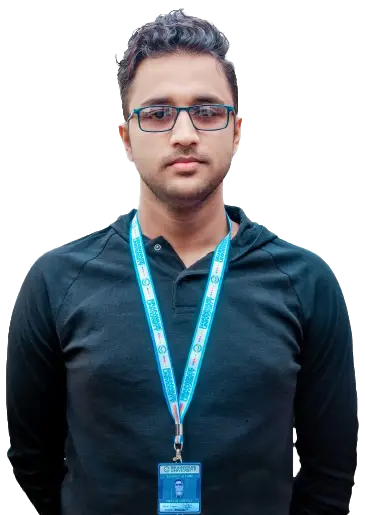
Brainware University transformed me, fostering confidence and capability for conquering the world.
Bachelor in Medical Radiology and Imaging Technology (BMRIT) is an undergraduate-level programme with a duration of 3 years of academic learning and 1 year of internship. The course trains students in medical imaging techniques and technologies, along with foundational knowledge of human anatomy, physiology, pathology, radiation safety, patient positioning, image interpretation, and diagnostic procedures. Students receive both theoretical and practical training in imaging modalities such as X-ray, MRI, CT scan, ultrasound, and nuclear medicine.
Graduates can build promising careers as radiology technologists, imaging technologists, MRI technicians, CT scan technicians, X-ray technicians, cath lab technicians, radiology assistants, application specialists, and diagnostic imaging professionals. They can find opportunities in hospitals, diagnostic centres, imaging departments, cath labs, healthcare organisations, research centres, and medical equipment companies.
The applicants will find all admission-relevant information on this page, including programme overview, syllabus outline, career options, and learning benefits. Details concerning course, eligibility, fees, and admission criteria are provided as well.
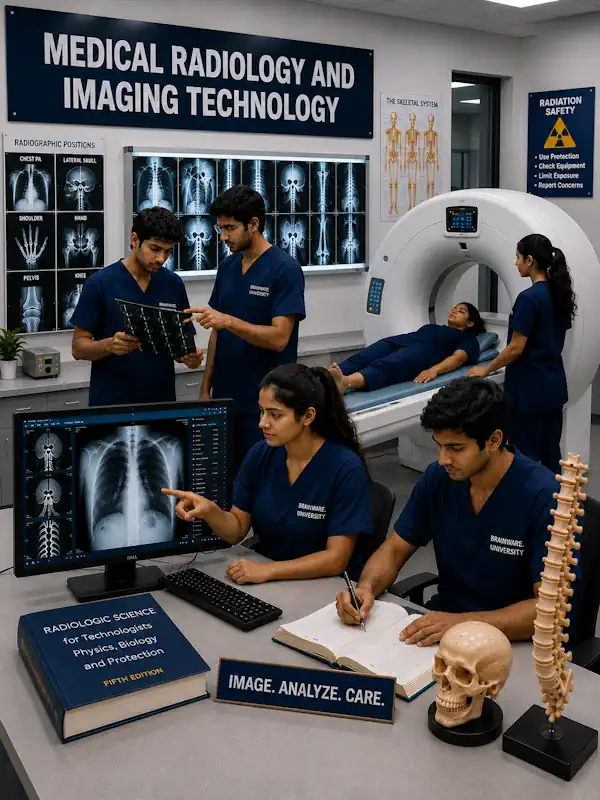

A 3+1 year (internship-integrated) undergraduate programme that trains students to operate modern imaging systems (X-ray, CT, MRI, USG, mammography), follow AERB safety standards, and support clinicians with high-quality diagnostic images. Delivered with hands-on labs, clinical postings, and placement support at reputed hospitals in Kolkata and beyond.
| Programme | Bachelor in Medical Radiology and Imaging Technology |
|---|---|
| Duration | 3 Years + 1 Year Internship |
| Focus Areas | Radiographic physics, conventional & digital radiography, CT and MRI technology, ultrasonography basics, interventional imaging support, image processing and PACS, radiation protection (AERB), quality control & assurance, patient positioning and care. |
| Salary | Typical fresher range ₹3–6 LPA in hospitals/diagnostic centres; with 3–5 years’ experience or modality specialization (CT/MRI/interventional), ₹7–12 LPA+. |
| Popular Job Types | Radiology Technologist, X-ray Technologist, CT Technologist, MRI Technologist, Sonography Assistant, Interventional Radiology Assistant, PACS Administrator, QA/QC Technologist, Clinical Instructor. |
| Hiring Industries | Multispecialty hospitals, standalone diagnostic chains, day-care centres, interventional cath labs, tele-radiology providers, OEMs & service providers, public health facilities, medical education & research institutes. |
| Top Recruiters | Apollo Hospitals & Diagnostics, Fortis, Medica, Desun Hospital, Tata Medical Center, SRL Diagnostics, Metropolis, government medical colleges & hospitals, public health labs. |
| Specializations | CT technology, MRI technology, digital radiography, mammography, interventional radiology assistance, ultrasound basics & echo assistance, QA/QC in radiology, PACS/RIS operations. |
| Higher Studies | M.Sc. Radiology & Imaging Technology, PG Diplomas (CT/MRI/USG), MHA/Hospital Management, Biomedical Imaging, Radiation Physics, Image Informatics (PACS/RIS). |
| Benefits |
|
| Internship and Placement | Structured, hospital-based internship under radiologists/technologists; placement mentoring, mock OSCEs, and interview prep; campus drives with leading hospitals/diagnostic networks. |
| Location | Brainware University, Barasat (Kolkata) — convenient access to major hospital networks and diagnostic centres across the city. |
| Approvals & Recognition | UGC-approved degree of Brainware University; programme aligned with NEP 2020 and AERB radiation safety norms followed in training & labs. |

Educational Qualification:
Candidates must have passed 10+2 or equivalent examinations from a recognised Board/University with individual pass marks in both theory and practical in Physics, Chemistry, Biology, and English.
Minimum Marks:
A minimum of 60% aggregate in the 10+2 examination is required. Students must be at least 17 years of age as on 31st December of the admission year. The upper age limit is 40 years as on 31st December of the admission year.
Entrance Exams:
Candidates may be required to appear for institutional entrance assessments such as the BET (Brainware Entrance Test) as per the university’s admission guidelines.
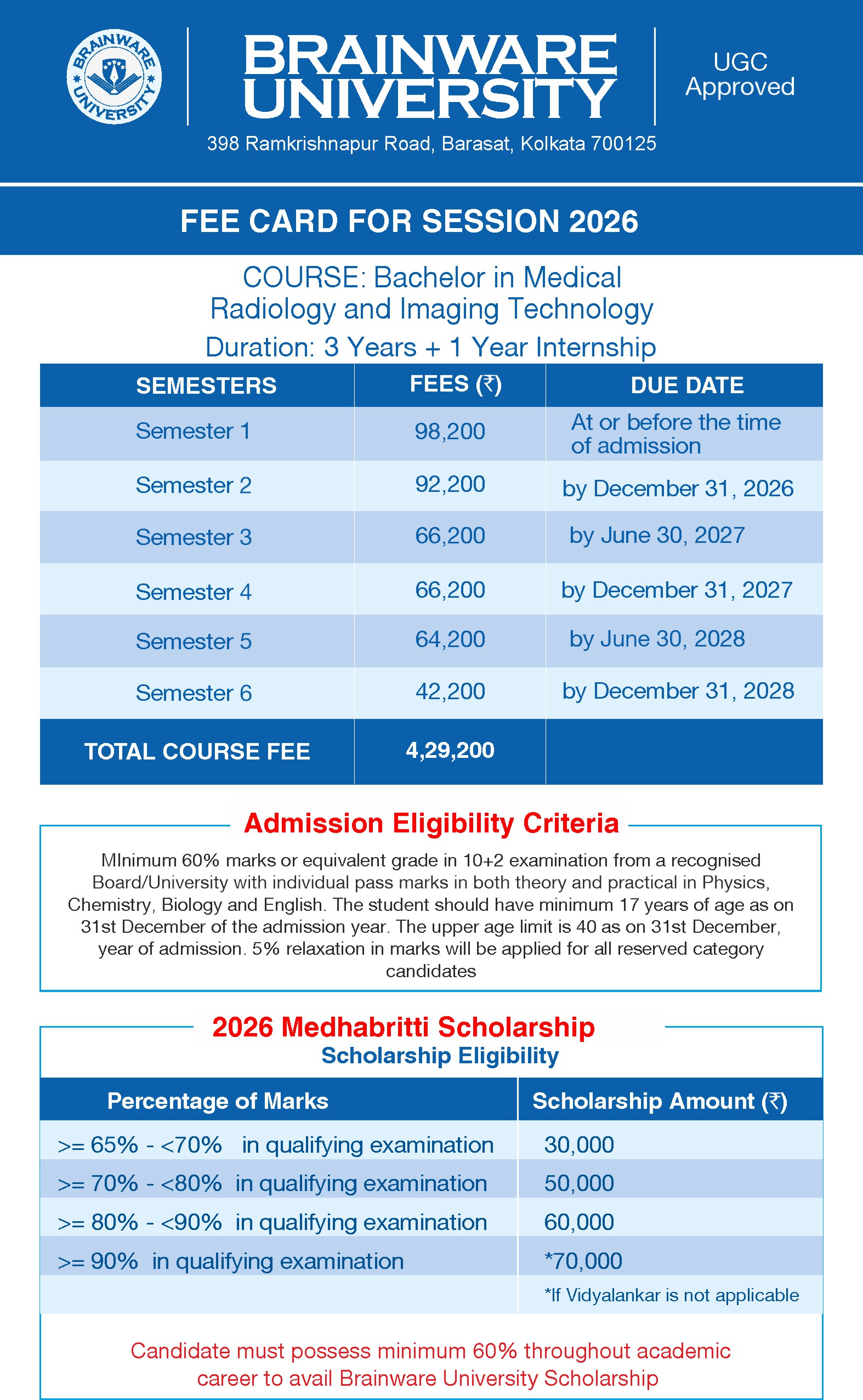
Pursue your passion for medical imaging and healthcare technology with the BSc in Medical Radiology & Imaging Technology (MRIT) program, designed to offer high-quality education at an affordable cost. The course provides access to modern radiology labs, advanced imaging equipment, expert mentorship, and hands-on clinical exposure. With a balanced investment in academics and practical training, this program empowers students to build successful careers in the fast-growing field of medical imaging and diagnostic technology.
The fee structure of the MRIT course is thoughtfully designed to make advanced technology education accessible to aspiring students. It comprehensively covers tuition fees, laboratory access, hands-on projects, industry workshops, and structured placement training.
| Semesters | Semester 1 | Semester 2 | Semester 3 | Semester 4 | Semester 5 | Semester 6 | Semester 7 | Semester 8 | Semester 9 | Semester 10 | Total |
|---|---|---|---|---|---|---|---|---|---|---|---|
| Fees (INR) | 98200 | 92200 | 66200 | 66200 | 64200 | 42200 | 0 | 0 | 429200 |
**Fees are subject to change, and the application fee of ₹5,000 is non-refundable under any circumstances. Please contact us for further details.
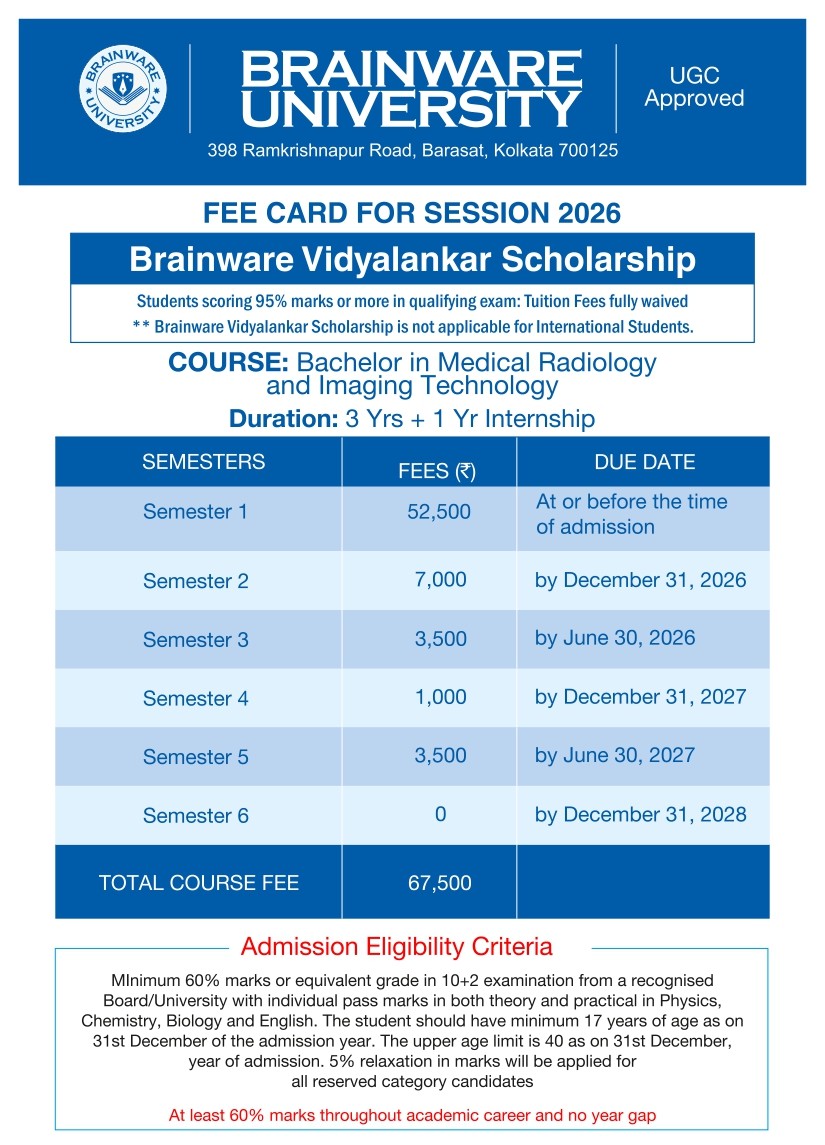
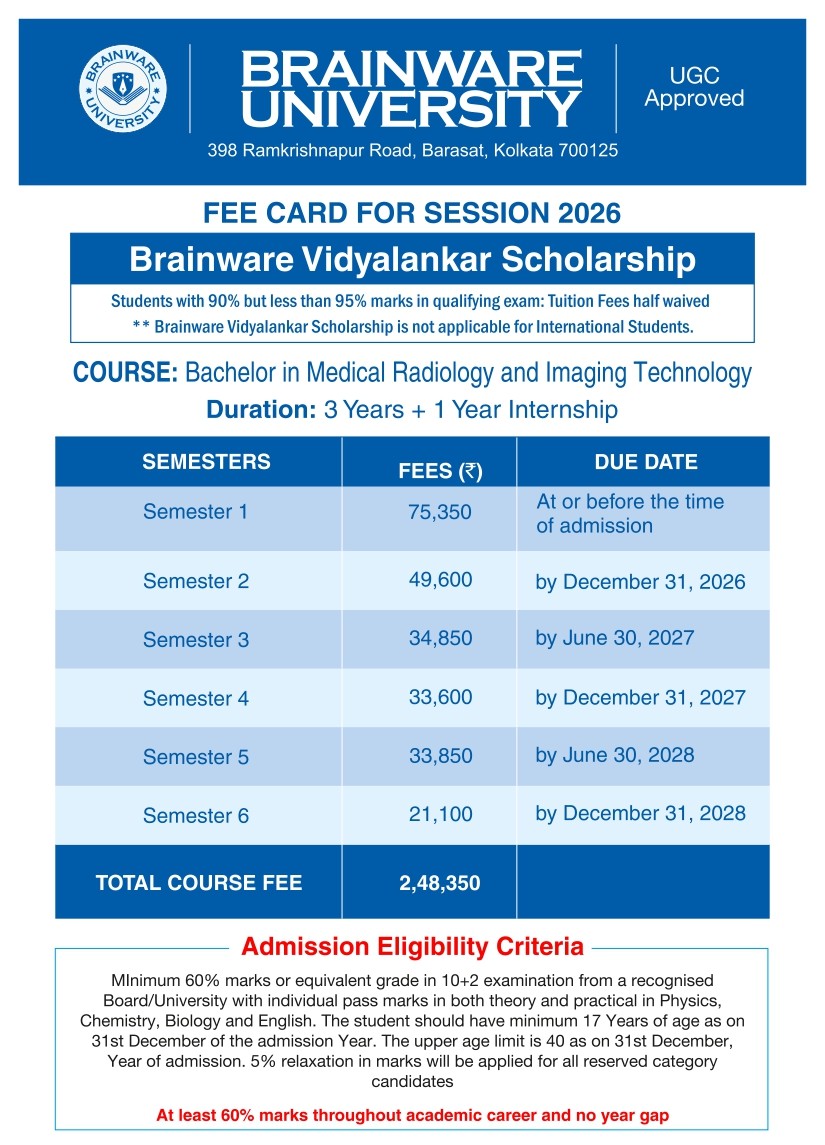
Scholarships(Fees): Brainware University offers merit-based scholarships for top performers and financial aid for deserving students. Scholarships are available for high scorers in entrance exams, board results, and outstanding achievements in innovation or research. Visit our scholarship page for more details.
**Please note that the Brainware Vidyalankar Scholarship is available only to students who passed their qualifying examination in the current admission year. Also, eligibility is strictly restricted to Indian nationals; international students are not eligible to apply.
The Bachelor in Medical Radiology & Imaging Technology (B.Sc MRIT) programme at Brainware University integrates artificial intelligence, digital imaging systems, and data-driven diagnostics into traditional radiography training. As modern radiology departments increasingly rely on AI-assisted reporting, automated dose optimisation, and smart workflow systems, the curriculum prepares students to operate within technologically advanced healthcare environments.
Students are trained to understand how AI enhances diagnostic accuracy in CT, MRI, digital radiography, and mammography. Exposure includes intelligent image reconstruction, automated anomaly detection support systems, workflow optimisation using PACS/RIS platforms, and radiation dose monitoring technologies aligned with AERB safety norms.
The programme bridges radiographic physics, modality protocols, and digital health informatics, ensuring graduates are prepared not only as imaging technologists but as contributors to AI-enabled diagnostic ecosystems in hospitals and diagnostic centres.

The AI integration in B.Sc MRIT follows a structured progression:
This layered spectrum ensures graduates are comfortable working with both conventional imaging systems and AI-augmented diagnostic platforms.
Imaging & Modality Systems
Digital Workflow & Informatics
AI-Enabled Imaging Support
Safety & Quality Systems
Through mastery of these tools, students develop the technical precision, radiation safety awareness, and digital adaptability required in modern radiology departments, diagnostic chains, cath labs, and imaging research centres.
The B.Sc MRIT programme at Brainware University reflects strong and consistent placement outcomes across multispecialty hospitals, diagnostic chains, and interventional labs.
The placement ecosystem includes:


Brainware University’s MRIT graduates secure roles across multispecialty hospitals, diagnostic chains, and cath labs. Our placement team conducts portfolio reviews, viva & positioning practice, HR mock rounds, and connects students to recruiters hiring for X-ray, CT, MRI, fluoroscopy, mammography, QA/QC, and PACS operations.
Graduates of the B.Sc MRIT programme have successfully built careers in reputed hospitals, diagnostic imaging centres, and specialised cath labs across Kolkata and India. Alumni are currently working as:
Many alumni have progressed toward advanced certifications in CT, MRI, interventional radiology support, and hospital administration. Several have also pursued postgraduate degrees in Radiology & Imaging Technology and Biomedical Imaging, strengthening their technical leadership roles.
Their journeys reflect Brainware University’s commitment to clinical precision, safety-first training, and industry-ready radiology education, enabling graduates to thrive in high-impact diagnostic environments.


Brainware University has earned an AA+ rating in India’s Best Engineering Institutes by Careers360. The recognition reflects the University’s strength in academic quality, faculty, infrastructure, research, and student outcomes, reinforcing its position as a trusted destination for industry-aligned engineering education.
Brainware University has been ranked No. 1 Engineering College under a Private University in West Bengal in the IIRF Rankings 2026. The recognition highlights the University’s strength in engineering education, industry-focused learning, research, emerging technologies, and placement outcomes.
Brainware University has been ranked No. 2 Private University in West Bengal by uniRank 2026, marking another recognition of the University's growing presence in the state's higher education landscape.
Brainware University's inclusion in the Times Higher Education (THE) Impact Rankings 2025 reflects its contribution to the UN Sustainable Development Goals (SDGs) through education, innovation, sustainability, community engagement, and responsible institutional practices.

Brainware University has been recognised as the Best Private University of West Bengal in Infrastructure & Placement at Times Now.in – Leaders of Excellence: East 2026, celebrating its commitment to world-class infrastructure and career-focused education.

Brainware University has been recognised by The Times Group for excellence across Engineering (Placement), Law, and MBA Studies. The honours reflect the University’s multidisciplinary strength and its focus on career-oriented, industry-relevant education.

Brainware University received the ABP Ananda Shiksha Samman 2026 for Excellence in Placement & AI-Integrated Academic Infrastructure, acknowledging its emphasis on placement opportunities alongside technology-enabled academic development.

Brainware University has been honoured with the Zee 24 Ghanta Education Excellence Award 2026 for Best Industry Placement & Academic Infrastructure, continuing its recognition in 2022, 2023, 2024, 2025, and 2026. The University was also recognised in 2017 and 2018 for its job-oriented academic initiatives.

Brainware University received the TV9 Uttaran Academic Excellence Honour for Excellence in Placement & AI-Integrated Academic Infrastructure, highlighting its focus on combining career opportunities with an AI-enabled academic and learning environment.
Brainware University was honoured with the R Bangla Sikkha Gourab Samman 2026, recognising its contribution to higher education and continued pursuit of academic excellence and career-focused learning.

Brainware University was honoured as the Best Private University in West Bengal at the Times Now in Business Excellence Awards (East) 2025, recognising its academic quality, modern infrastructure, industry engagement, and focus on student success.

Brainware University was recognised as the Leading University in Infrastructure, Academics & Placement at the Times Business Awards West Bengal 2025, highlighting its strong campus facilities, academic ecosystem, and placement performance across disciplines.

A rigorous blend of radiographic physics, anatomy, positioning, image processing, modality protocols and AERB safety. Students learn conventional to advanced imaging technologies, radiation dose optimisation, QA/QA, and clinical communication.
| Semester | Course |
|---|---|
| Semester I | Environmental Science |
| Human Anatomy & Physiology Part I | |
| Clinical Biochemistry & General Pathology | |
| Introduction to National Healthcare System & Medical Laboratory Sciences | |
| Human Anatomy & Physiology Part I – Practical | |
| Introduction to National Healthcare System & Medical Laboratory Sciences – Practical | |
| Generic Elective I | |
| Generic Elective I – Practical / Tutorial | |
| Semester II | English Communication |
| Human Anatomy & Physiology Part II | |
| Fundamental Physics & Radiological Physics | |
| Radiographic Image Processing Techniques | |
| English Communication Lab | |
| Human Anatomy & Physiology Part II – Practical | |
| Fundamental Physics & Radiological Physics – Practical | |
| Radiographic Image Processing Techniques – Practical | |
| Generic Elective II | |
| Generic Elective II – Practical / Tutorial | |
| Semester III | Radiographic Techniques of Mammography, DEXA & Oral Radiography with Image Interpretation |
| Clinical Radiography – Positioning Part I | |
| Physics of Conventional Radiographic & Imaging Equipment | |
| Contrast & Special Radiography Procedures | |
| Radiation Safety & Hazards | |
| Clinical Radiography – Positioning Part I – Practical | |
| Contrast & Special Radiography Procedures – Practical | |
| Clinical Observership I (Radiography & Fluoroscopy) | |
| Generic Elective III | |
| Generic Elective III – Practical / Tutorial | |
| Semester IV | Clinical Radiography – Positioning Part II |
| Physics of Modern Radiographic & Imaging Equipment (Digital Radiography, CT) | |
| Radiographic Techniques of CT Including Image Interpretation | |
| Clinical Radiography – Positioning Part II – Practical | |
| Radiographic Techniques of CT Including Image Interpretation – Practical | |
| Clinical Observership II (Radiography & Specialized Imaging Modalities) | |
| Generic Elective IV | |
| Generic Elective IV – Practical / Tutorial | |
| Semester V | Physics of Advanced Imaging Equipment – MRI |
| Cross Sectional Anatomy & Physiology (CT & MRI) Part I | |
| Protocol and Procedure of MRI | |
| Cross Sectional Anatomy & Physiology (CT & MRI) Part I – Practical | |
| Protocol and Procedure of MRI – Practical | |
| Clinical Observership III (CT & MRI) | |
| Semester VI | Basic Nuclear Medicine Technology |
| Interventional Radiology | |
| Quality Control & Quality Assurance of Radiological Equipment including AERB Guidelines | |
| Ultrasonography & Echocardiography | |
| Medical Law & Ethics including Patient Care Technique in Radio-diagnosis | |
| Research Methodology | |
| Project Work | |
| Semester VII | Internship I |
| Semester VIII | Internship II |
Please note that the syllabus is subject to modification. Visit our Syllabus page for the elective subject details and updated syllabus.

Many alumni have progressed toward advanced certifications in CT, MRI, interventional radiology support, and hospital administration. Several have also pursued postgraduate degrees in Radiology & Imaging Technology and Biomedical Imaging, strengthening their technical leadership roles.
Their journeys reflect Brainware University’s commitment to clinical precision, safety-first training, and industry-ready radiology education, enabling graduates to thrive in high-impact diagnostic environments.
State/Central hospitals & medical colleges, district/sub-divisional hospitals, cancer centres.
Recruitment through PSC/ESIC/AIIMS/ICMR and state health departments.
Roles in public health labs, mobile screening units (e.g., mammography/DR vans) and QA units under AERB-aligned programmes.
The MRIT degree provides multi-entry pathways across hospital radiology, diagnostic centres, interventional labs, and imaging informatics. Graduates begin with X-ray or CT/MRI roles and build specialisation, leadership (shift leads/QA), or move into PACS administration, education, or applications with OEMs.
| Area of Opportunity | Why It’s in Demand |
|---|---|
| Entrepreneur (e.g., establishing diagnostic centers, teleradiology services, or tech startups) | Need for Innovation and Accessibility: Driven by the push for private, technologically advanced, and AI-integrated diagnostic services, filling gaps in rural or underserved areas. |
| Clinical Instructor | Workforce Shortage and Training Need: Essential for training the next generation of technologists and technicians to meet the rapidly increasing demand for imaging professionals. |
| Research area | Technological Advancement: Continuous need to study and validate new imaging modalities (AI, molecular imaging), improve diagnostic accuracy, and refine therapeutic procedures. |
| Radiological equipment installation area | Rapid Tech Evolution: Demand for skilled engineers/technicians to install, maintain, repair, and upgrade increasingly complex and expensive high-tech imaging systems (MRI, CT, PET-CT). |
| Radiology Technologists (General) | Aging Population & Chronic Disease: Essential frontline role. The increasing number of elderly patients and the rise in chronic conditions (heart disease, cancer) require frequent diagnostic imaging. |
| Radiology Technician (General/X-ray) | High Volume of Basic Diagnostics: X-rays remain the most common, fundamental, and cost-effective initial diagnostic tool in emergency rooms and primary care settings. |
| Ultrasound technician | Non-Invasive Safety: High demand due to its versatility, safety (uses no ionizing radiation), and critical role in fields like obstetrics, cardiology, and vascular studies. |
| MRI technician | Need for High-Resolution Soft Tissue Imaging: Essential for detailed diagnosis of complex conditions like neurological, orthopedic, and oncological disorders, especially in specialized centers. |
| CT Technologist | Speed and Detail in Trauma: High demand for rapid, detailed cross-sectional imaging, making them critical in emergency and trauma centers for quick diagnosis and treatment planning. |
| Cathode Lab Technician | Growth of Interventional Procedures: Driven by the shift toward minimally invasive cardiovascular and neurovascular procedures guided by specialized real-time imaging (fluoroscopy/angiography). |
| Radiographer | Broad Diagnostic Needs: Similar to Technologist, there is a consistent, broad-based need for professionals capable of performing general and specialized X-ray and computed radiography procedures. |
| X-ray technician | Consistent First-Line Imaging: The backbone of general diagnostic imaging in hospitals, clinics, and outpatient centers for basic skeletal and chest pathology. |
| Mammography Technician | Focus on Preventive Screening: Growing emphasis on public health and mandates for early breast cancer screening programs drives a specialized and highly consistent demand. |
| Fluoroscopy Technologists | Guidance for Dynamic Procedures: Critical role in real-time imaging for complex dynamic studies (e.g., GI tract) and interventional procedures, requiring specialized skill. |
With strong clinical training and safety-first habits, Brainware MRIT graduates are ready for high-impact roles in modern radiology departments—where precision imaging drives faster diagnosis and better patient outcomes.


Strategic collaborations with multispecialty hospitals, diagnostic networks, and imaging solution providers enable equipment demos, site visits, internships, and recruitments. Engagements include masterclasses on CT/MRI protocols, PACS workflow, QA audits, and radiation safety drills with industry experts.


Begin your Bachelor in Medical Radiology and Imaging Technology (MRIT) journey at Brainware University, one of Kolkata’s most trusted private universities for healthcare education. The programme blends classroom learning with real-world clinical exposure, equipping students with the technical skills, patient-handling expertise, and safety knowledge required to excel as professional radiology technologists. Join a future-ready curriculum designed to meet global healthcare standards and open doors to rewarding careers in hospitals, diagnostic centres, and research institutions.
Admission Criteria:
10+2 (PCB & English) from a recognised board with minimum 60% aggregate; age 17–40 years as on 31 December of the admission year.
Application:
Apply online, upload documents, and book your counselling slot. Our counsellors guide applicants on fees, scholarships, hostel, and career paths.
Entrance Exam:
Admission is merit-based; candidates may be required to appear for the Brainware Entrance Test (BET) as per university norms.
Counselling:
Academic counselling covers modality interests, internship planning, and skill-bridge sessions (positioning basics, soft skills).
Direct Admission:
Eligible high-merit applicants may be offered direct admission with priority consideration for scholarships and hostel allotment.
Please follow the Bachelor in Medical Radiology and Imaging Technology admission procedure at Brainware University:

"Brainware students are professionally and technically well-informed as freshers. We are impressed with the level of confidence and positive attitude they demonstrated during their interviews."
Mr. Vaskar Bhattacharya Regional Head-East, Ginnisystems Ltd.
We always find competent and positive students who are almost ready to be professionals. We never get disappointed wherever we come for the recruitment. Well done Brainware University!
Ms. Srimoyee Mukherjee Manager HR Nature Technologies Pvt. Ltd.
In the fast-evolving landscape of healthcare, Brainware University's commitment to excellence and innovation takes center stage. The university's various departments have orchestrated groundbreaking events and sessions, leaving an indelible mark on the industry and its stakeholders.
The Department of Allied Health Sciences at Brainware University lit up with energy during the power-packed workshop ‘Critical Care Connect’. From life-saving strategies to real-world hospital experiences, our students got an exclusive chance to learn directly from the experts.
Dr. Pratik Maitra, Consultant in Critical Care Medicine, shared vital insights on handling emergencies with precision; Dr. Subhajit Sharma, renowned Cardiothoracic Surgeon from JIMS Hospital, Budge Budge, inspired students with his incredible professional journey; while Dr. Oendrila Roy, Associate Consultant at Apollo Hospital, brought in practical wisdom straight from her clinical expertise. Our Allied Health Science students soaked up every moment, realizing that in critical care, saving seconds truly means saving lives.
The university organized an insightful session that demystified the world of AYUSH. Featuring speakers like Dr. Krishnendu Mohanta, a Homoeopathic Medical Officer from the Department of Health and Family Welfare, and Dr. Sinchan Das, a Homoeopathic Physician and Researcher, this session addressed the myths and facts surrounding alternative healthcare practices. Brainware University is at the forefront of promoting holistic health education.
Dr. Ranjan Kumar Srivastava, Founder and MD of Renaissance Hospital, shared his wisdom on the scope and prospects of Allied Health Science. This session illuminated the diverse career paths within the healthcare industry, providing students with valuable insights into this dynamic field.
On World Health Day, Brainware University hosted an intriguing session with Rana Dasgupta, the eastern region CEO of Apollo Hospitals Group. The event featured Lieutenant Abhijit Majumder, COO of Apollo Hospitals Group Kolkata, and Phalguni Mookhopadhayay, the Hon'ble Chancellor of Brainware University. Together, they discussed crucial aspects of healthcare leadership and the collective responsibility of institutions towards public health.
The Optometry industry took centre stage as Brainware University's C2C cell organized a seminar in collaboration with Lenskart. Sreejit Sarkar, Regional Training Manager East, Professional Optometry Service, Lenskart, provided a captivating sneak peek into the industry's latest trends and innovations.
Brainware University's various departments continue to spearhead initiatives that not only enhance academic learning but also foster a deeper understanding of the ever-evolving healthcare landscape. Through these remarkable events and sessions, the university is making a positive impact on the industry and preparing its stakeholders for the challenges and opportunities that lie ahead.

BSc MRIT stands for Bachelor of Science in Medical Radiology & Imaging Technology. The course trains students in X-ray, CT, MRI, ultrasound, radiation safety, and diagnostic imaging procedures for careers in hospitals and diagnostic centres.
BSc in Medical Radiology & Imaging Technology is an undergraduate degree program that focuses on training students to operate and manage various imaging equipment used in medical diagnosis, such as X-ray, CT scan, MRI, ultrasound, and nuclear medicine technology.
Eligibility criteria may vary depending on the educational institution, but generally, candidates must have completed their 10+2 education with a science stream (Physics, Chemistry, and Biology). Some institutions may also have specific minimum percentage requirements.
The curriculum typically includes subjects like Radiographic Physics, Anatomy, Radiographic Positioning, Radiation Safety, Imaging Techniques, CT and MRI Technology, Ultrasound Technology, Nuclear Medicine, and Patient Care in Radiology.
Brainware University offers a practice-oriented BMRIT programme with modern radiology labs, hands-on imaging training, hospital-based clinical exposure, internship opportunities, and placement support. With experienced faculty, healthcare tie-ups, and a 98% placement record, the university helps students prepare for careers in hospitals, diagnostic centres, cath labs, imaging departments, and healthcare organisations.
Graduates can secure government jobs as radiographers or imaging technologists in government hospitals, medical colleges, diagnostic centres, and public health departments through state and central recruitment exams.
Graduates of BSc MRIT can find employment in hospitals, diagnostic imaging centres, private clinics, and research institutions. They can work as Radiologic Technologists, CT/MRI Technologists, Sonographers, and Nuclear Medicine Technologists, and pursue careers in medical imaging management.
Yes, BSc MRIT is a recognized and specialized degree that prepares individuals to work in the field of medical imaging and radiology. It provides essential knowledge and practical skills required to operate various imaging modalities.
Yes, practical training is a crucial part of the BSc MRIT curriculum. Students are required to undergo hands-on training in imaging centres and hospitals to gain proficiency in using different radiological equipment.
Students develop skills in operating and maintaining imaging equipment, patient positioning techniques, radiation safety protocols, image analysis, patient care, and effective communication with patients and medical professionals.
BSc MRIT involves practical training, which is challenging to replicate through distance learning or online courses entirely. Therefore, it is typically offered as an in-person program to ensure students gain hands-on experience.
BSc MRIT provides a foundation in various imaging modalities. However, some institutions may offer specialization options or postgraduate courses in specific areas like MRI, CT, or ultrasound technology for those interested in advanced expertise.
The demand for medical imaging and diagnostic services is expected to grow, leading to favourable job prospects for BSc MRIT graduates. As technology advances and healthcare needs increase, skilled radiology and imaging technologists will be in demand.
Yes, BSc MRIT graduates can explore job opportunities in other countries. However, each country may have specific licensing or certification requirements for medical imaging professionals, so it is essential to research the destination country's regulations before seeking employment there.
Yes, after completing BSc MRIT, graduates can pursue higher studies like MSc in Medical Radiology & Imaging Technology, postgraduate diplomas, or specialized courses in areas like advanced imaging techniques, interventional radiology, or radiation therapy.
Brainware University is one of the top choices for B.Sc. Medical Radiology and Imaging Technology, offering cutting-edge facilities, experienced faculty, and strong placement support.
To enroll in this program at Brainware University, you need to pass Class 12 with Science (Physics, Chemistry, and Biology). Visit the university’s website, fill out the application form, and follow the admission guidelines.
After graduation, you can work as a Radiologic Technologist, MRI Technician, CT Scan Technician, or pursue higher studies like M.Sc. in Radiology or related fields.
Yes, it’s an excellent career option with high demand in the healthcare industry, offering competitive salaries and opportunities to work with advanced medical technology.
Key subjects include Radiographic Techniques, Human Anatomy, Radiation Physics, Imaging Modalities (CT, MRI, Ultrasound), and Radiobiology.
You can work as a Radiologic Technologist, Sonographer, MRI/CT Technician, Radiology Assistant, or Medical Imaging Specialist in hospitals, diagnostic centers, and research labs.
The starting salary typically ranges between ₹3 to ₹6 LPA, depending on your role and the organization. Salaries grow significantly with experience and specialization.
Revise key concepts in imaging techniques, learn about the latest radiology equipment, and be ready to discuss practical experiences and internships. Communication and teamwork skills are also important.
The scope of B.Sc. Radiology and Imaging Technology is excellent, offering careers in hospitals and diagnostic centres as radiology technologists, MRI/CT technicians, or imaging specialists, with strong demand and growth in the healthcare sector.
Hospitals like Apollo, Fortis, and Max Healthcare, as well as diagnostic centers like SRL Diagnostics and Metropolis, hire graduates for radiology roles.
Highlight your academic achievements, technical expertise in imaging modalities, internships, certifications, and practical experience with advanced imaging equipment.
Focus on hands-on training in labs, internships at hospitals or diagnostic centers, and staying updated on the latest advancements in radiology and imaging technology.
Certifications in MRI, CT Scan, Ultrasound Imaging, and Radiation Safety can enhance your career prospects.
Gain practical experience during internships, attend workshops, and complete training programs focused on modern imaging tools like MRI, CT, and digital X-ray machines.
Focus on subjects like Anatomy, Radiation Physics, and Imaging Techniques. Practice previous exam papers and take mock tests for postgraduate entrance exams or certifications.