

ICCTEA 2025
International Conference on
Computing in Emerging Areas (Hybrid Mode)Date: April 25-26, 2025
CONFERENCE WILL START IN
Days
Hours
Minutes
Seconds
About Brainware University
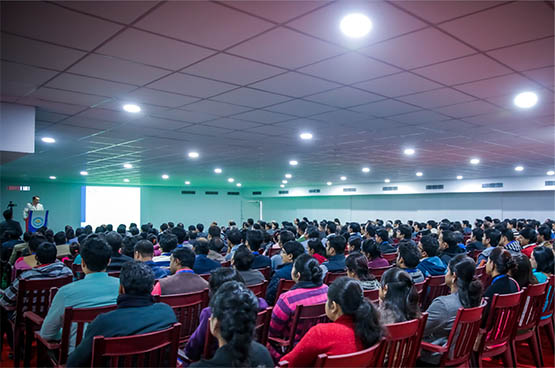
Brainware University Kolkata, a part of a 35-year-old leading education group, Brainware of West Bengal, started with the aim of contributing to nation-building through research, innovation and quality education. It is the brainchild of Mr. Phalguni Mookhopadhayay, its hands-on chancellor, whose acumen and vision have transformed Brainware University into one of the best crucibles of learning in a short period of five years.
For over 35 years now, more than 2 lakh students have passed out from Brainware. Most of them are now well-established and thriving. Our aim has always been to make quality education affordable for students coming from all strata of the society as well as help them ease into successful careers of their choice. It still is,” the chancellor says. Established in 2016 as a UGC-recognised, private state university in West Bengal, Brainware University offers over 70+ PhD, PG, UG, Diploma and Skills programmes to over 17,000 students on its state-of-the-art, sprawling, green, ragging-free campus.

The university provides a well-stocked library with national and international journals, providing adequate resources to the students for academic pursuits. Education is incomplete without sports and recreational activities. Brainware also organizes seminars, workshops, fests to unleash the creativity of students. To tap into their hobbies, students could also join different types of clubs like photography clubs, tech clubs, communication clubs, and more. Even in this pandemic, the education process has never stopped. The online classes helped the students continue their courses uninterruptedly.
World-class infrastructure, modern labs and workshops, emphasis on research and extension activities, a team of highly qualified faculty, exhaustive pre-placement grooming, soft skills training, an efficient placement cell, pan-India network of clients and consultants, excellent placements that aim at a magic figure of 100% and equal stress on academics and discipline are the hallmarks of this institution of excellence.
About the Conference
The engineers and engineering professionals have made significant strides in computing, and let to the emergence as a global hub for information technology, software development, and innovation. With the robust IT industry contribution towards growth of the economy, India has developed expertise in areas such as software services, artificial intelligence, machine learning, cloud computing, blockchain technology and so on. Government initiatives like "Digital India" and "Make in India" have fostered technological adoption and skill development, driving advancements in digital infrastructure and e-governance. Indian researchers and technological companies are also contributing to cutting-edge developments in quantum computing, supercomputing (with systems like PARAM and Pratyush), and indigenous chip design. With a strong talent pool and growing startup ecosystem, India continues to play a pivotal role in shaping the global computing landscape.
Brainware University, India is actively engaged in diverse research areas, fostering innovation and academic excellence. The university focuses on cutting-edge fields like artificial intelligence, machine learning, cybersecurity, bioinformatics, and renewable energy. With state-of-the-art laboratories and industry collaborations, Brainware promotes interdisciplinary research and practical applications. Faculty and students contribute to impactful projects, publications, and technological solutions addressing societal challenges. Therefore, we look forward to reach the global perspectives through local interactions and international previews through the International Conference on Computing Technologies in Emerging Areas (ICCTEA).
In the above-mentioned context, the Department of Cyber Science & Technology intends to host the International Conference on Computing in Emerging Areas (ICCTEA) on April 25th-26th April 2025, in hybrid mode. The conference will focus on exploring advancements and future possibilities in emerging technologies involving Artificial Intelligence, Cellular Automata, cloud computing, Edge computing, quantum computing, and IoT etc. It will further address the role of parallel and distributed computing in technological progress. The importance of energy-saving metrics and environmental considerations in smart computing are also included alongside. The event aims to highlight the critical role of secured, efficient smart computing systems in driving modernization and supporting Society 5.0. The conference includes various domains, connecting emerging areas through computing theory and applications as well.
Topics
The conference aims two-fold: to nurture computing theory as technology and it’s applications in emerging areas. In particular, the topics of interest include (but is not limited to) the following:
- Artificial Intelligence and Machine Learning
- Cellular Automata Models and Computation
- Internet of Things
- Artificial Intelligence in Cyber Security
- Quantum Computing
- Cloud Computing
- Crowd Computing
- Hybrid models and System
Publication and Collaborators
All accepted papers of the conference will appear in the proceedings published by Springer Nature in the book series Communications in Computer and Information Science (CCIS), Springer (Scopus indexed) (final approval pending).
In association with

NATIONAL INSTITUTE OF TECHNOLOGY SIKKIM
&

CMRI
Program Committee
| Chief Patron: | Mr. Phalguni Mookhopadhayay Chancellor, Brainware University, India |
| Patron: | Prof (Dr.) Sankar Gangopadhyay Vice-Chancellor, Brainware University, India Mr. Gour Krishna Pattanayak Pro-Vice Chancellor, Brainware University Ms. Mahua Pal Registrar, Brainware University, India |
| Honorary Chair: | Dr. Anant Shrivastava Dean of Academics, Brainware University Dr. Deepsikha Dutta Director Research, Brainware University Dr. Bipasa Bimalendu Patra Associate Director – IQAC, Brainware University |
| General Chairs: | Prof (Dr.) Sankar Gangopadhyay, Brainware University, India Dr. Sangram Ray, National Institute of Technology Sikkim, India Dr. Hiroki Sayama, School of Systems Science and Industrial Engineering, Director, Binghamton Center of Complex Systems (CoCo) Dr. Pabitra Mitra, Indian Institute of Technology Kharagpur, India Dr. Ir. Rozita Jailani, Universiti Teknologi MARA, Malaysia |
| Program Co-chairs: | Sutapa Chatterjee Sarkar, Brainware University, India Mousumi Saha, National Institute of Technology Durgapur, India Indrajit Banerjee, Indian Institute of Engineering Science and Technology Shibpur, India Ir. Rozita Jailani, Universiti Teknologi MARA, Malaysia Debasis Giri, Maulana Abul Kalam Azad University of Technology, West Bengal, India |
| Technical Program Committee Members: | Hiroki Sayama, School of Systems Science and Industrial Engineering, Director, Binghamton Center of Complex Systems (CoCo) Ir. Rozita Jailani, Universiti Teknologi MARA, Malaysia Abhishek Kumar, University of California, Davis, USA Debajyoti Pal, King Mongkut's University of Technology Thonburi, Bangkok, Thailand Pabitra Mitra, Indian Institute of Technology Kharagpur, India Indrajit Banerjee, Indian Institute of Engineering Science and Technology Shibpur, India Mousumi Saha, National Institute of Technology Durgapur, India Sudip Ghosh, Indian Institute of Engineering Science and Technology Shibpur, India Kamalika Bhattacharjee, National Institute of Technology, Tiruchirappalli, India Banani Saha, Calcutta University, India Sangram Ray, National Institute of Technology Sikkim, India Supreeti Kamilya, Birla Institute of Technology Mesra, India Tanmoy Bhattacharya, Techno India Mourani Sinha, Techno India University West Bengal Saikat Biswas, Bose Institute, Kolkata Subhrendu Guha Neogi, Techno India University, India Susmita Biswas, Brainware University, India Anindya Bose, Brainware University, India Argha Ghosh, Brainware University, India Sutapa Chatterjee Sarkar, Brainware University, India Subrata Sinha, Brainware University, India Wasim Akram Shaikh Neotia University, India Shuvendu Chakraborty St. Xaviars University, India Anirban lahiri, Brainware University, India Arghya Sikdar, Brainware University, India Soumik Pyne, Brainware University, India Arijit Karati, National Sun Yat-sen University, Taiwan SK. Arif Ahmed, UiT The Actic University of Norway, Norway Sujit Das, NIT, Warangal, India Sourav Mandal, XIM University, Bhubaneswar, India Suman Majumder, Nanyang Technological University, Singapore Ashok Kumar Das, IIIT Hayderabad, India Arunava Roy, University of Memphis, USA Chien-Ming Chen, Shandong University of Science and Technology, China Debiao He, Wuhan University, China Khalid Yahya, Istanbul Gelisim University, Istanbul, Turkey Maazen Alsabaan, College of Computer and Information Sciences (CCIS), King Saud University, Saudi Arabia Marko Holbl, University of Maribor, Slovenia Neetesh Saxena, Cardiff University,UK Sandip Roy, Old Dominion University, Suffolk, VA, USA Sedat Akleylek, Istinye University, İstanbul, Turkey Shehzad Ashraf Chaudhry, Abu Dhabi University Sherali Zeadally, University of Kentucky, USA SK Hafizul Islam, IIIT Kalyani, India Sourav Mandal, XIM University, Bhubaneswar, India Soumya Prakash Rana, The University of Manchester (UoM), Manchester, UK Yousaf Bin Zikria, Victorian Institute of Technology, Sydney, Australia YoungHo Park, Kyungpook National University, Korea Anand Kumar M, NIT Surathkal, India Andrew Ip, University of Saskatchewan, Saskatoon, Canada Angel A. Juan, Open University of Catalonia, Barcelona, Spain Anne Kayem, Hasso-Plattner Institute for Digital Engineering, Potsdam, Germany Anjan Kumar Ray, NIT Sikkim, Sikkim Chandra Shekhar, BITS-Pilani, India Darshan Medhane, National Sun Yat-Sen University, Taiwan Deepak.T.G, Indian Institute of Space Science & Technology, India Dhananjoy Dey, IIIT Lucknow, India Dibu A S, Christ (Deemed to be University), Bangalore, India Dieter Claeys, Ghent University, Belgium Douglas Down, McMaster University, Canada G. Ayyappan, Puducherry Technological University, India |
| Organizing Committee Members: | Anirban Lahiri, Brainware University, India Sutapa Chatterjee Sarkar, Brainware University, India Anindya Bose, Brainware University, India Susmita Biswas, Brainware University, India Ayan Gangopadhyay, Brainware University, India Arnab Chakraborty, Brainware University, India Sasmit De, Brainware University, India Kaushik Maitra, Brainware University, India Ayan Mukherjee, Brainware University, India Argha Ghosh, Brainware University, India |
| International Advisory Committee: | Youngho Park, School of Electronic and Electrical Engineering, Kyungpook National University, Daegu, South Korea Mohammad S. Obaidat, Professor at the King Abdullah II School of Information Technology, The University of Jordan, Amman, Jordan Salil Kanhere, Professor in the School of Computer Science and Engineering at UNSW Sydney, Australia Muhammad Khurram Khan, Professor of Cybersecurity at the Center of Excellence in Information Assurance (CoEIA), King Saud University, Kingdom of Saudi Arabia. Rajkumar Buyya, University of Melbourne, Australia Joel J. P. C. Rodrigues, Amazonas State University, Brazil Alvaro Rocha, Professor of Information Systems, ISEG, University of Lisbon, Portugal Gautam Srivastava, Brandon University, Brandon, Manitoba, Canada Sherali Zeadally, University of Kentucky, USA Victor Chang, Aston University, UK Sathish A. P. Kumar Ashkewicz, College of Engineering, Cleveland State University, USA Sakurai Kouichi, Kyushu University, Fukuoka, Japan Rakesh M. Verma, University of Houston, USA Vincenzo Puri, University of Milan, Italy Indrajit Ray, Colorado State University, USA |
| Publicity Chairs: | Ayan Mukherjee, Brainware University, India Arnab Chakraborty, Brainware University, India Kaushik Maitra, Brainware University, India Bikram Ghosh, Brainware University, India Hemanta Kumar Sahu, Brainware University, India Pioosh Kundu, Brainware University, India Abhradip Chatterjee, Brainware University, India Sasmit De, Brainware University, India Subhankar Dhar, Brainware University, India |
| Web Team: | Sampat Banerjee, Brainware University, India Ayan Das, Brainware University, India Chitrak Dey, Brainware University, India |
| Registration Chairs: | Raima Saha, Brainware University, India Debdutta Mondal, Brainware University, India Sasmit De, Brainware University, India Argha Ghosh, Brainware University, India |

CALL FOR PAPERS
Instructions to Authors
Each paper must be original and unpublished work, not submitted for publication or review consideration under any other publication outlet (copyright infringement issues will be the responsibility of the authors). Papers must be written in good English. The submissions must be, with author name(s), affiliation(s), Orcid ID, Declaration of conflict of interest statement at the end of the manuscript acknowledgment (optional), or obvious references. The similarity index for a submitted paper should be below 15%.
It should begin with a title, a short abstract, and a list of key words and its introduction should summarize the contributions of the paper. Papers should be at most 12 pages in total, including references and appendices.
The authors are encouraged to prepare their paper as per the given guidelines.
Submitted papers must be in PDF format and should be submitted electronically via Microsoft CMT (https://cmt3.research.microsoft.com/ICCTEA2025).
Review Process International Conference on Computing in Emerging Areas (ICCTEA):
There is call for paper with firm deadline in terms of submission, acceptance, review of revised submission and camera-ready submission. The Editorial board has decided to implement desk review and rejection by the editorial board. On scrutinizing the papers by the editorial board if the papers rejected in the process of desk review that will not assign any review further. All submissions will be screened for plagiarism, and when identified, the submissions by the same author will be rejected at any stage of the conference even after the conference and after the publication of the proceedings online from the springer. The question of reimbursement of registration fees will not be applicable here.
Names and Affiliations of the authors must be included in the paper during the initial submission. For the peer review purpose, self-references are NOT permitted. If the author needs to refer his/her own paper the reference MUST be made in third person in text description of the submitted article. Any attempt to reveal author details and affiliation at the time of initial submission will lead to rejection summarily of the paper without further processing. The review will be single Blind in nature.
All papers that conform to submission guidelines will be evaluated based on originality, technical and/or research content/depth, correctness, relevance to conference, contributions, and readability. Acceptance of papers will be communicated to authors by submission portal (email). The authors of the accepted papers will be allowed to make corrections in accordance with the suggestions of the reviewers and submit final camera-ready papers within the stipulated deadline. All camera ready papers must be prepared in conformance with reviewer’s report. The Editorial Board is responsible for correctness of the manuscript including formal presentation and completeness. Editorial Board is also responsible for ensuring that the content of each contribution meet the designated requirements of the publisher. Editorial Board or the Publisher’s decision would be final in this regard. Acceptance based on the recommendation of reviewers will be at sole discretion of the editors.
Track 1: Artificial Intelligence and Machine Learning
- Key areas include deep learning, natural language processing, computer vision, robotics, and data analytics.
- Focus on advancements and applications of Artificial Intelligence and Machine Learning in computing.
- Innovative algorithms, system designs, and real-world implementations.
- The integration of AI/ML in modern computing paradigms.
- Encourages presentations on novel solutions and breakthroughs in automation, decision-making, and intelligent systems.
Track 2: Cellular Automata Models and Computation
- Focuses on the theoretical and practical aspects of cellular automata in computing.
- Includes topics like algorithm design, complexity analysis, and modeling computational systems.
- Explores applications in pattern recognition, cryptography, network modeling, and artificial life.
- Highlights advancements in automata-based simulations and their use in solving real-world problems.
- Encourages interdisciplinary approaches combining cellular automata with AI, machine learning, and data science.
Track 3: Internet of Things (IoT)
- Focuses on IoT technologies and their impact on modern computing.
- Covers topics like IoT architectures, protocols, and communication standards.
- Explores advancements in edge computing, cloud integration, and IoT security.
- Highlights applications in smart cities, healthcare, industrial automation, and connected devices.
- Research on data analytics, real-time processing, and energy-efficient IoT solutions.
- Discussions on challenges and innovations in large-scale IoT deployments.
Track 4: Cyber Security
- Focuses on the application of innovative measures to enhance cyber security.
- Covers topics such as machine learning for threat detection, anomaly detection, and intrusion prevention.
- Highlights the use of AI in developing intelligent security systems, risk assessment, and vulnerability management.
- Discusses advancements in behavioral analysis, automated response, and proactive defense strategies.
- Encourages research on AI-driven solutions to combat cyber threats in real-time and at scale.
- Promotes collaboration between AI researchers and cybersecurity professionals to address evolving security challenges.
Track 5: Advanced Computing Paradigms (Quantum Computing, Cloud Computing, Crowd Computing, Hybrid Models and Systems )
- Focuses on the convergence of these advanced computing paradigms.
- Covers the integration of quantum computing with cloud and crowd computing.
- Discusses hybrid models that combine different computing approaches for enhanced performance and scalability.
- Highlights research on novel algorithms, optimization techniques, and applications across various domains.
- Encourages exploration of interdisciplinary solutions to complex computing challenges.
Paper Submission Through Microsoft CMT: https://cmt3.research.microsoft.com/ICCTEA2025
Website Link: https://www.brainwareuniversity.ac.in/conference/2025/icctea/
Registration Link: https://forms.gle/SEP2PVmsTQqiW4QN7
Download link of Call for papers: Click here
Publication
All accepted papers of the conference will appear in the proceedings published by Springer Nature in the book series Communications in Computer and Information Science (CCIS), Springer (Scopus indexed) (final approval pending).
In association with
NATIONAL INSTITUTE OF TECHNOLOGY SIKKIM
&
CMRI
Important Dates
| Paper Submission deadline | 15th February, 2025 |
| Date of Acceptance notification | 15th March, 2025 |
| Date of Camera-ready paper submission | 25th March, 2025 |
| Last Date of Registration | 17th April (Hard Deadline) |
| Paper Submission Through Microsoft CMT | https://cmt3.research.microsoft.com/ICCTEA2025 |
| Website Link | https://www.brainwareuniversity.ac.in/conference/2025/icctea/ |
| Registration Link | https://forms.gle/SEP2PVmsTQqiW4QN7 |
Registration
The conference registration process consists of two steps:
- Filling Out the Registration Form: After acceptance of the research articles, participants should fill out the registration form provided through the link below.
- Payment of Registration Fees: Participants must first pay the conference registration fees as given in Table 1.
Table 1. Registration fees category wise:
| Category | Category 1* Indian (Paper Presentation and Conference Certificate) (INR) | Category 2** Foreign (Paper Presentation, Conference Certificate and Publication) (USD) |
|---|---|---|
| Author (Academia) | 6500 | 90 |
| Author (Industry) | 7500 | 100 |
| Student Author UG/PG/Research Scholars (Academia) | 5500 | 80 |
| Student Participant UG/PG/Research Scholars (Academia) | 750 | 20 |
Paper Submission Through Microsoft CMT: https://cmt3.research.microsoft.com/ICCTEA2025
Website Link: https://www.brainwareuniversity.ac.in/conference/2025/icctea/
Registration Link: https://forms.gle/SEP2PVmsTQqiW4QN7
Keynote Speakers

| 1 | 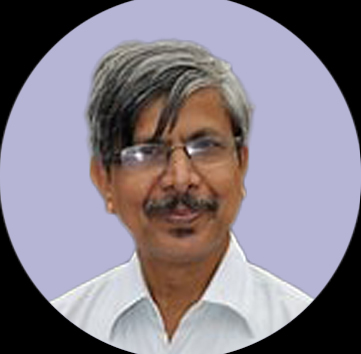 |
Padma Shri Prof (Dr.) Ajay Kumar Ray Former Director IIEST Shibpur, Chief Guest and distinguished Speaker |
| 2 |  |
Dr. Rolf Hoffman Professor Technical University Darmstadt, Germany |
| 3 |  |
Dr. G.P Biswas Professor IIT Dhanbad |
| 4 |  |
Dr. Amlan Chakraborty Professor at Calcutta University |
| 5 |  |
Dr. Tryambak Gangopadhyay Senior Applied Scientist, Generative AI Amazon, Santa Clara, California |
| 6 |  |
Dr. Sangram Ray Professor, NIT Sikkim |
Program Schedule
25/4/2025
| Opening Ceremony | 10:00 AM TO 10:15 AM |
| GENERAL CHAIR | 10:15 AM TO 10:30 AM |
| IST HALF KEYNOTE SPEECH |
|
| Dr. Ajoy Kar | 10:30 AM TO 11:30 AM |
| Dr. G.P Biswas | 11:30 AM TO 12:30 PM |
| Dr. Rolf Hoffmann | 11:30 AM TO 12:30 PM |
| LUNCH | 12:30 PM TO 01:30 PM |
| 2ND HALF | |
| Paper Presentation | 01:30 TO 05:00 PM |
26/4/2025
| IST HALF | |
| Paper Presentation | 10:00 AM TO 01:00 PM |
| LUNCH | 01:00 PM TO 02:00 PM |
| 2ND HALF KEYNOTE SPEECH |
|
| Dr. Amlan Chakraborty | 02:00 PM TO 03:00 PM |
| Paper Presentation | 01:30 TO 05:00 PM |
Important Contacts
| Dr. Argha Ghosh | Department of Cyber Science & Technology, Brainware University, India | agg.cst@brainwareuniversity.ac.in |
| Dr. Sutapa Chatterjee Sarkar | Department of Cyber Science & Technology, Brainware University, India | dsc.cst@brainwareuniversity.ac.in |
| Prof. Anirban Lahiri | Department of Cyber Science & Technology, Brainware University, India | hod.cst@brainwareuniversity.ac.in |
| Prof. Arnab Chakraborty | Department of Cyber Science & Technology, Brainware University, India | anc.cst@brainwareuniversity.ac.in |